Origin & Culture
Origin & Story
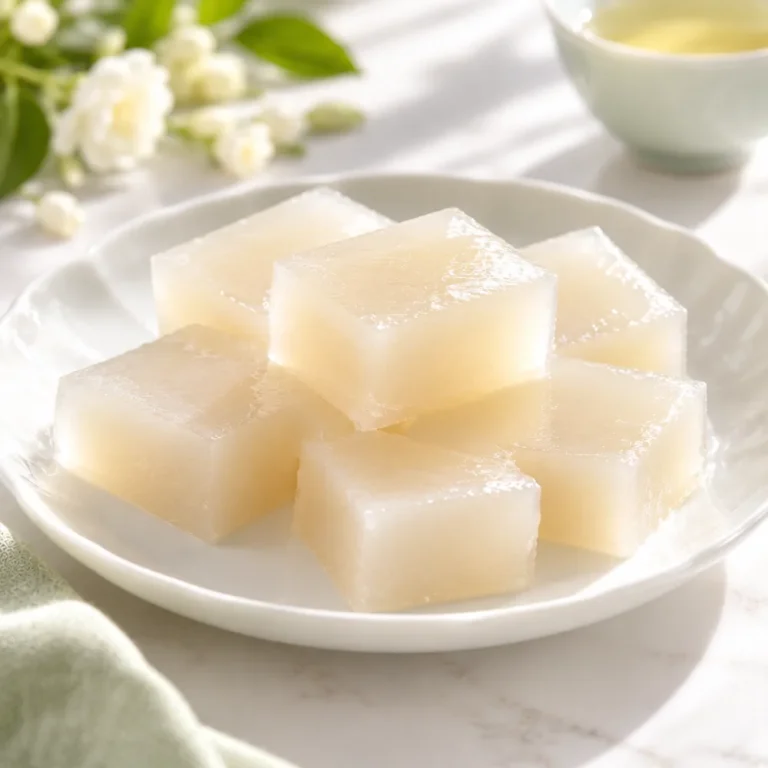
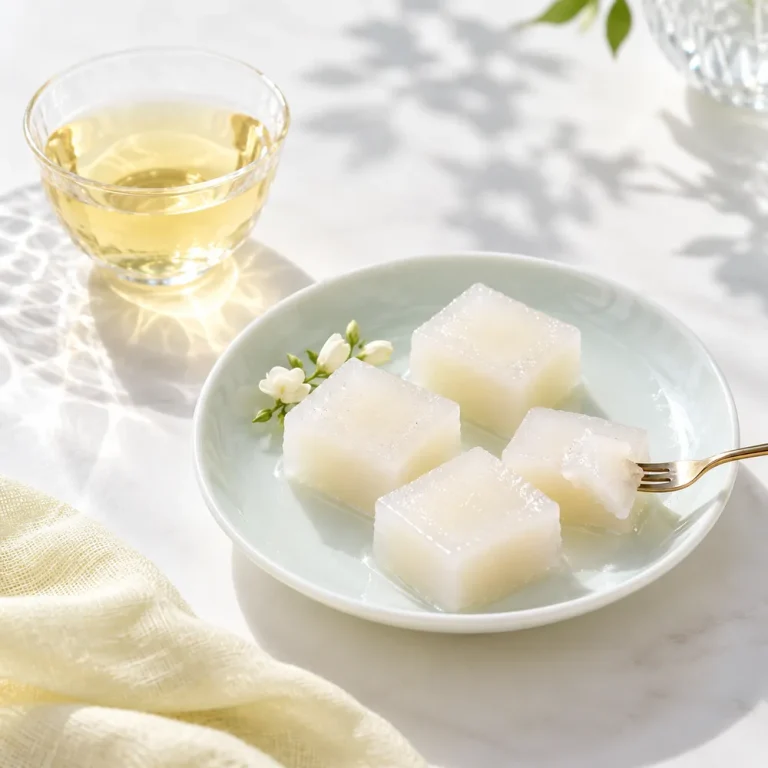
Traditional Weili cake is a Fuzhou summer pastry, with “weili” being the local dialect word for water chestnut. Jasmine Tea Weili Cake is a modern creative version that uses this traditional pastry as a base and incorporates jasmine tea in contemporary Fuzhou tea-banquet cuisine.
Historical Development
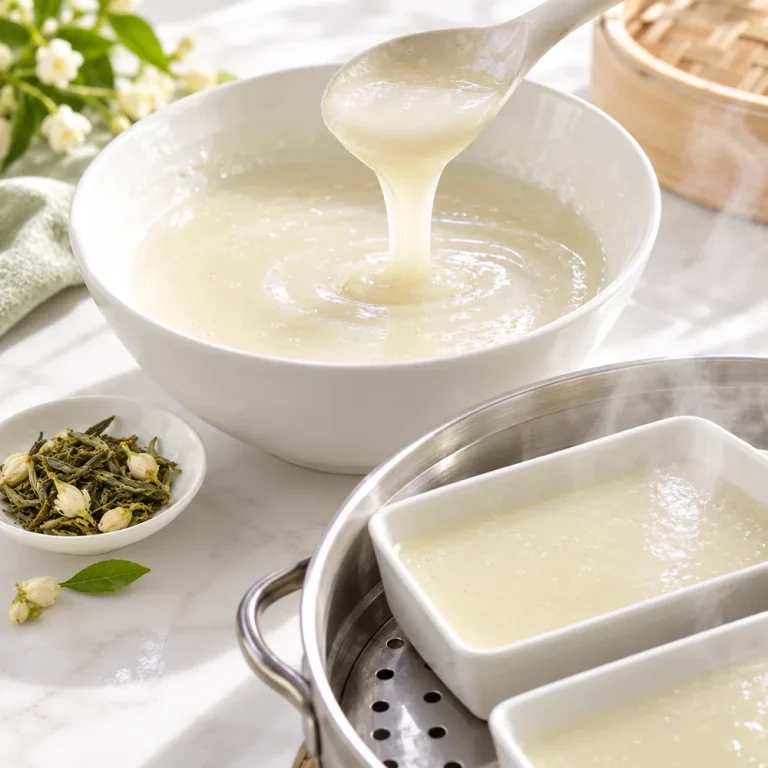
Early Fuzhou municipal folklore materials already list Weili cake as a common summer snack and describe it as water-chestnut starch mixed into a slurry, sweetened, steamed and cut into white semi-translucent blocks. Fuzhou News further explains that “weili” is the Fuzhou-dialect name for water chestnut, which is why water-chestnut cake is also called Weili cake. During the fifth Fuzhou Jasmine Tea Culture Festival in 2025, Xuanheyuan joined the “Fuduoduo” collaborative tea banquet and publicly introduced Jasmine Tea Weili Cake as part of a creative fusion of traditional Fujian cuisine and jasmine tea. Pre-event official reporting described it as a traditional Fuzhou pastry base incorporating jasmine tea during steaming; a post-event interview with the chef confirmed the use of water chestnut, described the finished texture as translucent, delicate and springy, and noted that jasmine tea added a lightly sweet lingering finish. The existing evidence can confirm that this modern creative version was publicly served by 2025, but not an exact first-creation date or sole inventor.
Cultural Context
The cultural value of this dessert lies in recombining two Fuzhou traditions: Weili cake, a local summer pastry whose name comes from the Fuzhou term for water chestnut, and Fuzhou jasmine tea culture. Fuzhou jasmine-tea scenting craft is a national intangible-cultural-heritage tradition, and the Fuzhou Jasmine Tea Culture System has been a FAO Globally Important Agricultural Heritage System since 2014. Those identities belong to the broader jasmine-tea cultural system, not to Jasmine Tea Weili Cake itself.
Regional Customs
Traditional Weili cake belongs to Fuzhou's refreshing summer snack tradition, while the modern jasmine-tea version appears in tea festivals, collaborative tea banquets and contemporary Fujian dining.
Creation Notes
Public sources show that in 2025 Xuanheyuan used traditional Fuzhou Weili cake as the base for a collaborative jasmine-tea banquet during the Fuzhou Jasmine Tea Culture Festival, incorporating jasmine tea into the steaming process. The precise R&D date and original technical formula have not been published.
Tea Conversations
Tea lovers from around the world meet over a cup of tea.
Sign in or register to join the conversation. Your comment account is created automatically the first time you use a connected account.
No comments yet
Share your thoughts with readers around the world.