Origin & Story
Black Tea Tangyuan is a modern-documented Wuyishan tea-banquet dessert that replaces or reinforces the conventional sweet soup with black-tea liquor, combining Wuyi black-tea culture with glutinous-rice tangyuan.
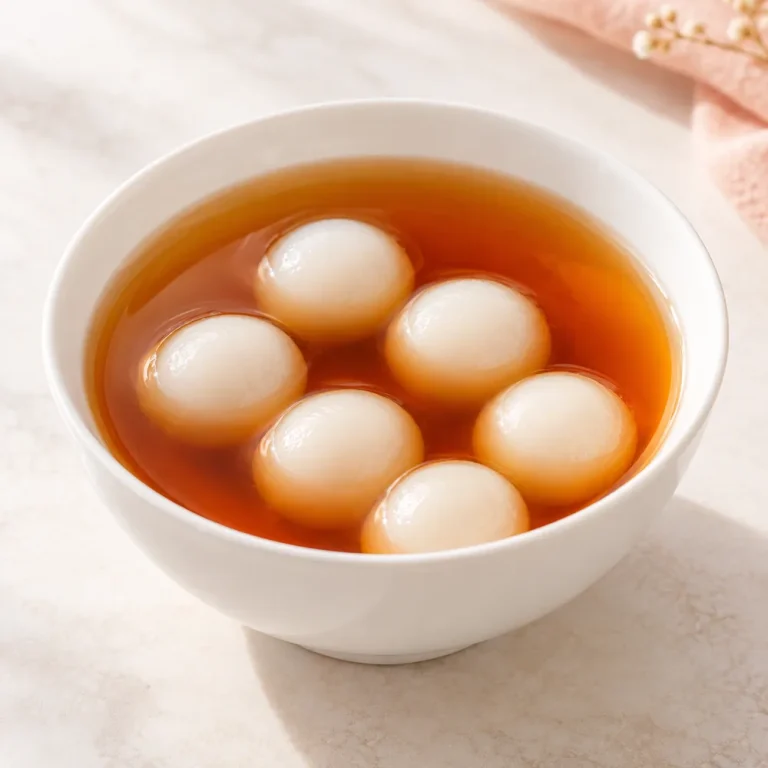
A Wuyishan tea snack in which brewed black tea serves as the soup base for soft glutinous-rice tangyuan. Representative versions use Zhengshan black tea and emphasize balance between tea fragrance and the dumplings' sweet, chewy texture.
Black-tea liquor contributes sweet, ripe-fruit or longan-like aromas and reduces the cloying impression of the sweet filling and glutinous rice, making the dessert feel fresher.
Soft glutinous tangyuan contrast with a clear fragrant black-tea liquor. The sweetness remains, but the tea makes the palate feel fresher. Representative versions may show longan-like sweet aroma, while osmanthus honey adds a more obvious floral note.
Black Tea Tangyuan is a modern-documented Wuyishan tea-banquet dessert that replaces or reinforces the conventional sweet soup with black-tea liquor, combining Wuyi black-tea culture with glutinous-rice tangyuan.
Public records can currently be verified at least to 2009, when Wuyishan tea-banquet materials already listed “Black Tea Tangyuan” and described local refined tangyuan served with black-tea liquor showing a distinct longan-like aroma. In 2022, Fujian Daily introduced a representative “Zhengshan Black Tea Mini Tangyuan,” specifying that high-quality Pucheng glutinous rice was made into tangyuan, cooked, placed in a bowl and then topped with freshly brewed Zhengshan black tea. In 2024, a spring Wuyishan tea-tour route published by the Ministry of Culture and Tourism again listed Black Tea Tangyuan among the area's famous tea foods. These sources are sufficient to establish stable recognition within Wuyi tea banquets and tourism cuisine, but not enough to identify the exact original year, shop or any supposed earlier Tea Horse Road origin.
The cultural focus is not tea stuffed into the tangyuan filling, but the Wuyishan practice of cooking with tea: local black tea becomes the soup base, giving a traditional glutinous-rice dessert the regional identity of tea country. Some modern versions further emphasize sweet aroma with osmanthus honey and longan-like tea notes.
It appears in Wuyishan tea banquets and tea-tour dining, including areas such as Xiamei, usually as a dessert or after-meal tea snack.
Current evidence can confirm that Black Tea Tangyuan had entered the Wuyi tea-banquet system by around 2009 and continued as a recognizable local tea food, but the earliest creator and exact origin date are unknown.
Because black tea already forms the soup base, there is usually no need to mechanically pair the dessert with a second tea.
Caffeine is confirmed to be present, but the amount per bowl cannot be quantified reliably.
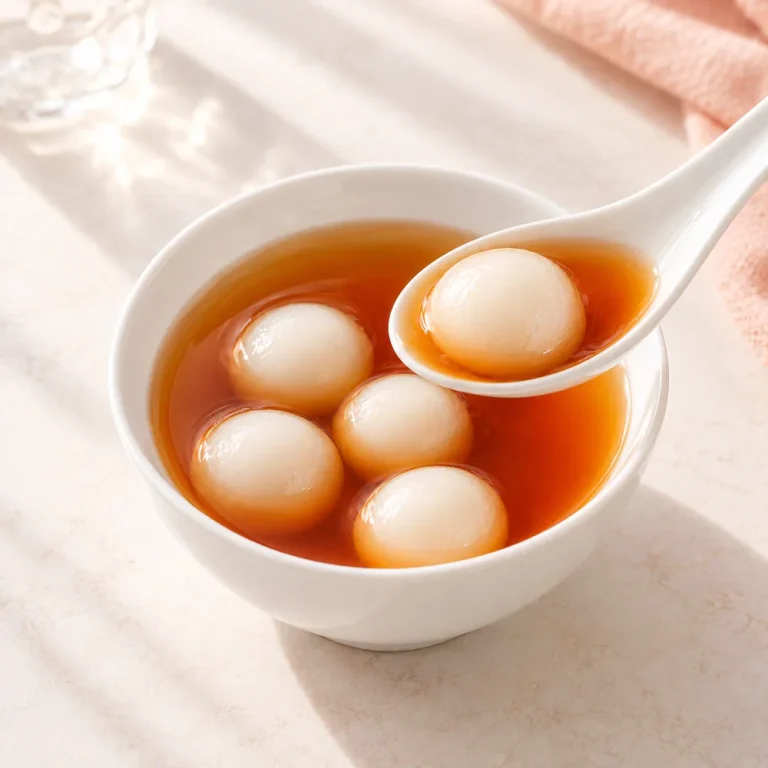
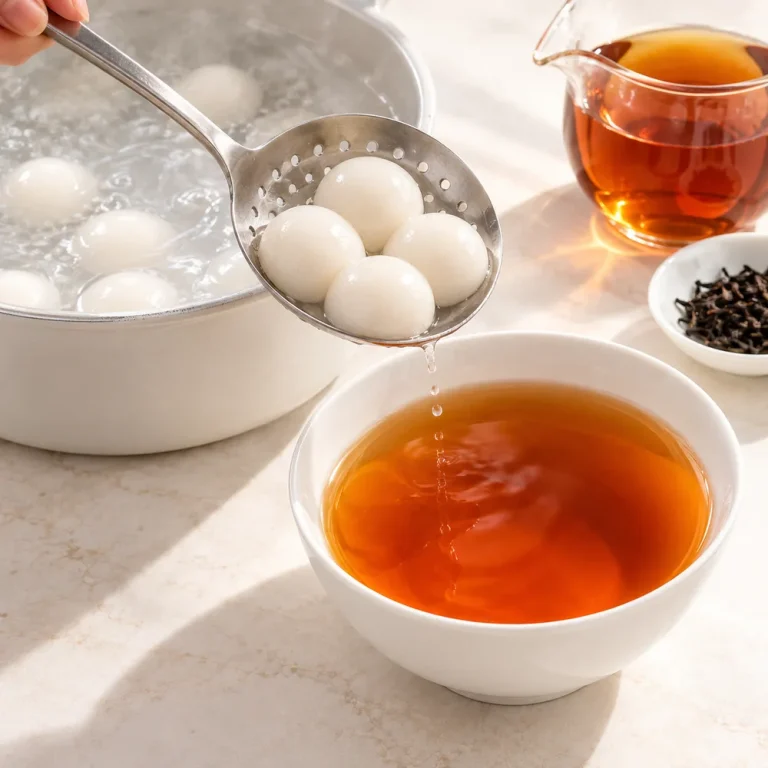
The process logic is simple and clear: tangyuan and tea liquor are prepared separately. The glutinous-rice dumplings are boiled until soft and cooked through, while the black tea is brewed on its own; the tea is then used as the final soup base. This avoids prolonged tea boiling that could create excessive bitterness and helps preserve the black-tea aroma at serving. Some versions add osmanthus honey, creating a fuller dessert structure of floral aroma, tea fragrance and sweet filling.
Tea Conversations
Tea lovers from around the world meet over a cup of tea.
Sign in or register to join the conversation. Your comment account is created automatically the first time you use a connected account.
No comments yet
Share your thoughts with readers around the world.