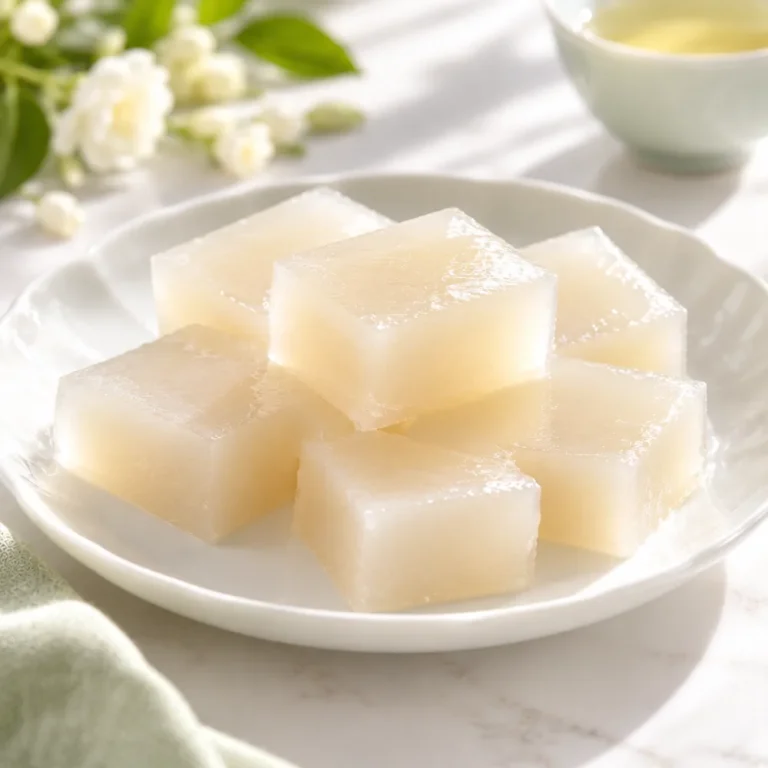
Skip to content
Tea & Realm
English

Longjing Tea Crisp Pastry

A layer of spring-green tea, a layer of flaky fragrance—West Lake spring folded into pastry.

A modern Hangzhou tea pastry that brings Longjing tea into the water-oil dough, filling or overall aroma design, using a Chinese flaky-pastry structure to create crisp, distinct layers.

Category
Tea Snacks · Chinese pastry
Tea ingredient
Longjing tea
Tea form
Tea powder
Preparation
Grind · Laminate · Bake

Tea in the Dish

Longjing contributes a fresh tea aroma, slight bitterness and green tone, making the lard-based pastry and sweet mung bean filling feel lighter. The documented prototype further strengthened its Hangzhou tea identity through tea liquor, mashed leaves and fresh-leaf decoration.

Tea ingredient
Longjing tea
Tea form
Tea powder
Role of tea
Main flavor · Color · Bitterness · Garnish
How the tea is used
In the representative recipe, Longjing leaves are ground to powder and sifted into the water-oil dough. The historical prototype also used Longjing tea liquor and mashed tea leaves and placed fresh Longjing leaves on top as decoration.

Flavor & Texture

The first impression is the crisp, crumbly texture and baked aroma of Chinese flaky pastry, followed by Longjing's fresh tea fragrance and a slight bitterness. The moist sweetness of mung bean paste softens the tea flavor, making the whole pastry drier and lighter than cream-rich tea desserts.

Aroma
Longjing tea aroma · Baked aroma · Flaky pastry aroma · Mung bean aroma
Taste
Light sweetness · Slight bitterness · Moist mung bean sweetness · Tea-sweet balance
Texture
Flaky · Distinct layers · Delicately crumbly · Soft filling

Origin & Culture

Origin & Story

Longjing Tea Crisp Pastry is a modern innovative Hangzhou tea snack rather than a traditional delicacy continuously inherited from the Song dynasty. Current Hangzhou reporting traces its modern prototype to around 2007, when Yan Xiaohua incorporated Longjing tea liquor and mashed leaves into the flaky structure of Wushan crisp pastry.

Historical Development

A 2018 Hangzhou local-media interview with developer Yan Xiaohua records that, inspired by the West Lake scenic motif “Tea at Longjing,” he created a new tea pastry around 2007 by adapting Wushan crisp pastry and incorporating Longjing tea liquor and mashed tea leaves. The pastry won recognition at the 2007 Hangzhou International Tea Banquet Design Competition and in events connected with the “West Lake First Banquet” at the eighth China (Hangzhou) Food Festival. A 2007 Hangzhou Daily report already listed “Longjing Tea Crisp Pastry” among Hangzhou's newly introduced award-winning tea banquets, tea dishes and tea snacks. Different versions later appeared in Hangzhou restaurants, teahouses and pastry brands. In 2023, Hangzhou's official Song-style lifestyle experience program again listed Longjing Tea Crisp Pastry among the new Hangzhou-style pastries of Nan Song Hu Ji, describing it as a modern fusion built on traditional pastry. Together these sources support a strong Hangzhou and Song-aesthetic association, but they do not make the modern product an ancient Southern Song formula.

Cultural Context

Longjing Tea Crisp Pastry combines one of Hangzhou's most recognizable tea symbols—Longjing—with Chinese flaky pastry. It is best understood in the context of new Hangzhou-style Chinese pastry and modern tea banquets. Its cultural identity comes from recombining West Lake, the “Tea at Longjing” scenic image, Hangzhou pastry and a contemporary Song-inspired lifestyle rather than from an unbroken ancient lineage.

Regional Customs

Today it appears mainly as a Hangzhou tea snack, teahouse pastry, souvenir or modern tea-flavored pastry in Song-style cultural experiences.

Creation Notes

The best-supported modern creation route draws on the image of “Tea at Longjing,” starts from the flaky logic of Wushan crisp pastry, and introduces Longjing tea liquor, mashed tea leaves and fresh-leaf decoration.

Serving Notes

Serving temperature
Room temperature or warm
Serving style
Serve on its own as a Chinese tea pastry, or pair with light tea for afternoon tea or a tea-table snack.
Season
Common in spring; suitable year-round
Best occasions
Afternoon tea · Tea table · Home snack
Tea pairing
Light green tea · Lightly roasted oolong
Storage
Store sealed and protected from moisture. Exact storage conditions for mung-bean-filled versions should follow the actual recipe or product label.
Reheating
No reheating is necessary. If the pastry has absorbed moisture, a brief low-temperature re-bake may suit the specific product, but this page does not set one universal parameter.
Allergens
Wheat / gluten
Caffeine
Contains caffeine · Unquantified

A light green tea extends the tea-aroma theme, while a lightly roasted oolong creates contrast with the pastry fat through roast and floral notes. These are editorial pairing suggestions.

Longjing is true tea and contains caffeine. Research shows substantial variation in caffeine among Longjing samples, so this page states only that caffeine is present.
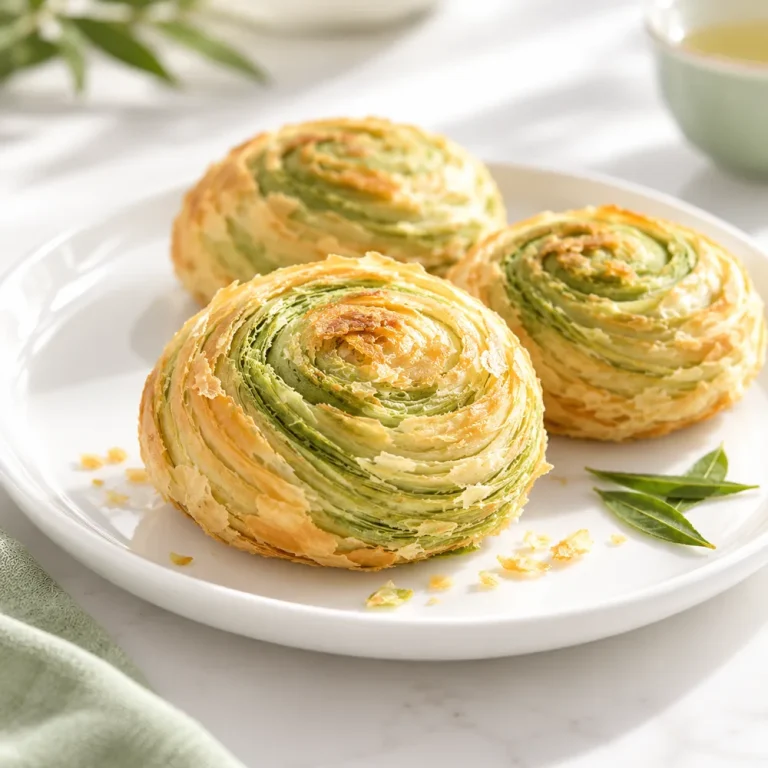
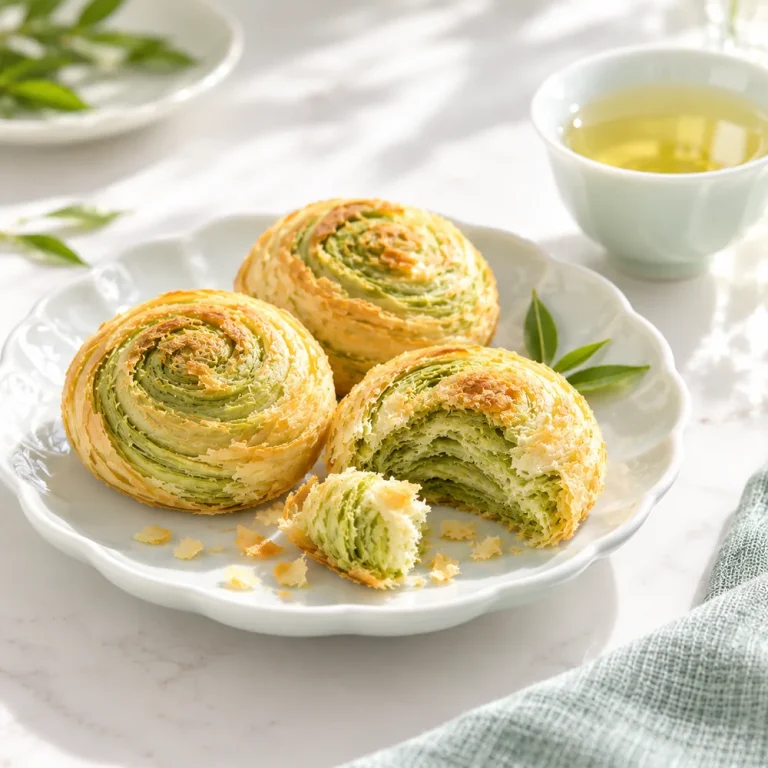
龙井茶酥·场景图

Recipe & Method

龙井茶酥·过程图

How It Works

The idea behind Longjing Tea Crisp Pastry is not simply to tint dough green with tea powder, but to carry tea aroma through a Chinese flaky-pastry structure. Tea powder or tea liquor supplies fresh tea aroma and a green visual cue; the water-oil dough provides stretch; the shortening dough creates layers; repeated wrapping and rolling organizes the two doughs into thin flakes; and relatively gentle baking sets the structure. The historically documented prototype further reinforced the Hangzhou image of “Tea at Longjing” with tea liquor, mashed tea leaves and fresh-leaf decoration.

Ingredients & Formula
Longjing tea leaves
5 g Grind into tea powder
All-purpose flour
135 g
Granulated sugar
25 g
Lard
30 g
Purified water
55 g The source recipe measures this in grams
Cake flour / low-protein flour
90 g
Lard
30 g
Mung bean paste
240 g About 20 g per pastry
Method
  1. 1
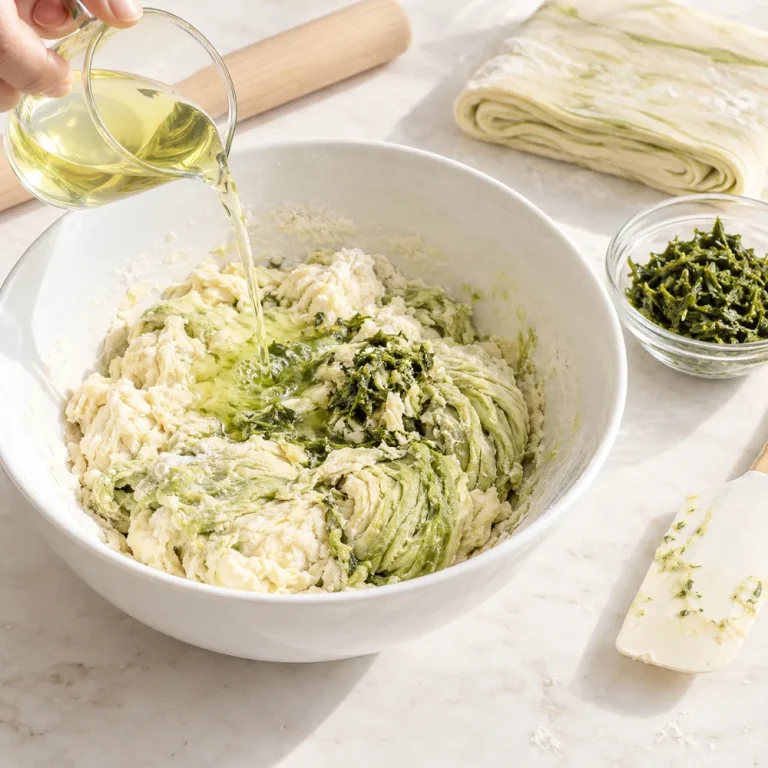
    Grind the Longjing teaGrind the Longjing tea leaves to a fine powder and sift them. This becomes the main tea-flavor source in the water-oil dough.
  2. 2
    Make the water-oil doughCombine all-purpose flour, sugar, lard and water, add the sifted Longjing powder, and knead into a relatively smooth dough.
  3. 3
    Rest the water-oil doughCover the dough and let it rest before dividing and laminating it.
  4. 4
    Make the shortening doughMix cake flour with lard into an even shortening dough and let it rest briefly.
  5. 5
    Wrap and roll the layersDivide both doughs into 12 portions. Wrap each portion of shortening dough inside the water-oil dough, roll into a strip and coil it, then fold, press and roll again to build the flaky layers.
  6. 6
    Add the mung bean fillingWrap about 20 g of mung bean paste in each portion of pastry dough, seal well and shape into a round cake.
  7. 7
    Shape the pastriesPress gently into shape. Tea-leaf patterns, stamps or restrained Chinese-style decoration can be used for presentation, but modern decoration should not be described as a fixed traditional form.
  8. 8
    BakeBake on the middle rack at 170°C for about 25 minutes, until the pastry is cooked through, the layers have opened and the tea aroma is evident.

Tea Conversations

Tea lovers from around the world meet over a cup of tea.

Sign in or register to join the conversation. Your comment account is created automatically the first time you use a connected account.