Skip to content
Tea & Realm
English

Longjing Shrimp

Jade-white shrimp meets a cup of Longjing—West Lake spring stir-fried into a plate of freshness.

A traditional Hangzhou dish combining river shrimp with Longjing tea. Brewed tea liquor contributes seasoning while the tender leaves themselves are retained in the wok, pairing the shrimp's delicate sweetness with the fresh fragrance of green tea.

Category
Tea Dishes · Hangzhou stir-fried shrimp
Tea ingredient
Longjing tea
Tea form
Other
Preparation
Velvet and marinate · Brew · Oil-pass · Quick stir-fry

Tea in the Dish

Longjing contributes fresh tea aroma, slight briskness and the visual presence of green buds, complementing the shrimp's sweetness and tender texture in a light, clearly tea-and-seafood combination.

Tea ingredient
Longjing tea
Tea form
Other
Role of tea
Main flavor · Supporting aroma · Liquid base
How the tea is used
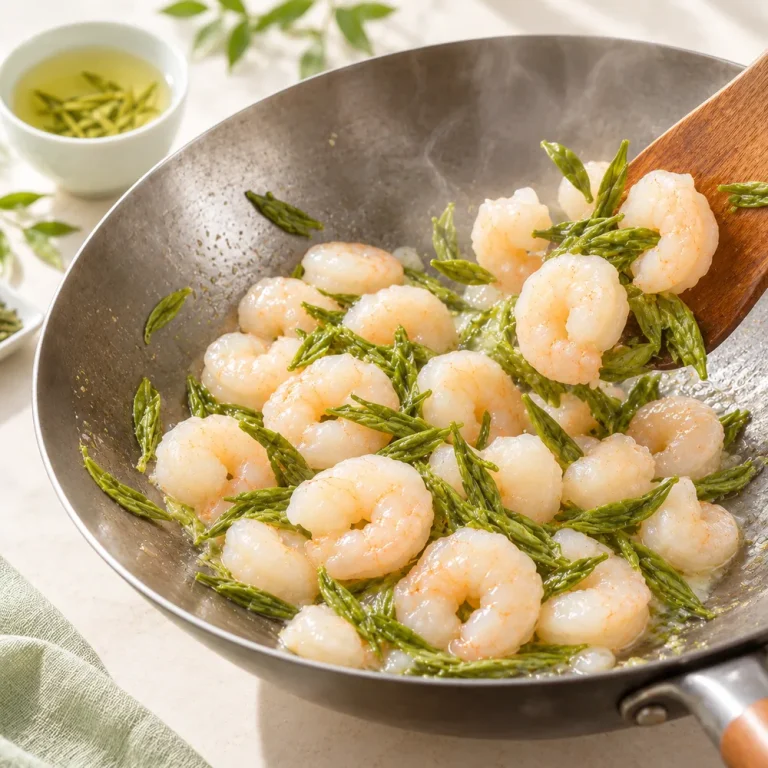
Brew the tea leaves briefly in hot water, then add both the leaves and reserved tea liquor to the already oil-slipped shrimp for a very short final toss, bringing tea aroma into the dish without prolonged cooking.

Flavor & Texture

Tea fragrance should not overpower the shrimp, and shrimp sweetness should not bury the tea. The style aims for light seasoning, fresh savoriness and tender smooth texture, with Longjing aroma appearing as a final, airy layer.

Aroma
Fresh Longjing aroma · Fresh river-shrimp aroma
Taste
Fresh and savory · Lightly seasoned · Tea-scented
Texture
Fresh and tender · Silky and tender · Springy

Origin & Culture

Origin & Story

Longjing Shrimp is a traditional Hangzhou signature dish. A reliable official historical lower bound reaches at least 1956, when Longjing Shrimp was included among 36 Hangzhou famous dishes selected at a major food exhibition organized by Zhejiang's catering authorities. It was also served in Hangzhou during U.S. President Richard Nixon's 1972 visit. Earlier stories involving Su Dongpo or Qianlong appear in the 2024 traditional-Hangzhou-cuisine group standard only as “tradition says” narratives and should be treated as culinary legend rather than established fact.
Historical Development

The 2024 group standard Traditional Hangzhou Cuisine—Longjing Shrimp preserves two traditional legends in its introduction. One says the dish was inspired by Su Dongpo's line about trying new tea over a fresh fire, pairing seasonal river shrimp with fresh Longjing around Qingming; another says that during the Qianlong Emperor's journeys to Jiangnan, an imperial cook added Longjing tea leaves and liquor to jade-white shrimp. The standard explicitly frames both narratives as traditions rather than strictly verified history. What can be confirmed is that Longjing Shrimp was already among the 36 Hangzhou famous dishes selected in an official large-scale food exhibition in 1956. It also appeared on the menu of a 1972 banquet in Hangzhou during U.S. President Richard Nixon's visit to China. In 2024, Hangzhou issued DB3301/T 0477.1—2024, Hangzhou Cuisine Part 1: Longjing Shrimp, bringing the classic dish into a modern local-standard system.

Cultural Context

Longjing Shrimp brings together two of Hangzhou's most recognizable culinary resources: tea culture and Jiangnan river seafood. Its visual ideal of jade-white shrimp and bright-green tea leaves, restrained seasoning and rapid cooking all emphasize the light, fresh and tender style associated with Hangzhou cuisine. Its inclusion among Hangzhou's famous dishes in 1956, use in a 1972 diplomatic banquet and entry into a 2024 local-standard system together reinforce its identity as a city signature dish.

Regional Customs

Traditional versions value fresh live river shrimp and fresh-season Longjing, and are often described in the spring context of new tea and seasonal shrimp. Modern restaurants may use prepared shrimp meat, Other cooking fats or adjusted tea quantities, but these should be treated as restaurant adaptations rather than replacements for the traditional standardized version.

Creation Notes

Stories linking the dish to Su Dongpo's poetry or to an imperial cook serving the Qianlong Emperor are both preserved in public standards as “tradition says.” Higher-level evidence is not sufficient to establish either legend as the unique factual origin.

Serving Notes

Serving temperature
Hot
Serving style
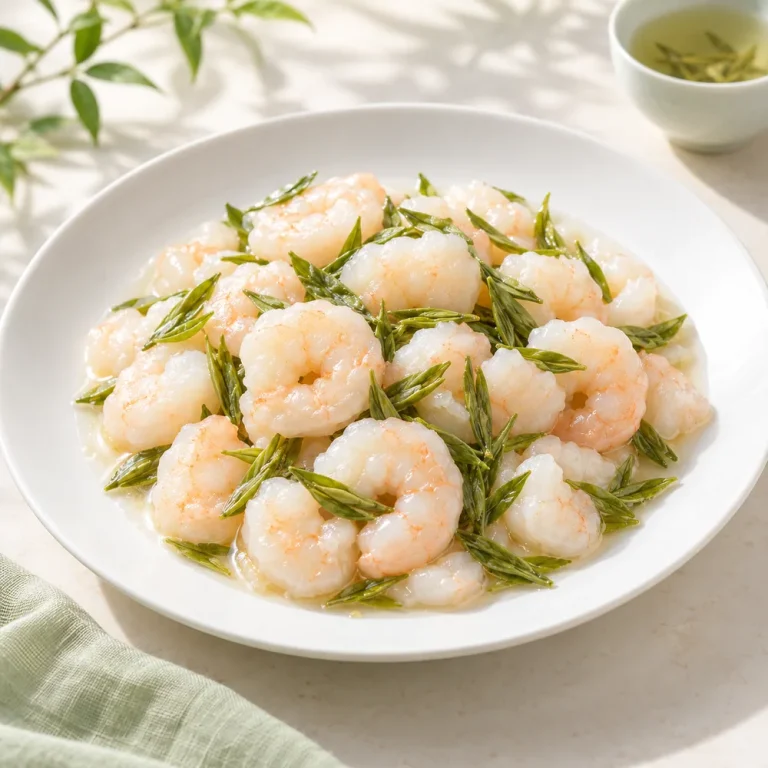
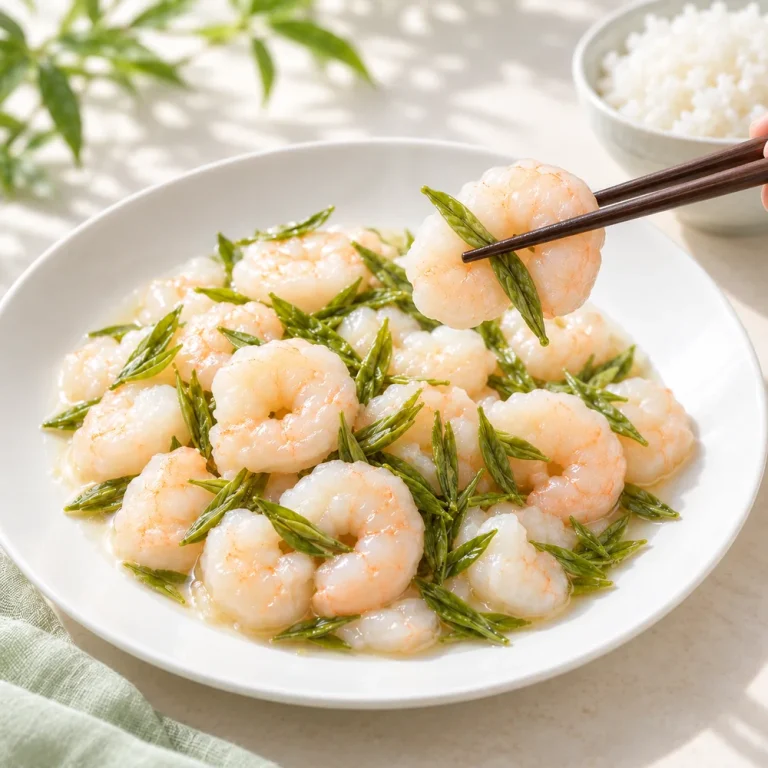
Serve hot on a flat white porcelain plate with the tea leaves and shrimp together.
Season
Spring
Best occasions
Banquet · Tea table
Storage
Best cooked and eaten immediately; traditional standards emphasize peak quality within a short time after cooking.
Reheating
Reheating is not recommended as a standard serving method because it can toughen the shrimp and diminish the tea aroma.
Allergens
Crustaceans · Egg
Caffeine
Contains caffeine · Unquantified

T/ZXCY 000—2024 recommends eating the dish within 15 minutes once it is ready to serve, at a serving temperature of 40–50°C.

The standardized version clearly uses river shrimp and Egg white, so crustacean and Egg allergens are identified. Longjing tea genuinely enters the dish, so naturally occurring caffeine is present, but the standards differ in tea dose and the amount of tea liquor and leaves actually consumed per plate cannot be determined, so no milligram estimate is given.

龙井虾仁·场景图

Recipe & Method

龙井虾仁·过程图

How It Works

The technical core of Longjing Shrimp is “make the shrimp tender first, add the tea last.” The shrimp are coated and quickly oil-slipped to establish a tender texture; Longjing tea is brewed briefly and then, at the final stage, the leaves and a small amount of tea liquor are tossed with the already-cooked shrimp for only a moment. This preserves the shrimp's freshness and jade-white color while protecting the Longjing buds' green tone and delicate aroma.

Ingredients & Formula
Fresh live large river shrimp
1000 g The standard measures whole live river shrimp; the shrimp meat is extracted after shelling.
Longjing tea
1 g T/ZXCY 000—2024 version; preferably fresh-season Longjing.
Egg white
1 whole
Wet starch
40 g
Shaoxing wine
15 g
MSG
2.5 g
Fine salt
3 g
Rendered lard
75 g The standard ingredient list specifies 75 g of rendered lard.
Boiling water
50 g Used in section 6.2 of the standard to brew the Longjing tea.
Scallion
Section 6.4 says to season the wok with scallion, but the ingredient table does not specify a quantity, so the amount remains blank.
Method
  1. 1
    Clean and coat the shrimpShell the live river shrimp and extract the meat. Rinse repeatedly in clean water until the shrimp are snow-white. Add fine salt and Egg white and stir until tacky, then add wet starch and MSG, mix evenly and rest for one hour.
  2. 2
    Brew the Longjing teaBrew the fresh Longjing tea with 50 g of boiling water, uncovered, for one minute. The standard records 50 g of tea liquor; keep the leaves and remaining liquor for the wok.
  3. 3
    Oil-slip the shrimpHeat the wok over medium heat and season it, then add rendered lard and bring it to a moderately warm oil temperature. Add the shrimp and quickly separate them with chopsticks. As soon as they turn jade-white, pour them into a slotted spoon to drain.
  4. 4
    Quickly toss with tea leaves and liquorSeason the wok with scallion, return the shrimp, quickly add the tea leaves with their liquor, splash in Shaoxing wine, toss for only a moment and plate immediately.

Tea Conversations

Tea lovers from around the world meet over a cup of tea.

Sign in or register to join the conversation. Your comment account is created automatically the first time you use a connected account.