Skip to content
Tea & Realm
English

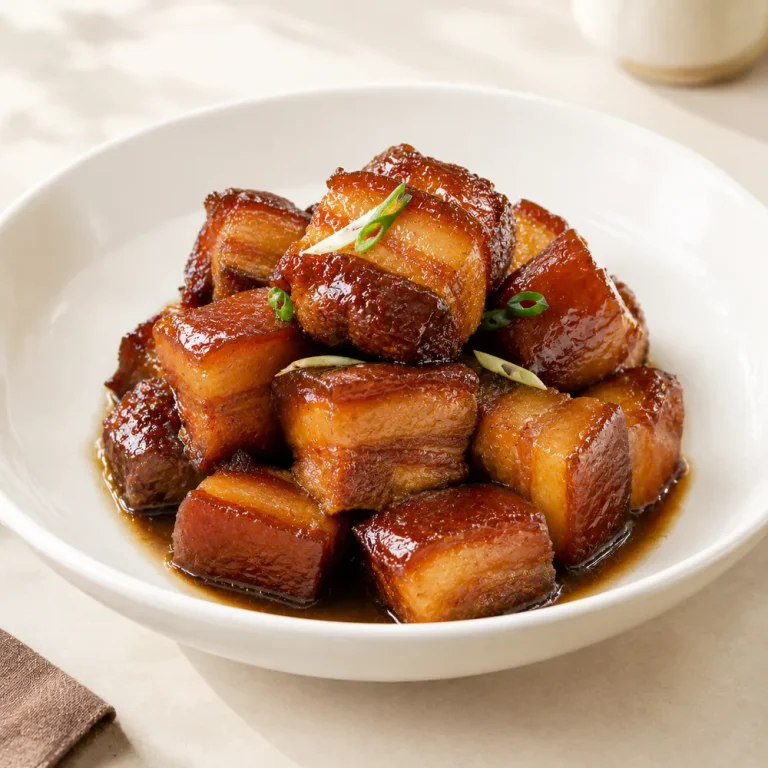
Pu'er Tea Red-Braised Pork

A cup of ripe Pu'er enters the braise, and aged tea aroma opens up the richness.

A modern tea-banquet fusion dish built around pork belly braised with Pu'er tea liquor. Representative local versions in Pu'er often use ripe Pu'er, adding aged tea aroma and tea fragrance to the familiar sweet-savory depth of red-braised pork.

Category
Tea Dishes · Tea-braised pork
Tea ingredient
Pu'er tea (representative local versions use ripe Pu'er)
Tea form
Tea liquor

Tea in the Dish

Ripe Pu'er can bring reddish-brown color, aged aroma and a rounder tea character to the sauce, layering with pork belly, caramelized sugar and savory braising flavors to create a more explicit tea dimension than ordinary red-braised pork.

Tea ingredient
Pu'er tea (representative local versions use ripe Pu'er)
Tea form
Tea liquor
Role of tea
Liquid base · Main flavor · Supporting aroma
How the tea is used
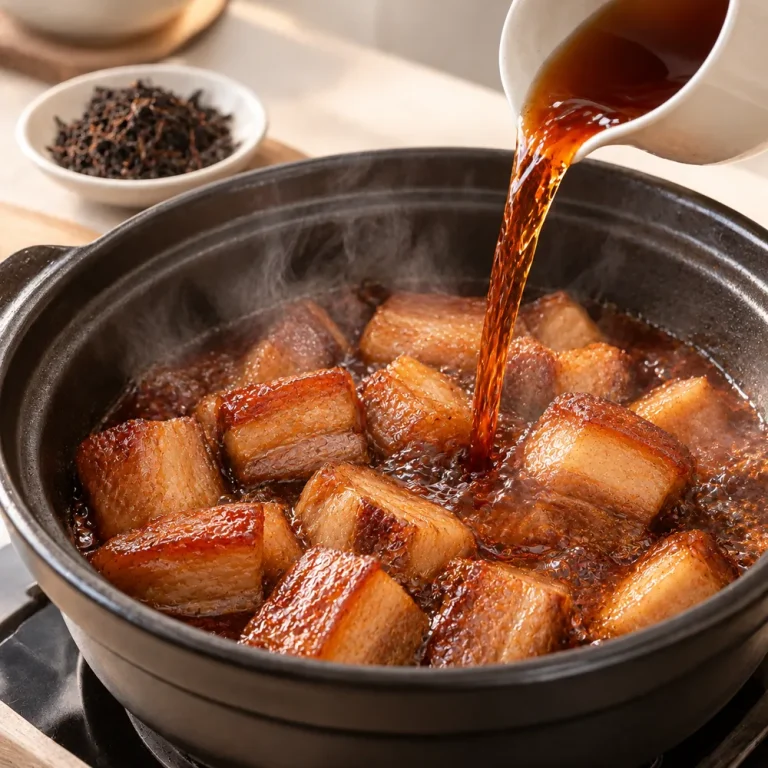
Brew Pu'er into a relatively strong tea liquor first, then use it as part of the braising liquid. The representative local Pu'er version uses ripe-tea liquor through the long braise.

Flavor & Texture

The dominant flavor remains the sweet-savory richness and pork fat of red-braised pork, while ripe Pu'er's aged aroma and tea character emerge later, adding a deeper, cleaner tea layer to the dish.

Aroma
Ripe Pu'er aged aroma · Red-braise sauce aroma · Pork aroma
Taste
Sweet-savory · Rich and mellow · Tea-scented
Texture
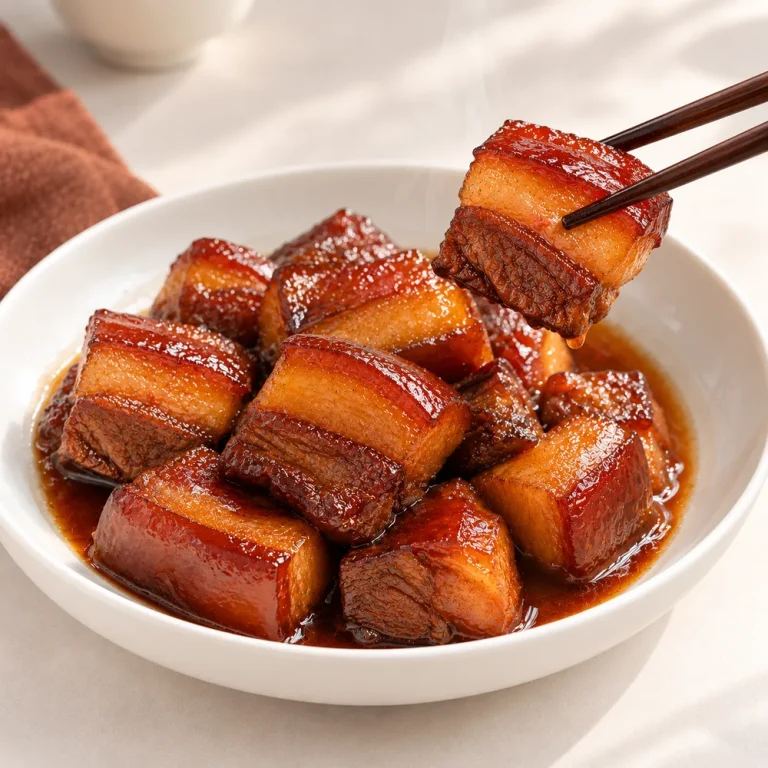
Soft and yielding · Tender and springy · Rich and glossy

Origin & Culture

Origin & Story

Pu'er Tea Red-Braised Pork is best understood as a modern tea-banquet fusion dish rather than a Yunnan classic that can currently be traced reliably to ancient or early-modern cookbooks. Recent local Pu'er reporting includes “Ripe Tea Red-Braised Pork” as part of an all-tea banquet, made by braising pork belly with ripe Pu'er liquor. Public home recipes appear at least by 2012, but that is only a lower bound for circulation and not an invention date.
Historical Development

Pu'er Tea itself has a clear geographical-indication system and a formal division between raw and ripe tea, but no old recipe catalog, regional cooking standard or established traditional lineage comparable to Longjing Shrimp or Zhangcha Duck has yet been found for “Pu'er Tea Red-Braised Pork.” Public home recipes using large amounts of Pu'er liquor to braise pork belly were already circulating by 2012, and recipes explicitly using ripe Pu'er appear by 2015. In 2026, reporting within the Pu'er Daily system on an all-tea banquet at Yinsheng Tea Estate directly listed “Ripe Tea Red-Braised Pork,” describing pork belly that is first cooked and stir-fried, caramelized with sugar, then braised with ripe Pu'er tea liquor. The current evidence therefore better supports a modern fusion dish linking Pu'er's tea industry with traditional red-braising technique than an ancient local classic that needs an invented old origin story.

Cultural Context

In recent years, Pu'er has continued developing all-tea banquets and tea-and-coffee dining experiences that use ripe tea, fresh leaves, tea flowers and Other tea resources in braising, stir-frying, boiling and mixing. Ripe Pu'er Red-Braised Pork fits this modern local tea-banquet logic well: familiar red-braised pork provides the meat-dish structure, while local ripe Pu'er brings regional tea flavor into the sauce.

Regional Customs

Representative Pu'er local versions favor ripe-tea liquor for braising. Modern restaurant and home versions elsewhere may use Generic Pu'er, light and dark Soy sauce, hawthorn, Huadiao wine or quail eggs. These are recipe variants and should not be combined backward into a supposed “authentic ancient Pu'er method.”

Serving Notes

Serving temperature
Hot
Serving style
Serve hot, usually plated with the concentrated braising sauce.
Best occasions
Home snack · Banquet · Tea table
Reheating
Reheat as you would ordinary red-braised pork, but this Generic page does not set a fixed reheating temperature or number of reheats unsupported by one standardized recipe.
Caffeine
Contains caffeine · Unquantified

Pu'er tea liquor genuinely enters the braising liquid, so the finished dish contains tea-derived caffeine. Tea type, leaf dose, liquor strength, braising time, reduction and the amount of sauce actually eaten all vary, making a reliable per-serving milligram estimate impossible. Many modern versions also use Soy sauce and may contain Soy, but the Generic dish has no single complete recipe, so allergen status remains not checked.

普洱茶红烧肉·场景图

Method Overview

普洱茶红烧肉·过程图

How It Works

The key to Pu'er Tea Red-Braised Pork is not simmering dry tea leaves as if they were a spice, but brewing a sufficiently strong tea liquor first and using it as part of the braising liquid. The reddish-brown liquor, aged aroma and rounder taste of ripe Pu'er combine with caramelized sugar, pork fat and savory braising flavors. The real challenge is to make the tea perceptible without braising the meat into obvious bitterness or astringency.

Tea Conversations

Tea lovers from around the world meet over a cup of tea.

Sign in or register to join the conversation. Your comment account is created automatically the first time you use a connected account.