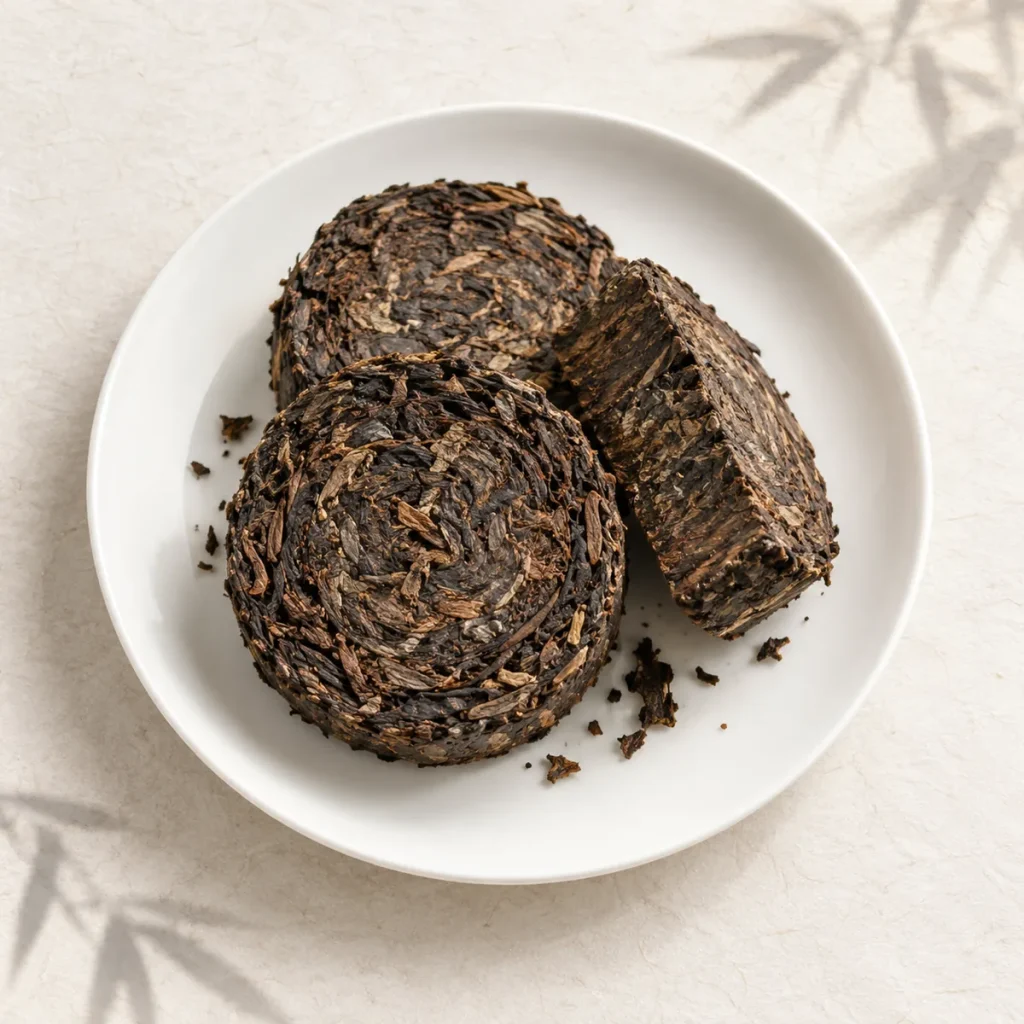
Composition Profile
Verified · 2026-09-26- 01Volatile aroma profile of Qianliang TeaAcross nine samples, the mean relative abundance by volatile class was highest for alcohols at 21.97%, followed by ketones at 20.11%, aldehydes at 18.69%, hetero-oxygen compounds at 18.39%, fatty acids at 12.71%, alkanes at 1.70% and heterocyclic compounds at 1.21%.Dry-leaf sample
Sensory evaluation was dominated by pine-like and aged aroma; some samples also showed bamboo-leaf, smoke or coarser mature-leaf notes. The principal aromatic impression arises from the combined contribution of alcohols, ketones, aldehydes and hetero-oxygen compounds.
- 02Multi-omics differences among Anhua dark teas made from identical raw materialAnhua Qianliang, Fuzhuan, Hezhuan, Tianjian and other products made from identical raw material developed significantly different metabolite and volatile profiles. Complex processing and longer fermentation strongly altered catechins, amino acids and related compounds and produced distinct flavor profiles.Dry-leaf sample
Qianliang volatiles are formed jointly by alcohols, ketones, aldehydes, hetero-oxygen compounds and other classes. Research using identical raw material further shows that processing routes alone can significantly reshape catechins, amino acids, volatiles and final sensory character.
Tea Conversations
Tea lovers from around the world meet over a cup of tea.
Sign in or register to join the conversation. Your comment account is created automatically the first time you use a connected account.
No comments yet
Share your thoughts with readers around the world.