Dark tea, or Hei Cha, may follow routes involving pile fermentation, compression, fungal flowering or later aging, producing mature, mellow and aged aromatic styles. Bricks, cakes, baskets, rolled cylinders and loose tea also make dark tea one of the six categories where processing, form and storage are especially intertwined.
Begin with Maturity: Understanding Dark Tea
Pile fermentation and later processing gradually build dark tea’s mellow, mature and highly varied character.
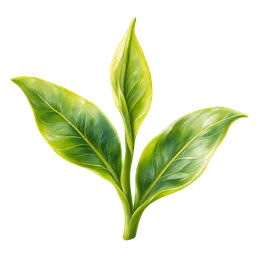
Begin with a single leaf
Maturity comes from more than time processing sets the foundation first
Dark tea is not one uniform kind of “old tea.” After fixation and rolling, many dark teas enter pile fermentation and related processing stages in which leaf color, aroma and taste move toward a more mature and mellow direction. Anhua dark tea, Liubao tea, Ya’an Tibetan tea and Hubei Qingzhuan each follow their own routes in raw material, pile fermentation, shaping and later processing. Brick, basket-packed, rolled-cylinder and loose forms make dark tea especially distinctive in the relationship among processing, form and storage.
Pile fermentation builds maturity
Pile fermentation is an important stage in the mature style of many dark teas. Moisture, temperature, air and microbial activity all participate in complex changes that move initially rougher leaf material toward softer, deeper aroma and taste.
Finished forms are highly diverse
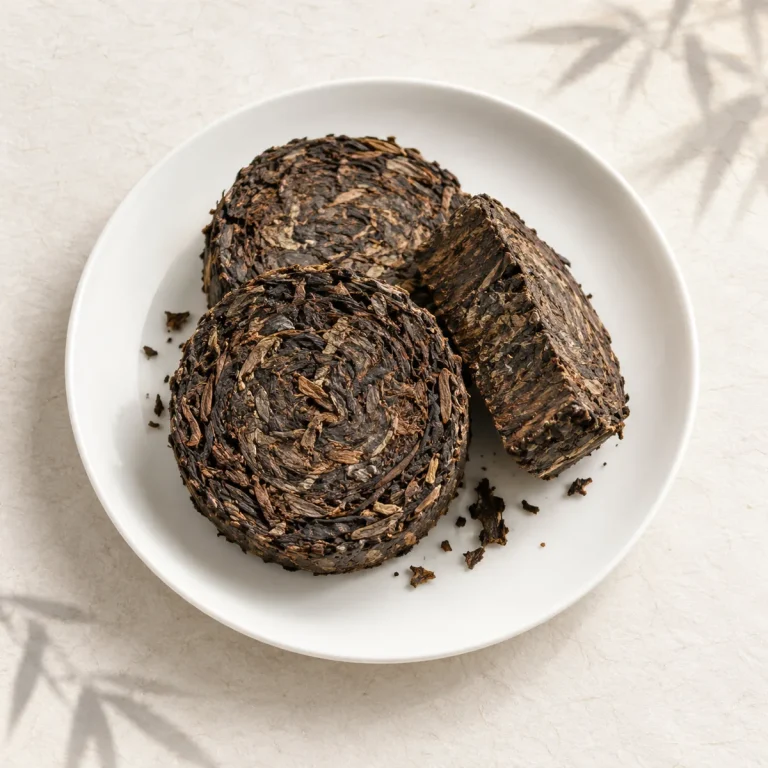
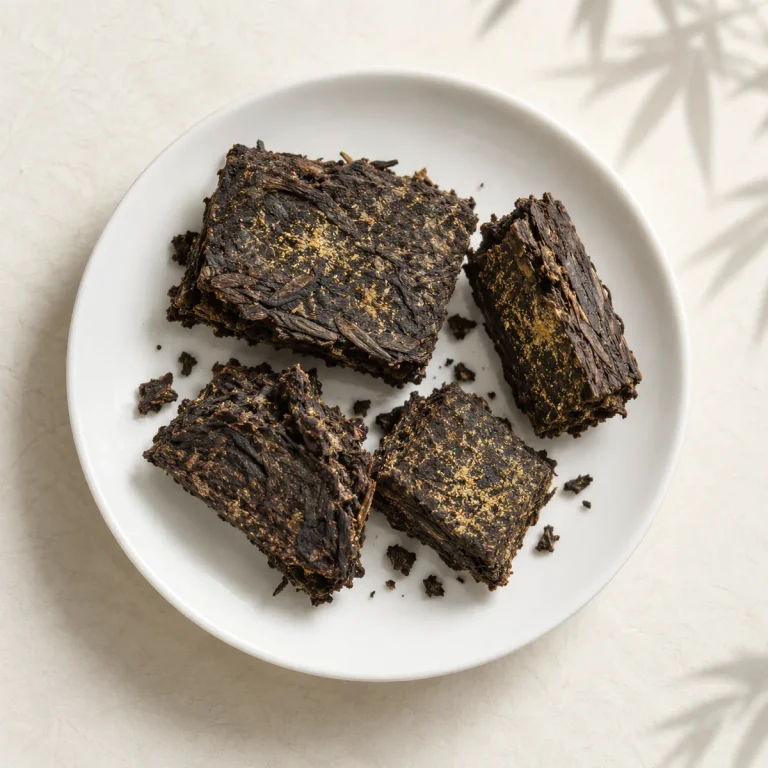
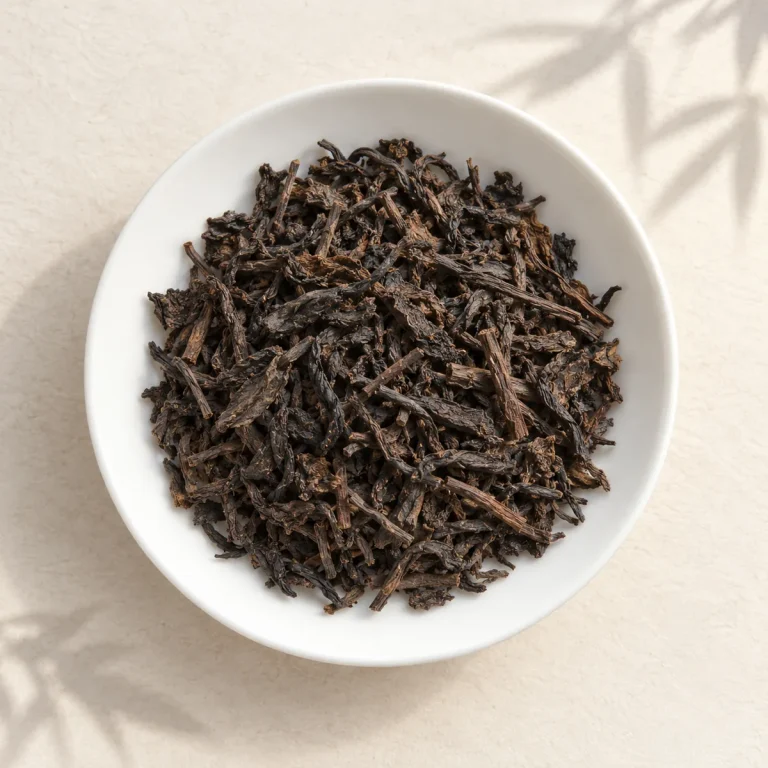
Dark tea appears as loose tea, bricks, basket-packed tea, rolled cylinders and other forms. These shapes affect not only appearance but also later storage, transport and brewing.
Later processing differs by tradition
Steam compression, fungal flowering, re-firing and additional drying belong only to certain dark-tea traditions rather than to the whole category. Fungal flowering, for example, is crucial to some Fuzhuan teas but cannot stand in for all dark tea.
Aging is not simply “the older the better”
Dark tea continues to change under suitable storage, but raw-material quality, processing, storage conditions and time together determine the final result. Aging is a process of change, not a formula in which more years automatically mean higher quality.
Classic Dark Teas, Each with Its Own Mature Character
Begin with well-known teas to see how dark tea changes in form, aroma, taste and terroir.
Pile fermentation and later processing lead color, aroma and taste toward mature, deeper expressions.
Dry Leaf Form
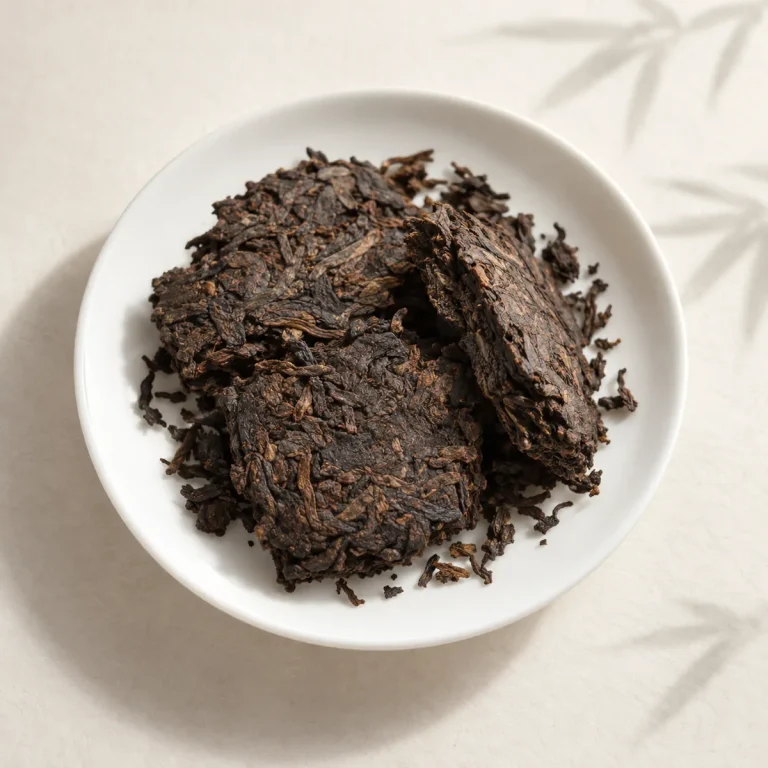
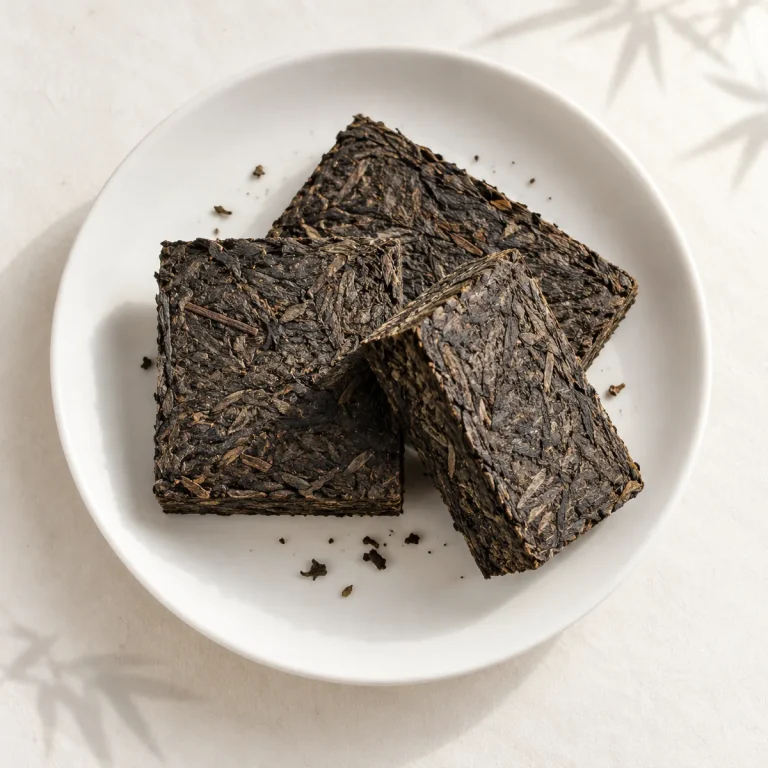
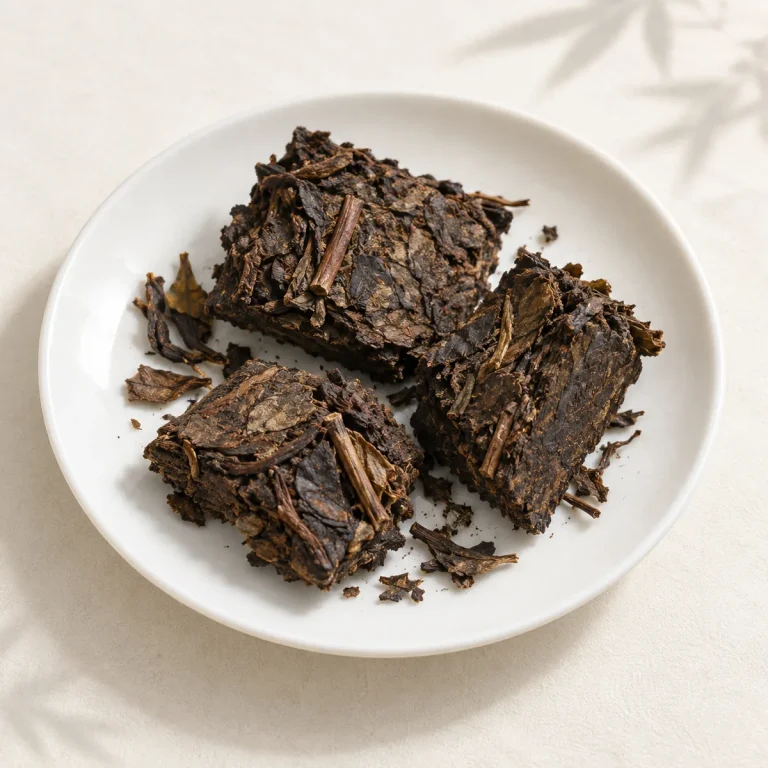
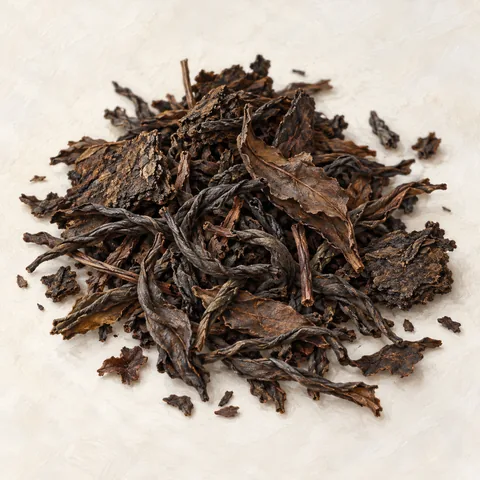
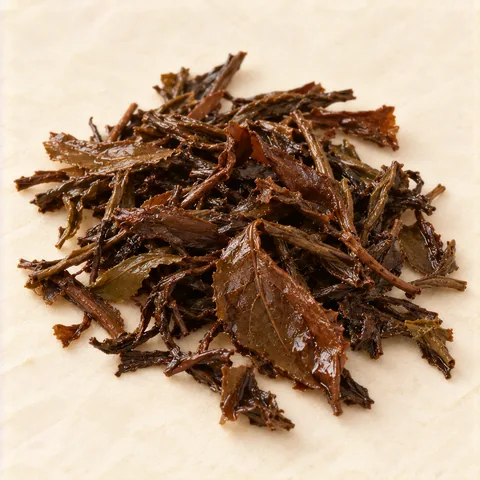
Dark-brown strips, mature leaves and many compressed forms are common. Bricks, baskets, rolled cylinders and loose tea each have their own appearance.
Liquor Color
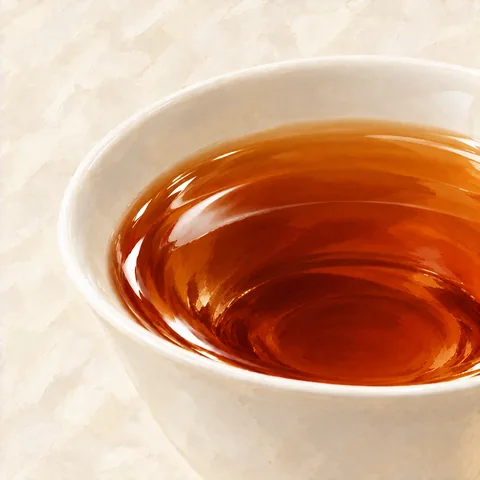
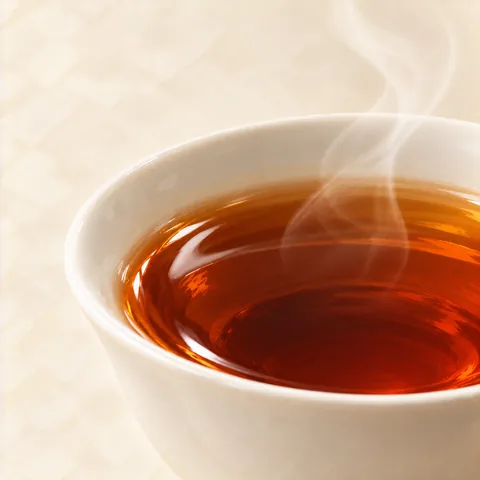
Deep amber, reddish brown and red-brown are common. Although the liquor may be dark, good examples should still appear clear and layered rather than muddy.
Aroma
Aged, woody and mature sweet notes are common, while some teas show distinctive fungal-floral aromas. Aromatic style varies greatly among traditions.
Taste
Full, smooth and rounded are common directions. Some dark teas are deep and settled; others can be cleaner, sweeter and more gentle.
Infused Leaf
After brewing, mature leaves are often reddish brown, dark brown or red-brown, soft and open rather than black, hard or sticky.
Sense of Origin
Anhua’s mountain landscape, Liubao’s valley environment and Ya’an’s humid highlands combine with local processing traditions to create distinct mature regional styles.
Inside the Leaf: Where Flavor Comes From
Pile fermentation brings polyphenols, pigments and microbial metabolism into continuing transformation, leading the liquor toward darker color, fuller body and mature character.
Changes in dark tea cannot be explained simply as “more oxidation.” During pile fermentation, the tea’s own enzymes, moist heat and complex microbial communities all participate in reactions. Catechins and other polyphenols are degraded, transformed and polymerized, while new phenolic acids, pigment polymers and volatile metabolites are formed.The most distinctive research question in dark tea is therefore how pile fermentation reorganizes an entire chemical system. Raw material, microbial community, pile-fermentation method and later processing differ among dark teas, so findings from one ripe Pu’er or one Fuzhuan tea should not be treated as representative of the entire category.
Polyphenols · Catechin Transformations
During pile fermentation, catechins and other tea polyphenols undergo continuing oxidation, degradation, hydrolysis and polymerization. These changes reshape the original bitter and astringent structure and form part of the chemical background behind dark tea’s shift toward softer, more mature flavor.
Theabrownins & Other Pigment Polymers
Continued oxidation and polymerization of polyphenols produce complex dark pigments and polymers including theabrownins, which are associated with the reddish-brown to deep-amber color and fuller texture of dark-tea liquor. “Theabrownins” themselves describe a complex material system rather than one single compound.
Gallic Acid · Phenolic Acids
Microbial and enzymatic action can promote hydrolysis of some ester-type catechins and the formation of gallic acid and other phenolic acids. These compounds are useful research markers for pile-fermentation transformation and also contribute to the final taste and chemical profile of dark tea.
Soluble Sugars · Amino Acids
Proteins, polysaccharides and other macromolecules also break down and transform during pile fermentation. Soluble sugars, free amino acids and related compounds contribute to sweetness, mellowness and overall body while also serving as substrates for microbial metabolism.
Microbial Metabolism · Volatile Compounds
Microorganisms in pile fermentation do more than merely “exist in the tea.” Their metabolism and enzymes participate in aroma formation. Alcohols, ketones and many other volatile compounds change with microbial communities and processing conditions, helping create aged, woody and mature sweet aromas as well as distinctive fungal-floral notes in some products.
Pile Fermentation Brings Transformation: How Dark Tea Is Made
Fixation, rolling and pile fermentation gradually move the leaf toward fuller, more mature character.
01
Fixation
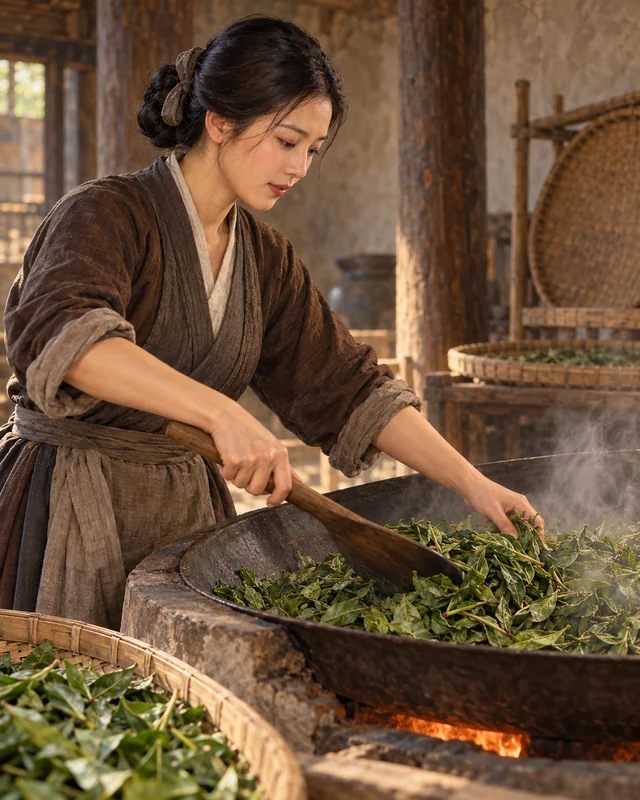
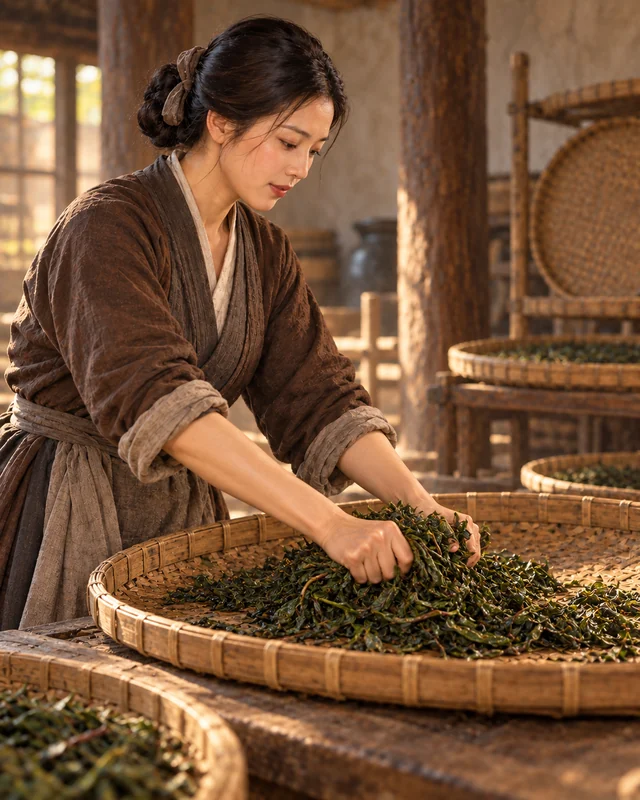
Fresh leaves for dark tea first undergo fixation. High heat suppresses enzyme activity, removes part of the moisture and softens the leaf, preparing it for rolling. Because dark tea uses raw material of different maturity levels across regions and products, equipment and operating methods vary, but the core purpose is to move the fresh leaf into a physical state suitable for further processing.
02
Rolling
After fixation, rolling curls and tightens the leaves and releases some tea juice onto the leaf surface. It helps establish an initial shape and creates a physical state more suitable for later pile fermentation. Different dark-tea traditions use raw material of different coarseness and tenderness, so rolling intensity, number of passes and final leaf form can vary substantially.
03
Pile Fermentation
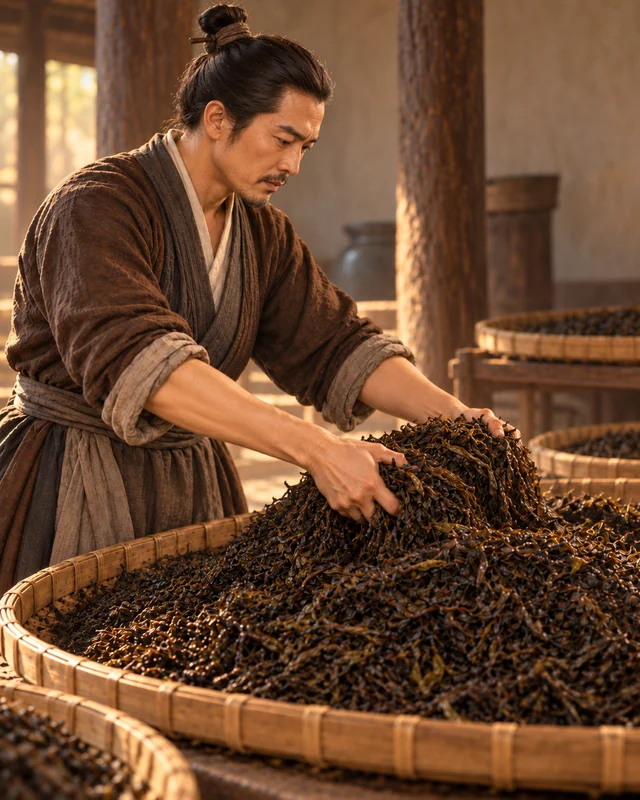
Pile fermentation is a key stage in the mature style of dark tea. Rolled leaves are piled according to the relevant process so that moisture, temperature, air and microorganisms can drive complex transformations. As the process develops, the original raw, rough character diminishes, the leaf color deepens, and aroma and taste move toward softer, fuller and more mature expressions.
04
Drying
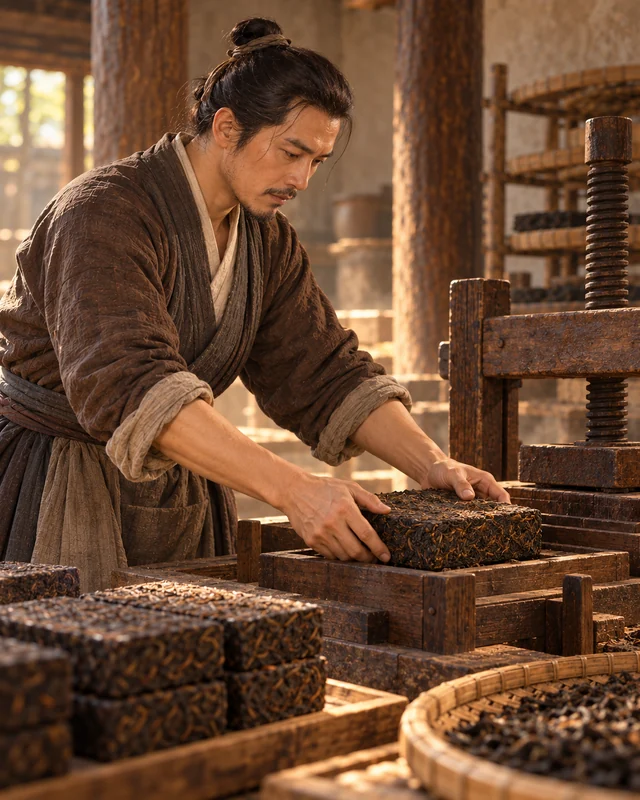
Once pile fermentation reaches the intended point, drying further reduces moisture and brings the rough tea into a more stable state for storage while stabilizing the color, aroma and taste already formed. This completes the shared basic processing backbone. Depending on the product, later stages may include steam compression, fungal flowering, re-firing, packaging or storage aging.
Fixation, rolling, pile fermentation and drying form the shared basic route from fresh leaf to rough dark tea. Anhua dark tea, Liubao tea, Ya’an Tibetan tea and Hubei Qingzhuan differ in raw material, pile-fermentation method, shaping and later processing. Steam compression, fungal flowering and aging should therefore be understood within specific products and traditions rather than as universal steps.
Different Landscapes, Different Dark-Tea Origins
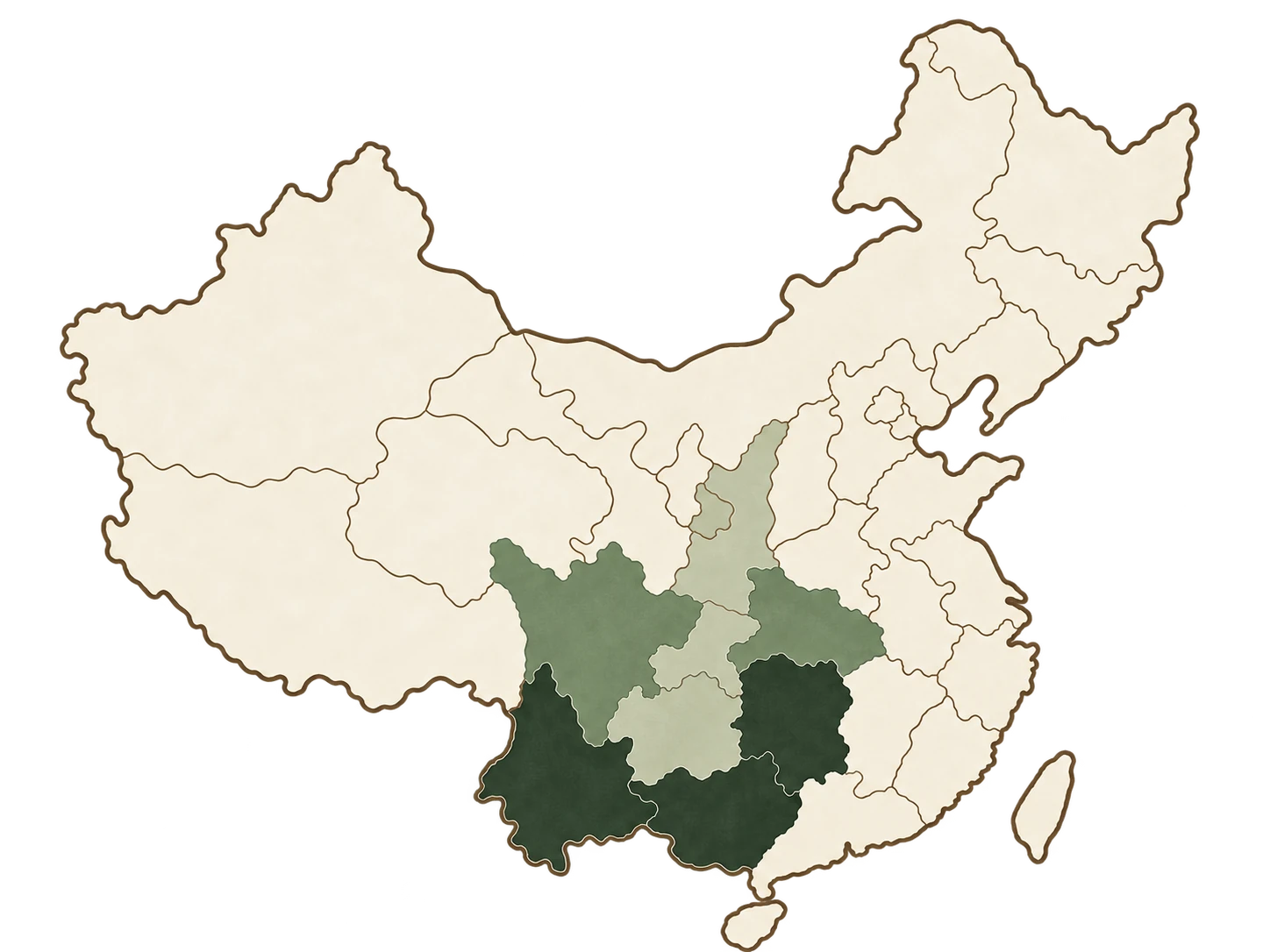
From Hunan and Hubei to China’s southwest, different pile-fermentation, compression and post-fermentation traditions shape the geography of dark tea.
Anhua developed one of the most recognizable dark-tea systems in China, from Fuzhuan and Heizhuan bricks to rolled-cylinder teas. Compression, fungal flowering and later processing combine in different ways to shape local styles.
02Yunnan
Large-leaf raw material and post-fermentation form a southwestern core
Representative teas:Ripe Pu’er Tea
Yunnan’s large-leaf tea, sun-dried green-tea base and later fermentation create a route very different from Hunan dark tea. Modern pile fermentation has further established the distinctive style of ripe Pu’er.
03Guangxi
Liubao creates a Lingnan post-fermentation tradition
Representative teas:Liubao Tea
Liubao and surrounding areas of Wuzhou developed Guangxi’s best-known dark-tea tradition. Post-fermentation, aging and local storage environments all influence its mature aroma and liquor texture.
Other Important Tea Regions
Sichuan · Hubei · Shaanxi · Guizhou · Chongqing
Ya’an in Sichuan and Chibi in Hubei continue border-tea and Qingzhuan compression traditions; Jingyang in Shaanxi connects with northwestern Fuzhuan tea routes, while Guizhou and Chongqing extend dark and post-fermented tea traditions across the southwest.
Dark tea is not one processing system. Anhua in Hunan, Pu’er in Yunnan and Liubao in Guangxi form three distinct cores; Sichuan border tea and Hubei Qingzhuan preserve another compressed-tea trade tradition, while Jingyang Fuzhuan connects to northwestern tea routes. The map is an editorial province-level overview.
Balanced Water and Heat, a Better Cup
Use high heat, wake compressed tea when useful, and decant in time; mature leaf material can also leave room for simmering later.
01Water
Clean and odor-free; soft or low- to medium-mineral water is a reliable choice.
Dark tea may have deeper color and fuller taste, but water quality still matters. Clean water makes it easier to perceive mellowness, gentle sweetness and mature aroma.
02Teaware
Gaiwan and Yixing clay both work; some dark teas also suit simmering.
A gaiwan makes it easy to observe extraction from compressed tea, while clay or ceramic pots suit repeated brewing. Mature border teas and brick teas may also have room for simmering in later rounds.
03Tea-to-Water Ratio
For gongfu brewing, adjust roughly within 1:15–1:30.
Dark tea varies widely. This site’s current method for Anhua Qianliang Tea can reach about 1:15, while daily suggestions for Ya’an Tibetan Tea and Fuzhuan are often around 1:20–1:30.
04Water Temperature
Most dark teas suit high-temperature brewing around 95–100°C.
Mature leaf material and compressed forms need enough heat to open and release aroma. This site’s data for Ya’an Tibetan Tea and Anhua Fuzhuan both use this high-temperature range.
05Steeping
For compressed tea, a quick rinse may be useful; then decant promptly.
Rinsing should not be a mechanical ritual for every dark tea. For firmly compressed tea with clear storage history, a short rinse can help loosen the leaves. A first infusion in the broad range of about 10–30 seconds is often a useful place to find concentration, adjusted for compression. This site’s current example for compressed Anhua Qianliang starts around 30 seconds, while some other dark teas use about 15–25 seconds.
06Reinfusion
Extend each infusion gradually; selected teas can move to simmering in the later rounds.
Dark tea is often durable. Once compressed leaves open, the middle infusions can become especially steady. When the liquor fades, some teas can continue in a heat-resistant pot through gentle simmering.
Dark tea includes Fuzhuan, Liubao, ripe Pu’er, border tea, Qingzhuan and rolled-cylinder forms, with substantial differences in compression and post-fermentation. This page gives only shared directions—high heat, timely decanting and the possibility of later simmering—while exact parameters belong on the individual tea page.
Tea Conversations
Tea lovers from around the world meet over a cup of tea.
Sign in or register to join the conversation. Your comment account is created automatically the first time you use a connected account.
No comments yet
Share your thoughts with readers around the world.

















Tea Conversations
Tea lovers from around the world meet over a cup of tea.
Sign in or register to join the conversation. Your comment account is created automatically the first time you use a connected account.
No comments yet
Share your thoughts with readers around the world.