Skip to content
Tea & Realm
English

Shoumei

White tea · loose-leaf white tea · Shoumei

Open leaf form · clean aroma · mellow body with lingering freshness.

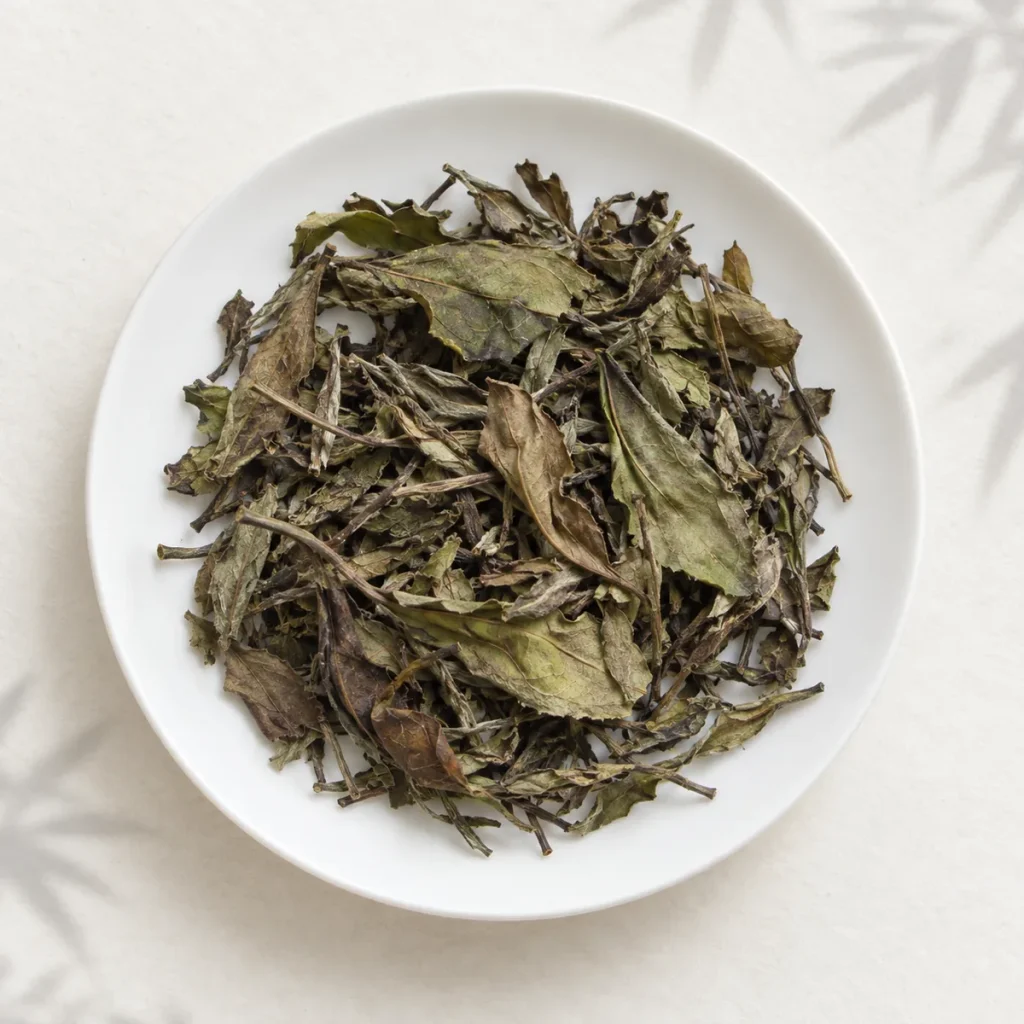
Shoumei is an independent white-tea product type under China's national standard. It may use tender shoots or leaves from Dabai tea, Shuixian or population tea cultivars and is made through withering, drying and sorting. Current GB/T 22291—2017 divides Shoumei into Grade 1 and Grade 2. Grade 1 shows still somewhat curled leaves in a natural gray-green color, a clean aroma, orange-yellow liquor, a mellow substantial taste that remains reasonably brisk, and soft, fairly bright infused leaves.

Origin
Traditional Fujian white-tea core · Fuding, Zhenghe, Jianyang and others
Harvest
Tender shoots or leaves · depends on cultivar, origin and grade
Craft
Withering · drying · sorting
Aroma
Clean aroma · Natural and gentle
Taste
Mellow and substantial, still brisk · Soft, sweet and moist
Liquor
Clear orange-yellow · Warm and translucent
Dry Leaf
Leaves still somewhat curledNatural gray-green
Liquor Color
Clear orange-yellowWarm and translucent
Aroma
Clean aromaNatural and gentle
Taste
Mellow and substantial, still briskSoft, sweet and moist
Finish
Gentle returning sweetnessSweetness continues
Infused Leaf
Soft open leavesFairly bright with some bud tips

Tea Overview

Tea Category
White tea · loose-leaf white tea · Shoumei
Cultivar
Dabai tea / Shuixian / population cultivars
Grade
Grade 1 / Grade 2
Harvest Period
Depends on cultivar, origin and grade
Plucking Standard
Tender shoots or leaves · no fixed national bud-leaf formula
Processing
Withering · drying · sorting
Also Known As
Shoumei White Tea
Aging
Shoumei can be stored long term and develop aged flavor, but raw material, moisture, packaging and storage conditions differ greatly, so the site avoids absolute claims such as “the older, the better.”

Origin & Terroir

Shoumei is first a white-tea product type defined by GB/T 22291—2017 rather than one unified geographical-indication name. Its traditional production is closely connected with Fujian white-tea regions such as Fuding, Zhenghe and Jianyang. Fuding White Tea and Zhenghe White Tea each have their own GI systems, and those protected regions should not be treated as the legal production area of all generic Shoumei.

Origin
Traditional Fujian core · no single unified GI area
Altitude
No single legal value
Climate
Traditional regions humid and misty · no unified hard value
Soil
Follow the relevant origin standard
Landform
Fujian hills and mountains · multiple production regions

Brewing

Gaiwan / white porcelain cup / simmeringWater first, then tea, then top up
Leaf Method
Gaiwan / white porcelain cup / simmering
Teaware
White porcelain gaiwan, clay pot or heat-resistant glass cup
Leaf Amount
About 5 g
Water Temperature
About 90–100°C
Tea-to-Water Ratio
About 1:20–1:30 (editorial recommendation)
Time
First infusion about 15–25 s · aged tea can be simmered
Infusions
About 5–7 infusions, adjusted to grade and aging state
Water
Clean drinking water
Brewing Steps · 4
  1. Warm the vessel: Warm the gaiwan or teapot with hot water and discard the warming water.
  2. Add the tea: Place about 5 g of Shoumei gently into the vessel, keeping the leaves as intact as possible.
  3. Pour the water: For newer tea, use about 90–95°C water; aged Shoumei can be brewed closer to boiling.
  4. Decant: Begin the first infusion around 15–25 seconds, then extend according to grade, age and preferred strength. Older tea can also be simmered in later rounds.

Composition & the Body

Shoumei has direct research on long-term storage metabolomics, volatile terpene enantiomers in Fuding white tea and anthocyanin glycosides, providing a useful picture of chemistry associated with aging.

Composition Profile

Verified · 2026-09-26
  1. 01
    Long-term storage metabolome of compressed ShoumeiAcross samples from different storage years, 148 compounds were identified. Catechins, dimeric catechins, amino acids, phenolic acids and organic acids generally declined, while EPSF, alkaloids, lipids and flavonoid aglycones generally increased. Among 2020–2013 samples, EPSF showed a correlation coefficient of 0.882 with storage time.
    Dry-leaf sample
  2. 02
    Volatile terpene enantiomer profileR-α-ionone showed relatively high abundance in the Fuding Shoumei samples. Levels of several terpene enantiomers were associated with plucking tenderness and product style among Fuding white teas.
    Dry-leaf sample
  3. 03
    Total anthocyanin glycosidesGrade 1 Shoumei: 126.04±16.41 μg/g; Grade 2: 122.28±2.18 μg/g.
    Dry-leaf sample

In stored compressed Shoumei, catechins, dimeric catechins, amino acids, phenolic acids and organic acids generally decline with time, while EPSF, alkaloids, lipids and flavonoid aglycones generally increase. Its terpene and anthocyanin profiles also show product-style differences.

Shoumei from different origins and processing systems should not be merged into one universal aging curve. The compressed-Shoumei study represents the corresponding Fuding sample system only. Animal and in-vitro studies are not treated as human evidence.

View Research Sources

基于代谢组学的不同贮藏年份紧压寿眉白茶化学成分分析

孙若璠, 高健健, 周丹阳, 谭俊峰, 林智, 戴伟东 · 食品科学 · 2025

Compressed Shoumei from Fuding, Fujian, across different storage years from 2020 to 2009.

Long-term storage systematically reshaped multiple classes of non-volatile metabolites in compressed Shoumei.

DOI: 10.7506/spkx1002-6630-20240805-035View Source

不同花色福鼎白茶中挥发性萜类化合物的对映异构体分布

严寒, 朱荫, 穆兵, 吕海鹏, KANG Suyoung, 张悦, 林智 · 食品科学 · 2019

Fuding Shoumei samples.

Shoumei showed a terpene stereoisomer distribution distinguishable from Baihao Yinzhen and Baimudan.

DOI: 10.7506/spkx1002-6630-20181229-350View Source

白茶花青素苷的结构鉴定与分析

胡金祥, 叶钰珊, 蔡梅生, 张青碧, 李博, 吴媛媛, 屠幼英, 何普明 · 浙江大学学报(农业与生命科学版) · 2022

Grade 1 and Grade 2 Shoumei samples.

In this study, the Shoumei sample group showed higher total anthocyanin glycosides than the Baihao Yinzhen and Baimudan groups.

DOI: 10.3785/j.issn.1008-9209.2021.03.181View Source

Tea Culture

Landscapes, people and history within a single leaf.

01

Shoumei Is Not a Synonym for “the Lowest Grade of White Tea,” but an Independent National-Standard Product

GB/T 22291—2017 places Shoumei alongside Baihao Yinzhen, Baimudan and Gongmei as four independent white-tea product types, and only then divides Shoumei internally into Grade 1 and Grade 2. Its raw-material range is broader, allowing tender shoots or leaves from Dabai tea, Shuixian or population cultivars.

For that reason, statements such as “Shoumei is low-grade Gongmei” or “Shoumei is just coarse leftover leaves” do not match the current national standard. The categories differ first in raw material and product definition; they should not be arranged into one simple cross-category ladder from high to low.

02

Gongmei and Shoumei Were Long Used Overlappingly; the 2017 National Standard Finally Wrote the Boundary Clearly

In historical trade terminology and local materials, Gongmei and Shoumei overlapped for a long time. Even today, some Fuding heritage materials preserve older expressions such as “Gongmei (Shoumei).” The 2017 edition of the national White Tea standard added and clearly defined Shoumei as a product type, while Gongmei was restricted to tender shoots from population cultivars.

When reading Shoumei history, this evolution in naming should be preserved rather than projecting today's definitions backward as if the two terms had always been completely separate.

03

Shoumei Is a Cross-Regional Product Type; Fuding Is One of Its Most Important Traditional Systems

Shoumei itself has no single nationwide GI. Fuding White Tea has long produced Shoumei within its GI and traditional craft system, Zhenghe White Tea has its own regional standards, and northern Fujian white-tea traditions including Jianyang are also connected with Shoumei-type products.

This page therefore does not assign one universal gi_basis to Shoumei. Fuding and Zhenghe are treated as related regional identities, and only a product with a verified specific origin may inherit the corresponding GI, heritage or agricultural-heritage relationships.

04

More Open Leaves Do Not Mean Simpler Craft: Shoumei Still Depends on Withering Control

Like other white teas, Shoumei centers on withering and drying. Because the raw material can be more mature than Gongmei and the leaves larger, leaf-layer thickness, ventilation, temperature, humidity and even moisture loss become especially important during withering.

Under-withering can leave green odor, while excessive withering can reduce liveliness and freshness. Fuding traditional practice includes natural and combined withering, while modern national processing specifications translate such experience into more controllable production conditions.

05

The Key Phrase for Grade 1 Shoumei Is “Mellow and Substantial, Still Brisk”—Not Darker and Stronger with Age

Current national-standard Grade 1 Shoumei should have leaves that remain somewhat tightly curled and relatively even, a fairly gray-green color, a clean aroma, a mellow substantial yet still brisk taste, orange-yellow liquor, and infused leaves that retain some bud tips and remain soft and fairly bright.

Grade 2 has looser leaves, can show somewhat darker color with red tones, a fuller taste and deeper liquor. For that reason, Cha Yu Jing uses newly made Grade 1 Shoumei as the standard visual anchor rather than drawing all Shoumei as brown-red aged tea.

06

Fuding Shoumei Can Enter Intangible-Heritage and GIAHS Narratives, but Generic Shoumei Cannot Borrow Those Identities

Fuding White Tea Making Craft entered China's national intangible-cultural-heritage list in 2011 and became a Fujian component of UNESCO's 2022 “Traditional tea processing techniques and associated social practices in China.” Official Fuding materials explicitly list Shoumei among the region's traditional white-tea products.

The Fuding White Tea Culture System became a China Important Agricultural Heritage System in 2017 and was formally recognized by FAO as a Globally Important Agricultural Heritage System in 2025. For generic Shoumei, these identities can only be presented as Fuding-specific regional associations and cannot automatically be assigned to Shoumei from other origins.

Frequently Asked Questions

Are Shoumei and Gongmei the same white tea?
Not under current GB/T 22291—2017. Gongmei uses tender shoots from population tea cultivars, while Shoumei may use tender shoots or leaves from Dabai tea, Shuixian or population cultivars.
How many grades does Shoumei have?
The current national standard divides Shoumei into two grades: Grade 1 and Grade 2.
Must Shoumei always be one bud with three or four leaves?
No. That should not be written as a nationwide national-standard rule. GB/T 22291—2017 allows tender shoots or leaves from Dabai tea, Shuixian or population cultivars. One bud with three or four leaves, or leaves left after bud separation, are common Fuding traditional practices.
Can Shoumei be compressed into white-tea cakes?
Yes. GB/T 31751—2015 lists compressed Shoumei as one type of compressed white tea.
Is Shoumei the lowest grade of white tea?
No. Shoumei is an independent product type, and only within Shoumei are there Grade 1 and Grade 2. Baihao Yinzhen, Baimudan, Gongmei and Shoumei are first different product categories, not one unified quality ladder.
Is Shoumei part of Fuding White Tea?
Shoumei itself is a nationwide white-tea product type and is not identical to Fuding White Tea. However, Shoumei is produced within the Fuding GI and traditional craft system, and official Fuding heritage materials list it among traditional products.
Does Shoumei have its own geographical indication?
Generic “Shoumei” is not one unified GI name. Fuding White Tea, Zhenghe White Tea and other regional systems must be checked separately.
Is the Fuding White Tea Culture System an FAO GIAHS?
Yes. It was formally recognized by FAO in 2025, but that identity applies only to Shoumei within the Fuding regional production system.

Tea Conversations

Tea lovers from around the world meet over a cup of tea.

Sign in or register to join the conversation. Your comment account is created automatically the first time you use a connected account.