Skip to content
Tea & Realm
English

Gongcheng Oil Tea

Tea, ginger and a wooden pestle pound out a hot bowl of hospitality by the Yao hearth.

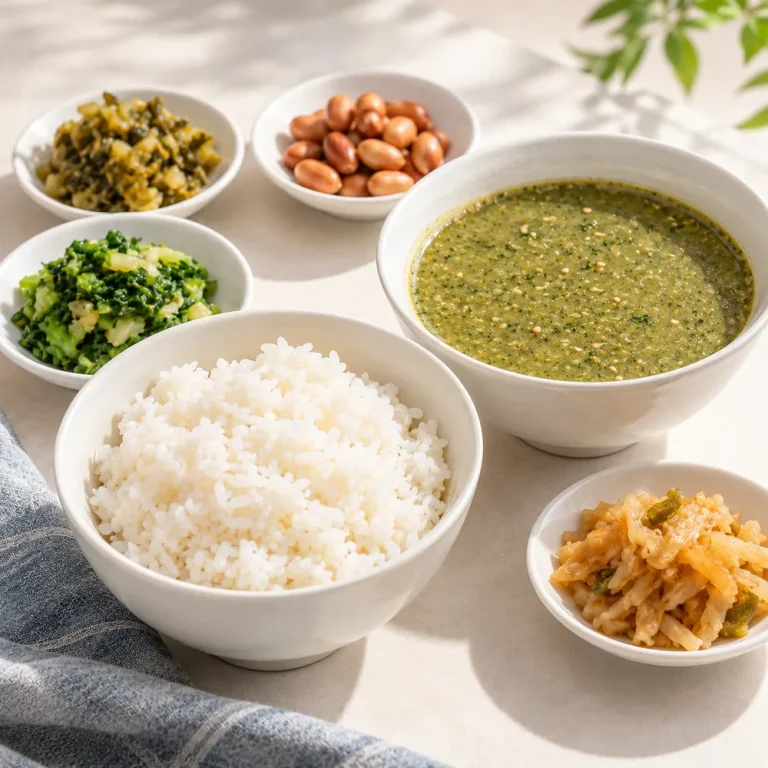
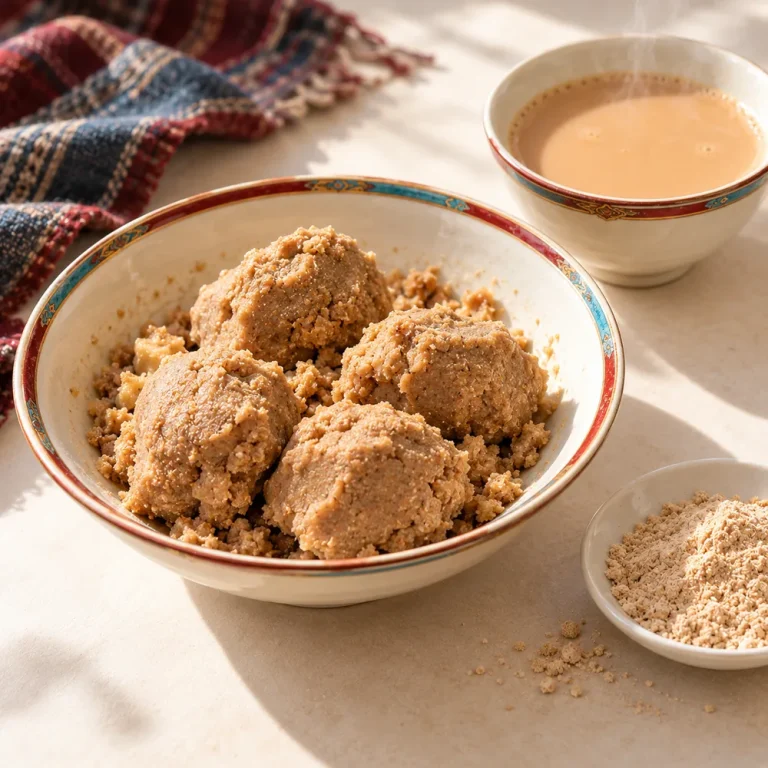
A representative traditional tea food of Gongcheng Yao Autonomous County in Guilin, Guangxi. Large-leaf green tea is stir-fried and pounded with ginger, garlic and oil, then simmered with water, strained and seasoned. It is commonly eaten with fried rice, peanuts, crisp snacks and glutinous-rice cakes, and serves both as everyday food and as an important Yao hospitality and life-cycle custom.

Category
Tea Meals · Yao pounded savory tea
Tea ingredient
Large-leaf green tea (traditional oil-tea leaves)
Tea form
Other
Preparation
Infuse · Stir-fry · Pound · Simmer · Strain

Tea in the Dish

Large-leaf green tea provides the tea aroma, bitterness, astringency and returning-sweet backbone. Layered with ginger-garlic pungency, fat and salt, it creates the typical Gongcheng Oil Tea progression from bitter and astringent toward a fuller sweet finish.

Tea ingredient
Large-leaf green tea (traditional oil-tea leaves)
Tea form
Other
Role of tea
Main flavor · Liquid base · Supporting aroma
How the tea is used
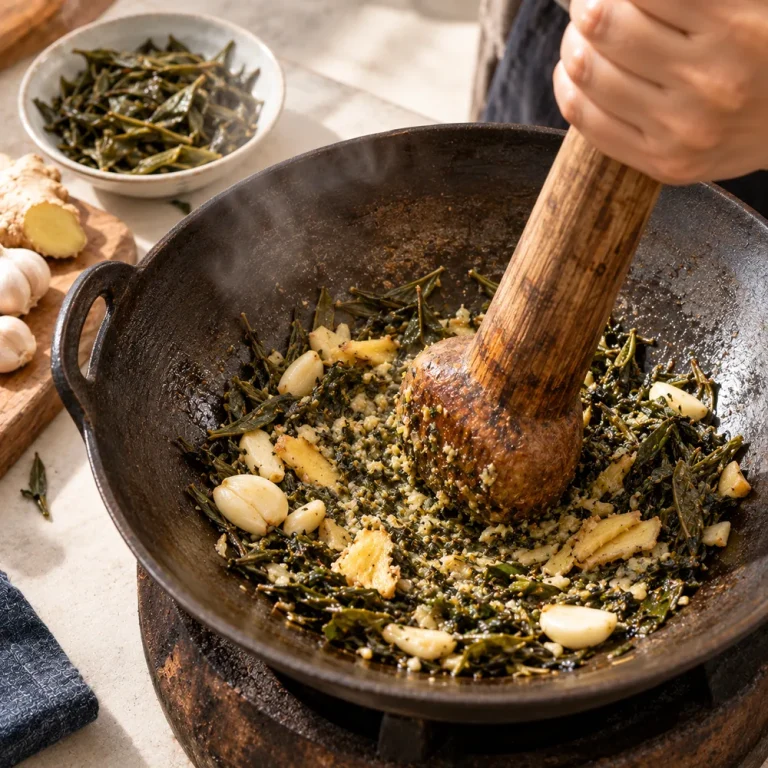
Pre-soak the leaves in a small amount of boiling water, for about 5–10 minutes according to the traditional report. Then stir-fry them with ginger and garlic in a hot pot with a little oil while repeatedly pounding. Once broken down, add boiling water, simmer until flavorful, season with salt and strain into the oil-tea soup.

Flavor & Texture

The first impression is noticeable tea bitterness and astringency, ginger-garlic pungency and salt, followed by returning sweetness. Fried rice, peanuts and crisp snacks add alternating soupiness and crunch, creating the most recognizable Gongcheng Oil Tea eating experience.

Aroma
Green tea aroma · Ginger aroma · Garlic aroma · Toasted aroma
Taste
Bitter · Astringent · Returning sweet · Savory-salty · Pungent
Texture
Hot and soothing · Soup-like · Crisp accompaniments

Origin & Culture

Origin & Story

Gongcheng Oil Tea is a traditional Yao food and tea custom centered on Gongcheng Yao Autonomous County. National heritage materials record tea cultivation, trade and drinking in Gongcheng since the Sui–Tang period, while Yao groups who migrated into the region from the Tang period onward expanded ingredients and refined local methods to form the distinctive oil-tea custom. In 2021, “Tea Customs (Yao Oil Tea Custom)” entered China's fifth national intangible-cultural-heritage list and later participated in the 2022 UNESCO inscription through the broader “Traditional tea processing techniques and associated social practices in China” project.

Historical Development

China's Intangible Cultural Heritage Digital Museum identifies Gongcheng Yao Autonomous County in Guilin as the core transmission area of the Yao oil-tea custom and records its spread to Guanyang, Ziyuan, Longsheng, Zhongshan and Fuchuan in the Nanling Yao region. Official heritage narratives hold that Yao groups who migrated into Gongcheng from the Tang period onward adapted local tea-drinking practices by adding ingredients and developing distinctive tools and techniques, and that interaction with Zhuang and Han communities helped shape a shared multiethnic tea custom. A 2025 inheritance report republished through the agricultural and rural information system further identifies “pounding” as the most obvious technical difference between Gongcheng Oil Tea and ordinary steeped, infused, boiled or decocted tea. The story that Qianlong named it “Refreshing Spirit Soup” is retained only as local legend because official reporting explicitly says its authenticity remains to be verified.

Cultural Context

Oil tea runs through Gongcheng Yao daily life as well as hospitality, marriage, birthdays, funerals, rituals and festivals. National heritage materials record that guests are first served oil tea, with fried rice, glutinous-rice cakes, peanuts and Other foods added to the bowl. Sitting around the hearth, pounding oil tea and talking also functions as a form of neighborly exchange and host-guest bonding. Gongcheng Oil Tea remains an important local food-culture and industry brand today and continues to operate within a GI certification-mark system.

Regional Customs

Traditional households often make several successive pots. Local experience describes early rounds as more bitter and astringent, gradually becoming richer and mellower. Common bowl additions include scallion, cilantro, fried rice, puffed rice, crisp peanuts, fried soybeans, crisp snacks, paishan and glutinous-rice cakes, though households and shops differ. During Spring Festival and Other occasions, sweet variants with ginger, mushrooms and brown sugar may also appear.

Creation Notes

The story that the Qianlong Emperor tasted Gongcheng Oil Tea during his journeys south and named it “Refreshing Spirit Soup” is one of the best-known local legends. A 2025 official heritage report explicitly says the story's authenticity remains unverified, so it cannot serve as confirmed origin history. The formation of the oil-tea custom should instead be understood through the long evolution and multiethnic exchange described in official heritage materials rather than one inventor.

Serving Notes

Serving temperature
Hot
Serving style
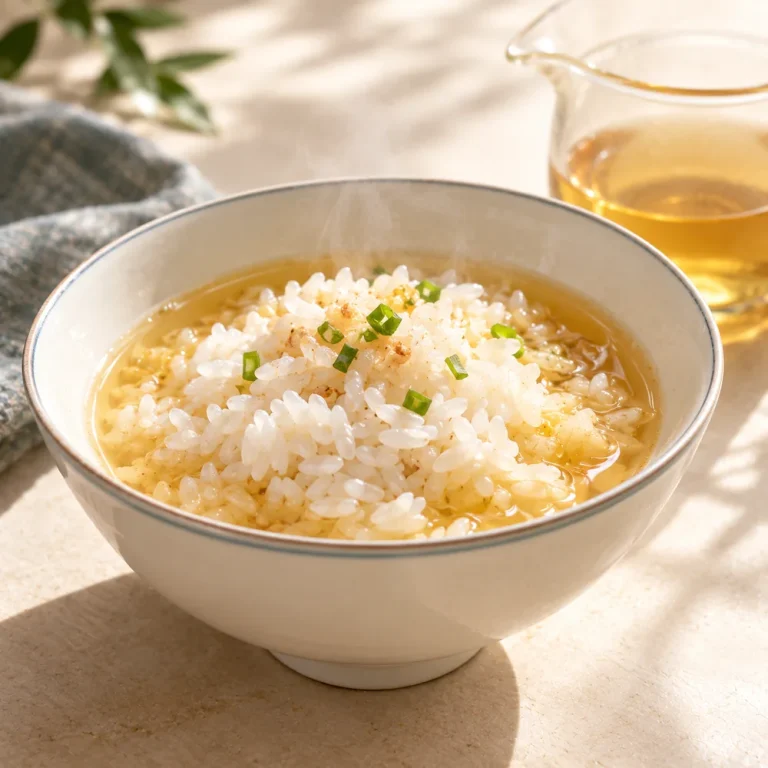
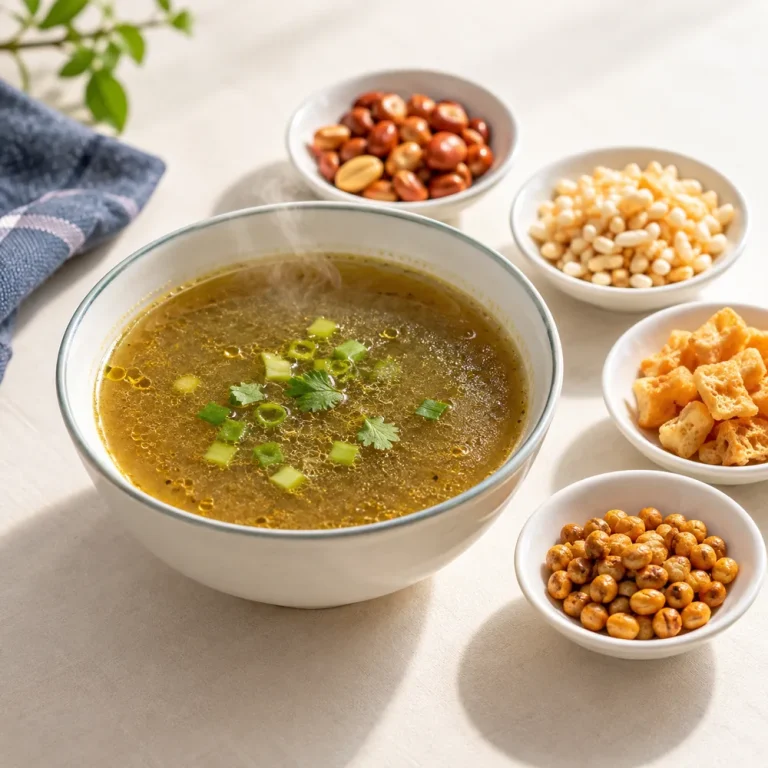
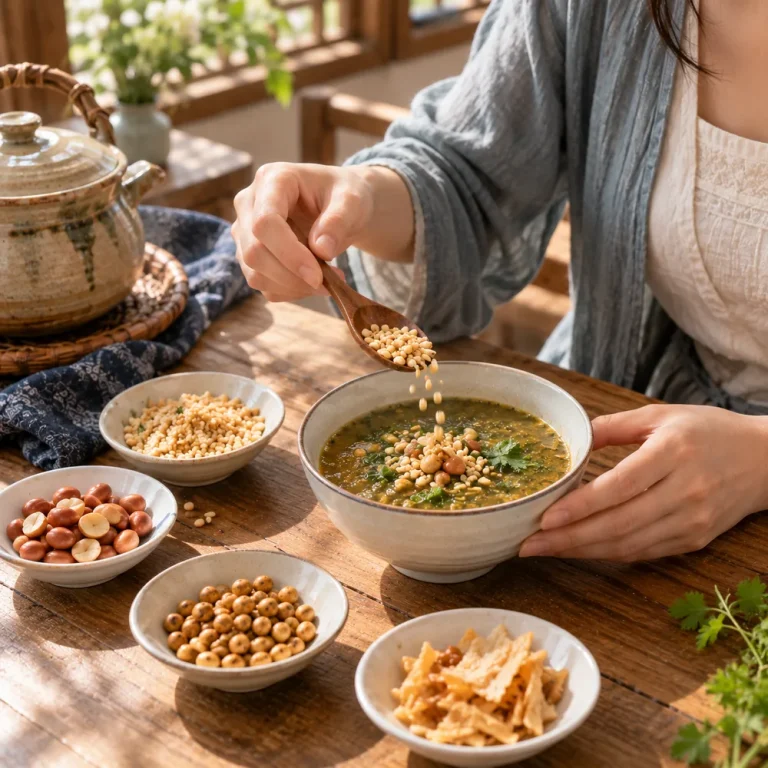
Strain the hot oil-tea soup into bowls and serve with fried rice, peanuts, glutinous-rice cakes and crisp snacks. Traditional hospitality may involve several successive bowls.
Season
All year
Best occasions
Breakfast · Festival · Home snack · Tea table · Other
Storage
Freshly pounded and freshly drunk is the traditional norm. Industrial oil-tea powders and concentrates belong to a different product system and their shelf life is not applied to freshly made Gongcheng Oil Tea.
Reheating
The tea soup can be reheated, but traditional practice more often continues by adding water and cooking another pot from the same base. This Generic page does not set a fixed reheating time.
Caffeine
Contains caffeine · Unquantified

Large-leaf green tea is pounded and simmered into the directly consumed oil-tea soup, so naturally occurring caffeine is present. Leaf dose, number of successive pots, water volume per pot and number of bowls consumed vary too much to calculate reliable milligrams per bowl. Traditional and modern versions often include peanuts, Sesame, soybeans or wheat-based crisp snacks and may involve Peanut, Sesame, Soy and wheat/gluten allergens, but none is universal across every version, so the Generic safety status remains not checked and should be verified against actual ingredients.
恭城油茶·场景图

Traditional Method

恭城油茶·过程图

How It Works

Gongcheng Oil Tea is more than a pot of salty tea. Pre-soaked green tea, ginger and garlic are first stir-fried in oil and repeatedly pounded so the leaves break down and their aroma and pungency release. Water is then added, the mixture is simmered and strained, and the hot tea is served with fried rice, peanuts, glutinous-rice cakes and Other solid accompaniments. It therefore sits between beverage, soup and tea-based meal.

Ingredients & Formula
Large-leaf green tea (oil-tea leaves)
Traditionally, tea from around Qingming and Guyu is favored; public sources do not provide one fixed gram weight.
Fresh ginger
Garlic
Cooking oil or lard
A 2025 heritage report specifies a small amount of lard in one traditional method; modern public versions also use cooking oil.
Boiling water
Used both to pre-soak the leaves and to simmer the tea after pounding.
Fine salt
Chopped scallion
Chopped cilantro
Fried rice or puffed rice
Peanuts
Common in traditional hospitality and modern shops, but not mandatory in every version.
Fried soybeans
Crisp snacks, paishan or glutinous-rice cakes
Combinations vary noticeably by household, festival and restaurant.
Method
  1. 1
    Pre-soak the tea leavesUse traditional large-leaf green tea or oil-tea leaves and soak them in a small amount of boiling water for about 5–10 minutes to soften storage smoke and part of the bitterness.
  2. 2
    Stir-fry and begin poundingHeat the oil-tea pot, add a small amount of oil, then add ginger, garlic and the soaked tea leaves. Stir-fry briefly while continuously rubbing and pounding with the oil-tea pestle.
  3. 3
    Pound until aromaticContinue stir-frying and pounding until the tea, ginger and garlic break down and release their aroma. Folk practice may use a yellow-green mashed-tea appearance at the bottom of the pot as one cue for moving to the next stage.
  4. 4
    Add water, simmer and seasonAdd boiling water after pounding, bring to a boil and simmer until flavorful, then season with salt.
  5. 5
    Strain into bowls and add accompanimentsStrain the hot tea into bowls. Add chopped scallion and cilantro if desired, and serve with fried rice, puffed rice, peanuts, fried soybeans, crisp snacks, paishan or glutinous-rice cakes according to household and occasion.

Tea Conversations

Tea lovers from around the world meet over a cup of tea.

Sign in or register to join the conversation. Your comment account is created automatically the first time you use a connected account.