Skip to content
Tea & Realm
English

Mongolian Pot Tea

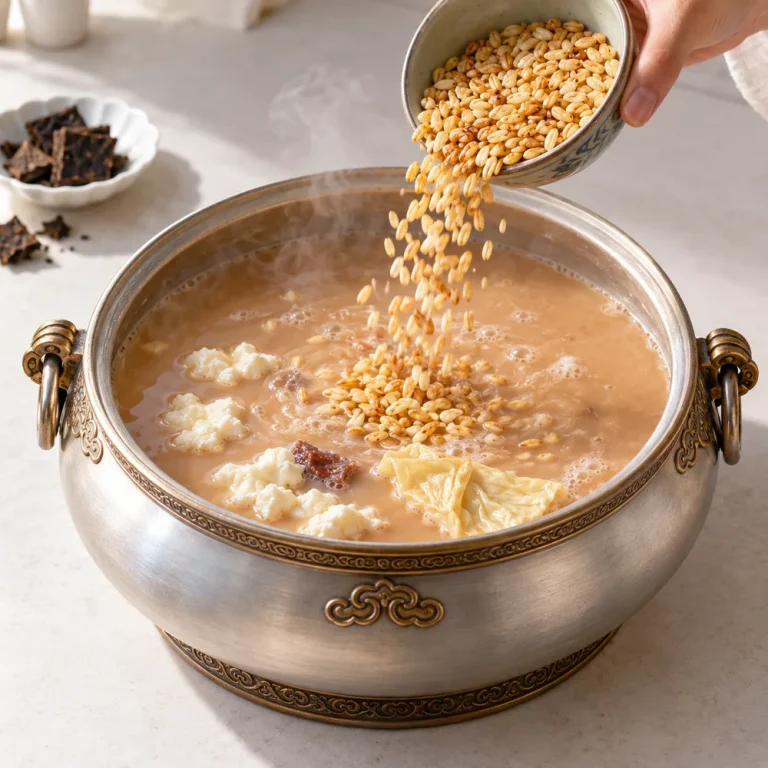
One pot of milk tea holds fried millet, dairy foods and dried meat—a whole grassland breakfast simmering together.

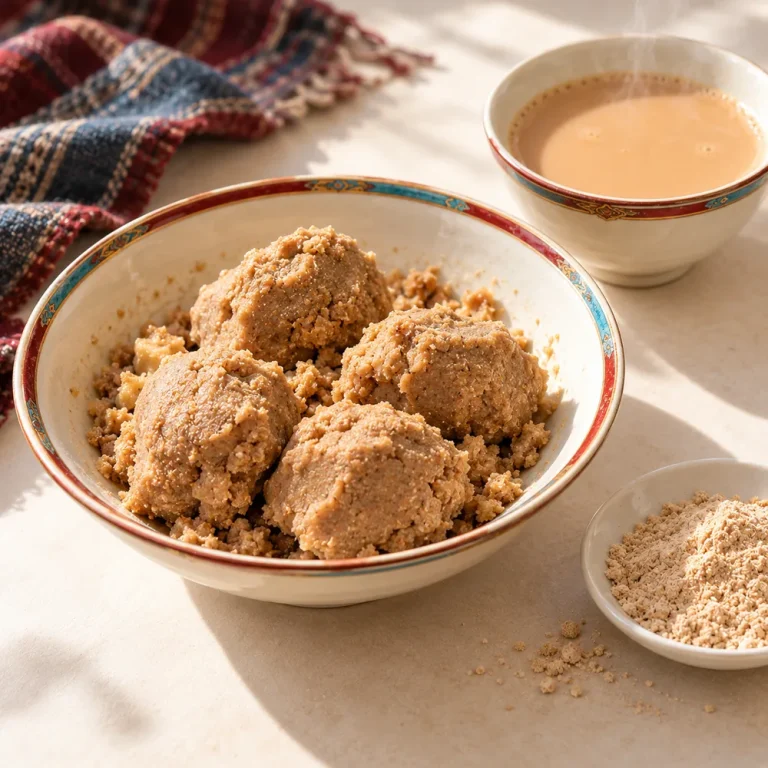
A traditional Mongolian tea food built on salted Milk tea made from brick tea, fresh Milk and salt, then enriched with fried millet, butter, Milk tofu, Milk skin, cheese, air-dried beef and Other solid foods. It is both a tea and a meal, important in grassland breakfast and hospitality.

Category
Tea Meals · Mongolian pot tea
Tea ingredient
Brick tea used as a traditional milk-tea base; Qingzhuan brick tea is common in some regions
Tea form
Tea liquor
Preparation
Simmer · Stir · Cook together in the pot

Tea in the Dish

Brick tea provides the pot's tea aroma, color and light astringency. Fresh Milk and butter turn it into a savory Milk-tea base that carries the combined aromas of fried millet, dairy foods and dried meat.

Tea ingredient
Brick tea used as a traditional Milk-tea base; Qingzhuan brick tea is common in some regions
Tea form
Tea liquor
Role of tea
Liquid base · Main flavor · Supporting aroma
How the tea is used
The traditional main route is to break brick tea and simmer it in water to make tea liquor, then add fresh cow's or sheep's Milk and salt to form salted Milk tea. Fried millet, butter, Milk tofu, Milk skin, cheese and air-dried meat are then added and cooked together.

Flavor & Texture

Salted Milk tea forms the base, with pronounced dairy richness and butter. Fried millet adds grain aroma, while air-dried meat contributes savoriness and chew. Brick tea provides the underlying light astringency and tea fragrance.

Aroma
Brick-tea aroma · Milky aroma · Butter aroma · Toasted millet aroma · Meaty aroma
Taste
Savory-salty · Milky · Tea character · Meaty and savory
Texture
Rich · Soft and starchy · Crisp turning soft · Chewy

Origin & Culture

Origin & Story

Mongolian Pot Tea is a one-pot traditional tea meal found across Inner Mongolian grassland communities. Unlike basic Mongolian salted Milk tea, pot tea begins with a prepared salted Milk-tea base and continues cooking with solid foods such as fried millet, butter, Milk tofu, Milk skin, cheese and air-dried meat.

Historical Development

Mongolian tea customs have long centered on Milk tea. Inner Mongolian heritage materials describe Milk tea as one of the Mongolian people's major traditional foods, and breakfast commonly combines it with meat, dairy foods and fried millet. Government materials from East Ujimqin Banner, Guyang County and Chifeng further document pot tea as a traditional route that adds dairy foods, fried millet and meat to the Milk-tea base.

Cultural Context

Mongolian Pot Tea is more than a beverage; it is part of grassland breakfast and hospitality. It brings Milk tea, dairy foods, grain and meat into one shared pot, showing how tea functions as both drink and staple-food framework in Mongolian everyday life.

Regional Customs

Regional sequences differ. Ujimqin and Guyang materials generally make the Milk tea first and then add foods, while Chifeng sources record melting butter and frying millet, Milk skin and dried beef before adding pre-brewed brick tea and Milk.

Serving Notes

Serving temperature
Hot
Serving style
Keep the copper or tea pot hot and eat as it cooks, ladling the Milk tea into bowls while also eating the fried millet, dairy foods and dried meat.
Season
All year
Best occasions
Breakfast · Home snack · Winter hot serving · Tea table · Other
Storage
Traditional pot tea is cooked and eaten fresh while kept warm. No single storage period is set across regions.
Reheating
The pot can remain on heat to stay hot, but this Generic page does not set one fixed reheating time or number of reheats.
Allergens
Milk
Caffeine
Contains caffeine · Unquantified

Fresh Milk, butter or ghee, Milk tofu, Milk skin and cheese are all dairy-derived, so Milk is a core traditional allergen. Pot tea is made with real brick tea and therefore contains naturally occurring caffeine, but no reliable per-serving milligram value can be calculated.
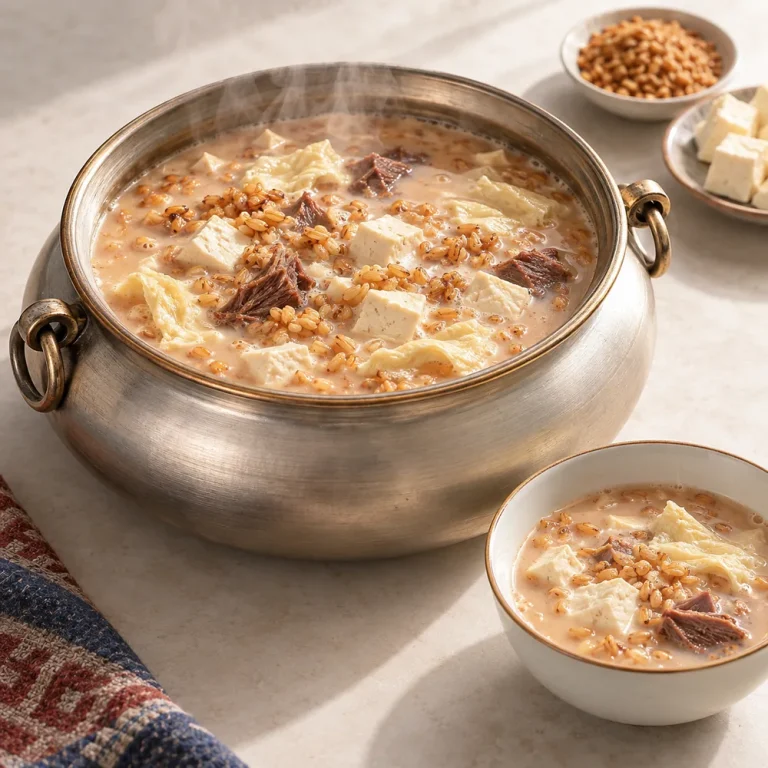
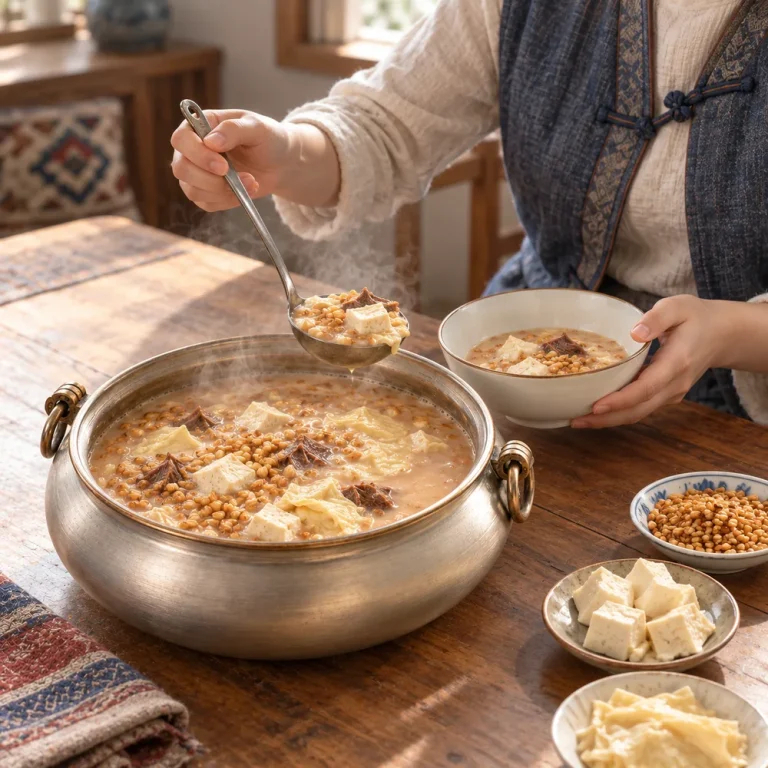
蒙古锅茶·场景图

Traditional Method

蒙古锅茶·过程图

How It Works

Mongolian Pot Tea turns traditional salted Milk tea into a complete meal. Brick tea provides the tea base, fresh Milk and salt create the salted Milk tea, and fried millet, Milk tofu, Milk skin, cheese, butter and air-dried meat extend a drink into a hot breakfast or shared meal that can be both sipped and eaten directly from the pot.

Ingredients & Formula
Brick tea
Traditionally broken into pieces before simmering; Qingzhuan brick tea is common in some present-day Xilingol areas.
Water
Fresh cow's milk or sheep's milk
The core dairy ingredient of the traditional milk-tea base.
Salt
The traditional core seasoning of salted milk tea; adjusted to taste.
Butter or ghee
Common in pot-tea descriptions from several regions; exact use and quantity vary.
Fried millet
Highly common in grassland breakfast and pot tea, usually made from roasted broomcorn millet.
Milk tofu
Milk skin
Cheese
Air-dried beef or beef jerky
Common in official pot-tea materials from East Ujimqin, Guyang and Chifeng.
Method
  1. 1
    Simmer the brick teaBreak the brick tea into pieces and simmer it in water until the tea fully infuses. According to household practice, the leaves may be strained out or left to continue simmering.
  2. 2
    Make the salted milk-tea baseAdd fresh cow's or sheep's Milk to the brick-tea liquor, season with salt and continue heating while stirring until the tea and Milk are fully combined.
  3. 3
    Add the pot-tea foodsAdd some combination of butter or ghee, fried millet, Milk tofu, Milk skin, cheese and air-dried beef. Stir repeatedly and continue cooking until the aromas merge.
  4. 4
    Keep warm and eat as you goLadle the hot pot tea into bowls, or keep the pot warm and continue eating from it. More fried millet, Milk tofu, butter or Other foods may be added directly to the bowl.

Tea Conversations

Tea lovers from around the world meet over a cup of tea.

Sign in or register to join the conversation. Your comment account is created automatically the first time you use a connected account.