Skip to content
Tea & Realm
English

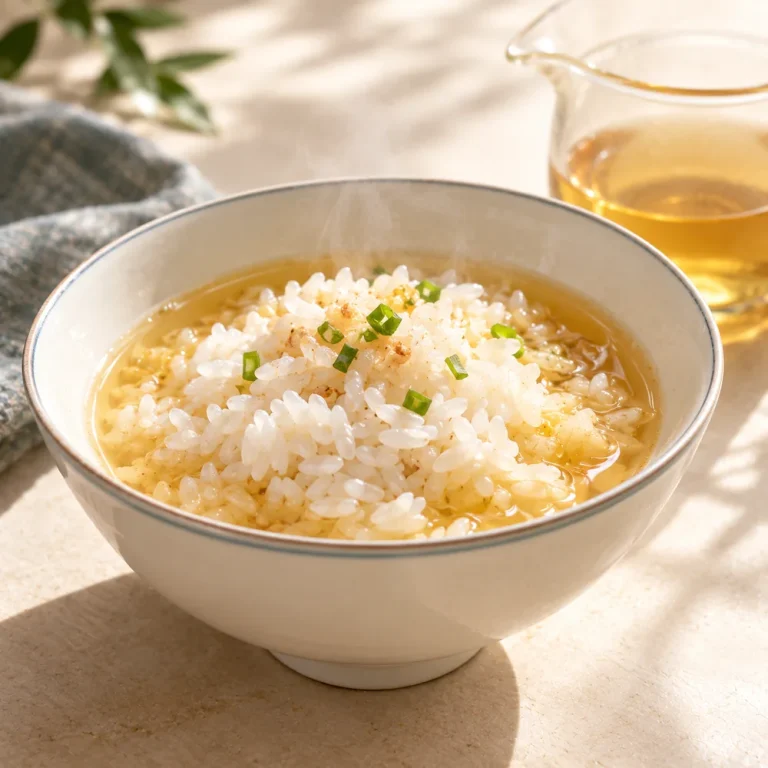
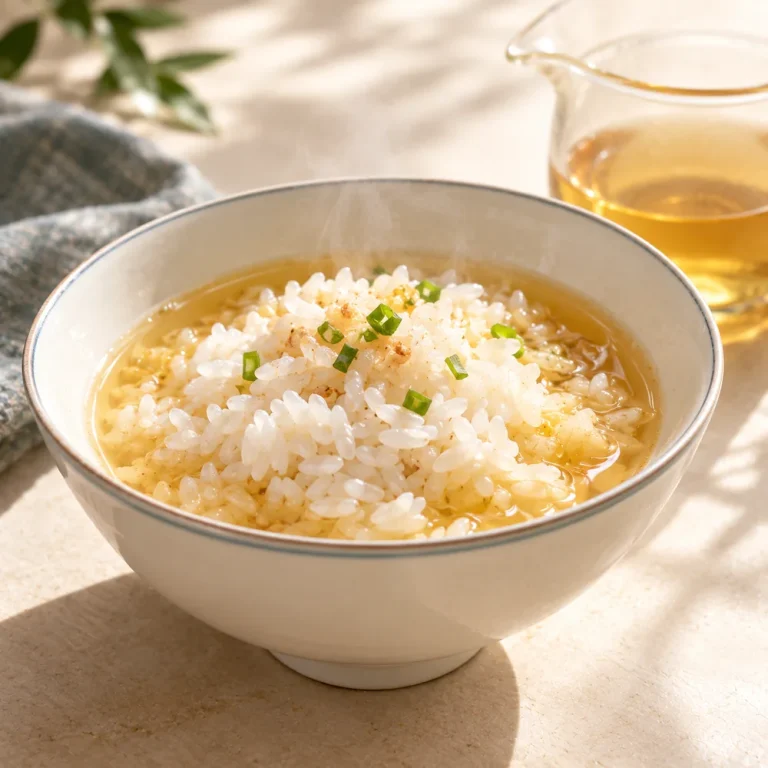
Chinese Tea-Soaked Rice

A pot of hot tea poured into a bowl of rice—the quietest kind of Jiangnan home cooking.

A long-standing home-style tea food found in Jiangnan and Other parts of China. Hot tea is poured directly over already cooked rice so the tea aroma moves between the grains, with pickles, fermented black beans, fermented bean curd, salted duck Egg or Other salty accompaniments served alongside. Historical texts also call it cha tao fan.

Category
Tea Meals · Chinese tea-soaked rice
Tea ingredient
Tea liquor; tea type varies by region and household, with historical Jiangnan sources mentioning Jie tea and modern Nanjing memories mentioning Longjing tea dust
Tea form
Tea liquor
Preparation
Brew · Infuse

Tea in the Dish

Tea liquor adds clean aroma, slight bitterness and moisture to the rice, loosening dry or cooled grains while forming a light home-style flavor with pickles, fermented black beans, fermented bean curd and Other salty accompaniments.

Tea ingredient
Tea liquor; tea type varies by region and household, with historical Jiangnan sources mentioning Jie tea and modern Nanjing memories mentioning Longjing tea dust
Tea form
Tea liquor
Role of tea
Liquid base · Main flavor · Supporting aroma
How the tea is used
Brew hot tea according to the household's ordinary method, then pour it directly over already cooked rice. Tea does not take part in the original cooking of the raw rice.

Flavor & Texture

Rice aroma and clear tea fragrance form the main profile, restrained and mild. Pickles, fermented black beans, fermented bean curd or salted duck Egg add a little salt and savoriness, giving more depth to the otherwise delicate rice-and-tea flavor.

Aroma
Tea aroma · Rice aroma
Taste
Light · Tea character · Savory-salty
Texture
Distinct rice grains · Warm and moist

Origin & Culture

Origin & Story

Chinese Tea-Soaked Rice, or cha tao fan, is a long-standing home-style way of eating in Jiangnan and Other Chinese regions, not a “tea + rice” combination unique to modern Japanese ochazuke. In the 17th-century Yingmei'an Yiyu, Mao Xiang directly records Dong Xiaowan using Jie tea to warm-rinse rice; Dream of the Red Chamber later mentions rice with tea twice. Modern Nanjing and Songjiang local materials continue to describe tea-soaked rice or cha tao fan as household and summer food. The evidence securely establishes a traditional identity but is insufficient to promote common claims that it already existed in the Six Dynasties to independently verified historical fact.
Historical Development

Volume 3 of Yingmei'an Yiyu records Dong Xiaowan's restrained eating habits, saying that at meals she used a small pot of Jie tea to warm-rinse rice and ate it with water vegetables and fermented black beans. This is among the earliest direct textual evidence verified in this research round. The Nanjing Local Chronicles Office, citing Nanjing historical materials, notes that chapters 49 and 16 of Dream of the Red Chamber both mention Baoyu eating rice with tea and explains tea-soaked rice as an old Nanjing custom, including the local pairing of tea-soaked rice with salted duck Egg. Songjiang materials preserve Shi Zhecun's account in Yunjian Yu Xiaolu of summer evening meals in which rice was soaked with tea, called cha tao fan, and eaten with preserved small eggplant. Together these sources show continuous textual and lived evidence for tea-soaked rice in Jiangnan home food from the Ming–Qing period onward.

Cultural Context

Chinese tea-soaked rice reflects a home-cooking logic of saving rice, eating simply and using mild accompaniments. Cooked rice does not need to be made into porridge again; hot tea simply moistens it, and a little salty food completes the meal. Nanjing and Songjiang materials particularly emphasize summer and ordinary household settings, while the Dong Xiaowan record shows the practice also appearing in literati domestic life. Modern Chinese often associate “tea over rice” with Japanese ochazuke, but this page treats the Chinese cha-tao-rice tradition as canonical and mentions Japanese tea-over-rice only as a related cultural branch.

Regional Customs

Old Nanjing practice could pair the dish with salted duck Egg or dried lettuce; Songjiang summer meals could include preserved small eggplant called nieluosu; Yingmei'an Yiyu records Dong Xiaowan using water vegetables and fermented black beans. Families may also use fermented bean curd or pickles. Accompaniments vary far more than the tea-and-rice core and should not be standardized nationally.

Serving Notes

Serving temperature
Warm
Serving style
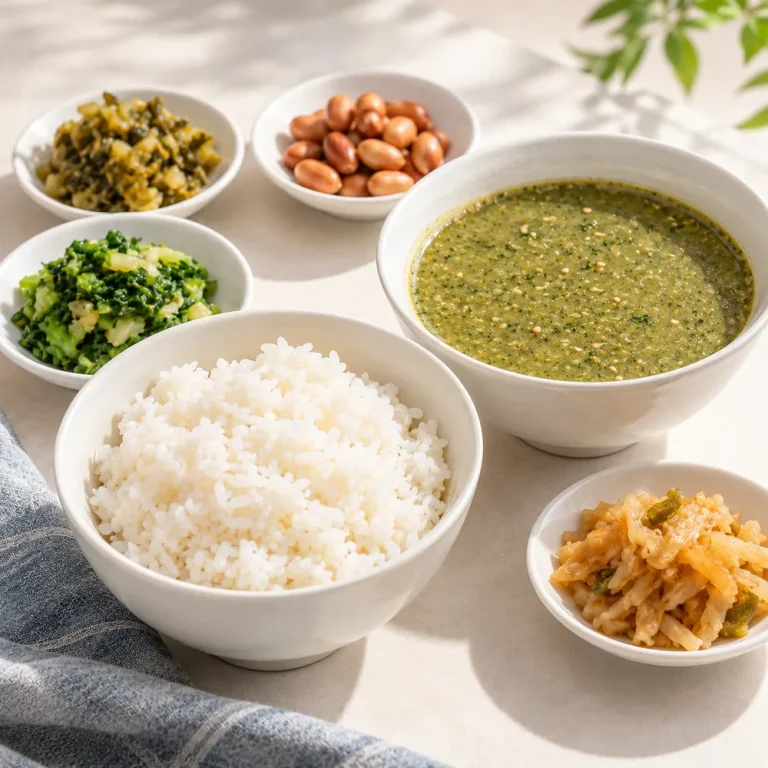
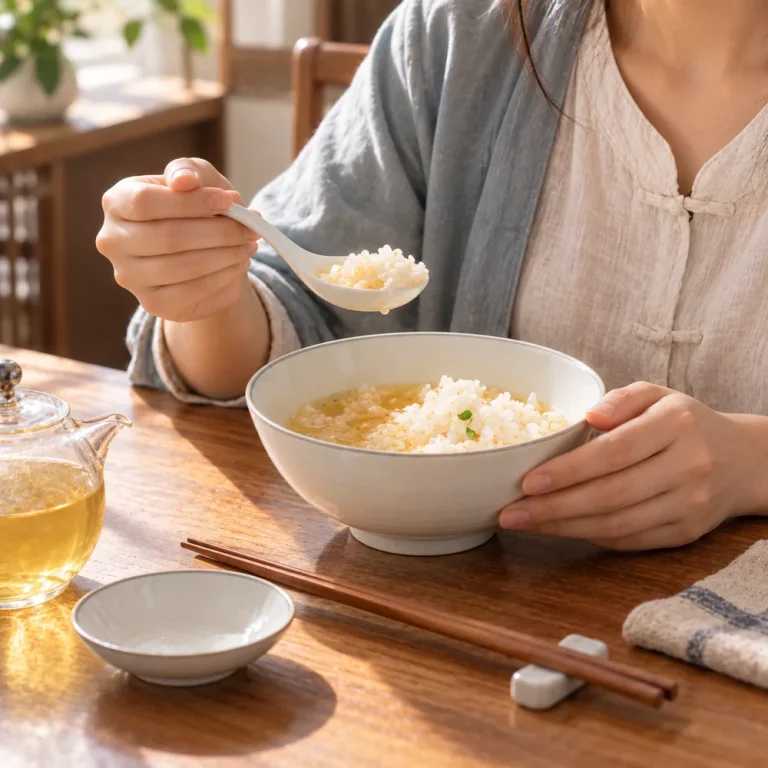
Place cooked rice in a bowl, pour hot tea directly over it and eat immediately with a small amount of pickles or another salty accompaniment.
Season
Common in summer; suitable year-round
Best occasions
Breakfast · Home snack · Other
Storage
Tea-soaked rice itself is best assembled and eaten immediately. Rice and side dishes should be stored separately according to their own food-safety requirements.
Reheating
Traditionally, hot tea is used directly to warm already cooked rice, so this Generic page does not define a separate repeated-reheating protocol.
Caffeine
Contains caffeine · Unquantified

Real tea liquor goes directly into the rice, so tea-derived caffeine is present. Tea type, leaf dose, brewing strength and the amount poured into each bowl vary, so caffeine cannot be quantified reliably per bowl. The core rice-and-tea combination does not inherently require major schema allergens, but traditional accompaniments may contain Soy, Egg, wheat/gluten or Other ingredients, so the Generic record keeps allergen status as not checked.

茶泡饭·场景图

Traditional Method

茶泡饭·过程图

How It Works

The technique is extremely simple but its boundary is clear: the rice is cooked first and the tea is added only at serving time. Hot tea moistens and perfumes the rice without recooking it into porridge, while a small salty accompaniment gives contrast to the otherwise mild rice-and-tea combination. Its character comes precisely from keeping tea and rice separate until the moment of eating.

Ingredients & Formula
Cooked rice
Freshly cooked or cooled rice may be used. Traditional home use often includes leftover rice, but that is not mandatory.
Hot tea liquor
Tea type varies by household and period; historical materials mention Jie tea, while modern Nanjing sources mention Longjing tea dust.
Pickled or preserved vegetables
Pickled accompaniments appear in Nanjing, Songjiang and other local traditions.
Fermented black beans or fermented bean curd
The memoir Yingmei'an Yiyu records Dong Xiaowan eating water vegetables and fermented black beans; later home versions also commonly use fermented bean curd.
Salted duck egg
Nanjing local-history materials preserve the old saying of eating tea-soaked rice with salted duck egg.
Method
  1. 1
    Serve cooked ricePlace already cooked rice in a bowl. The rice may be hot or cooled; when cold rice is used, the hot tea also serves to warm and moisten it.
  2. 2
    Brew hot teaBrew hot tea in the household's usual way. Tea type varies by region, period and family, so there is no universal requirement for green tea or famous tea.
  3. 3
    Pour tea over the ricePour the hot tea directly over the rice so the grains loosen, warm and take on tea aroma, then eat immediately.
  4. 4
    Add a small salty accompanimentAdd a small amount of pickled vegetables, preserved vegetables, fermented black beans, fermented bean curd, salted duck Egg or Other salty accompaniments according to regional and household habit.

Tea Conversations

Tea lovers from around the world meet over a cup of tea.

Sign in or register to join the conversation. Your comment account is created automatically the first time you use a connected account.