Yellow tea shares fixation as an important starting point with green tea, but develops its own color, aroma and taste through menhuang, or controlled yellowing. From tender bud teas to more mature leaf material, yellow bud tea, small-leaf yellow tea and large-leaf yellow tea show distinct forms and flavor depths.
Begin with Mellow Warmth: Understanding Yellow Tea
After fixation comes menhuang, moving yellow tea from brisk freshness toward a softer, rounder character.
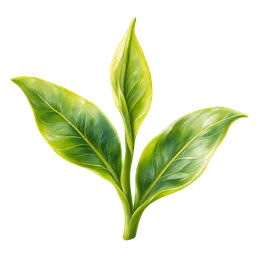
Begin with a single leaf
It begins where green tea begins then takes another path through menhuang
Yellow tea and green tea begin in similar fashion: the fresh leaves first undergo fixation. Yellow tea then enters menhuang, a controlled yellowing stage in which the fixed buds and leaves continue to change slowly. Green tones gradually shift toward yellow-green and tender yellow, raw green notes diminish, and the liquor becomes softer and rounder. Different levels of leaf tenderness and product tradition create yellow bud tea, small-leaf yellow tea and large-leaf yellow tea, so yellow tea is not simply “green tea that turned yellow.”
Menhuang sets the direction
Menhuang is yellow tea’s most distinctive processing logic. Under controlled warmth and humidity, fixed leaves change slowly, moving color, aroma and taste away from green tea’s sharper freshness toward a softer, more mellow profile.
Leaf tenderness creates different tiers
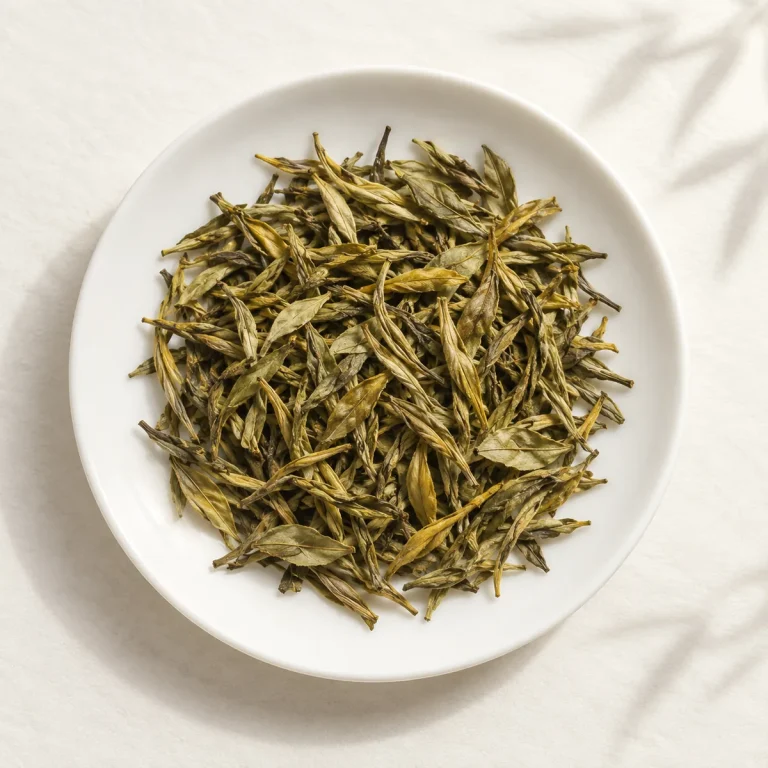
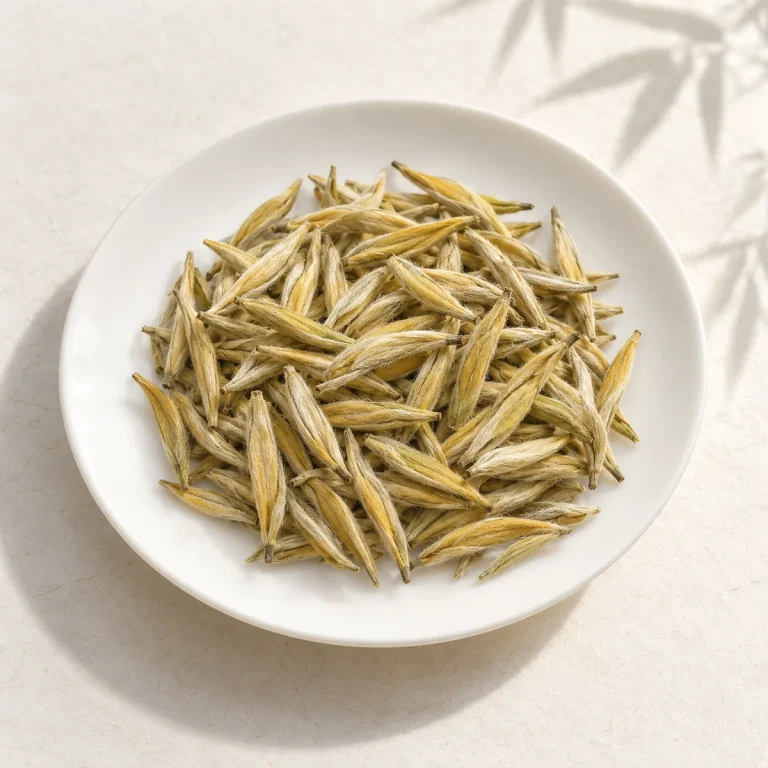
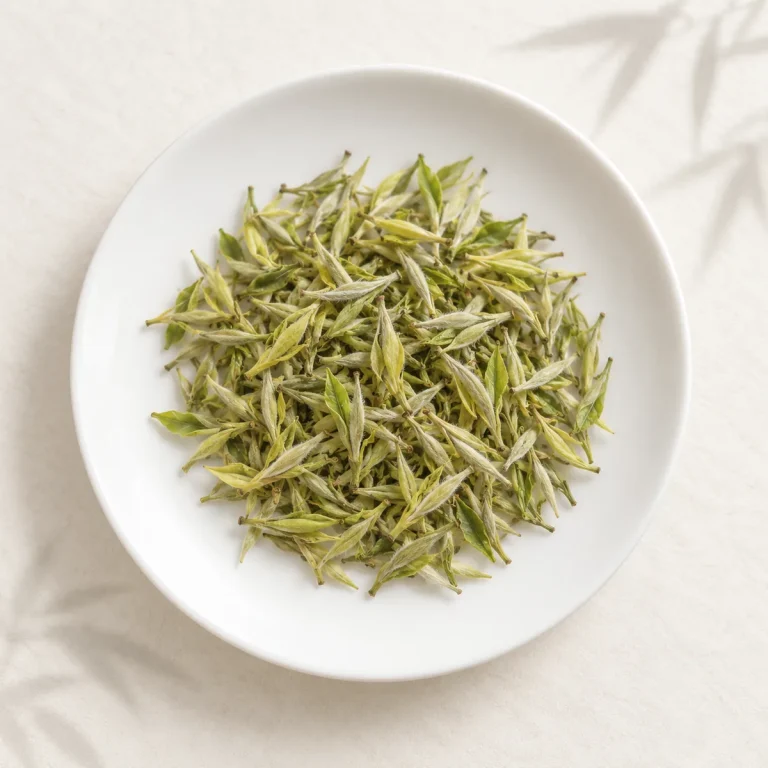
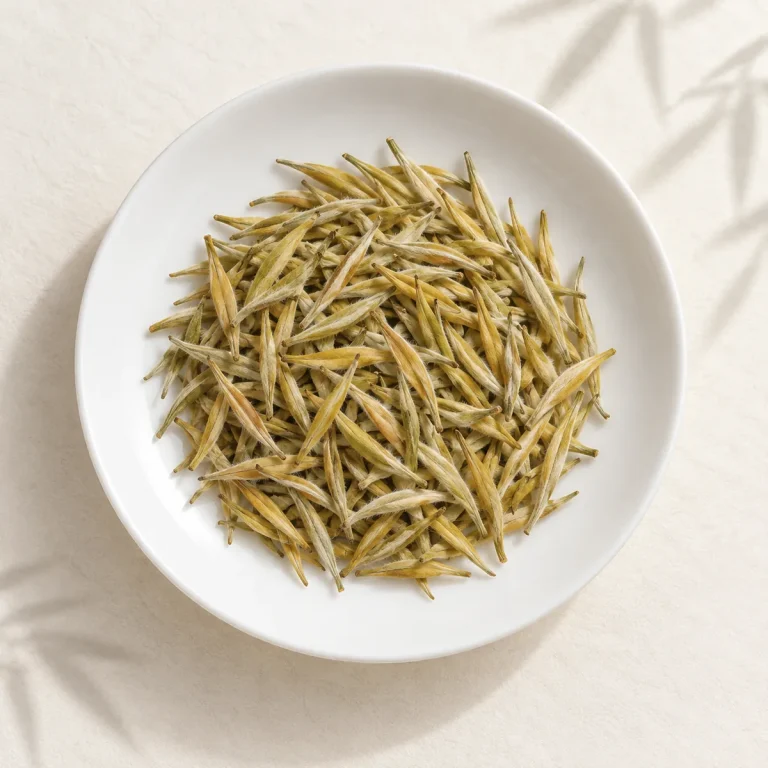
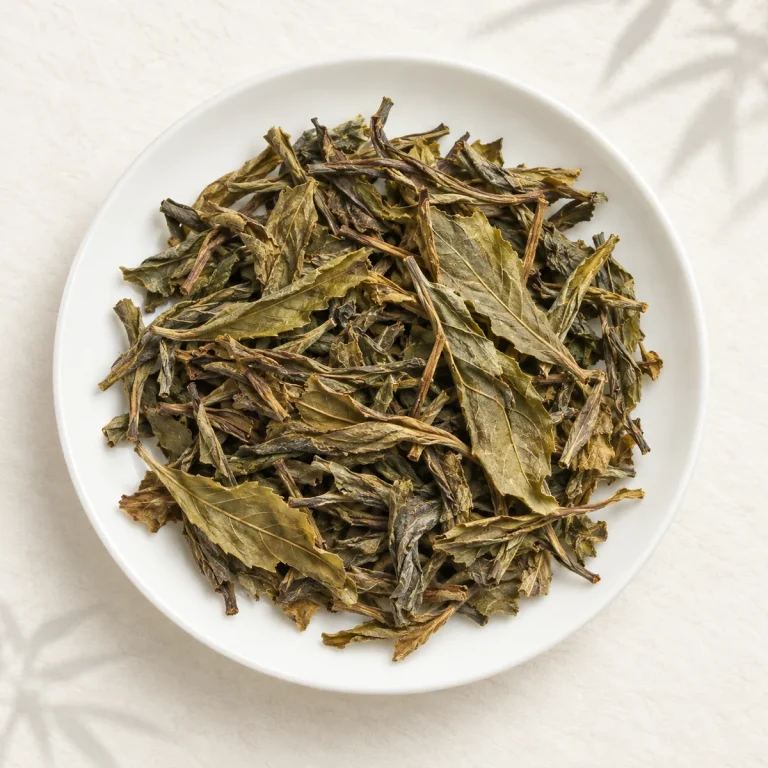
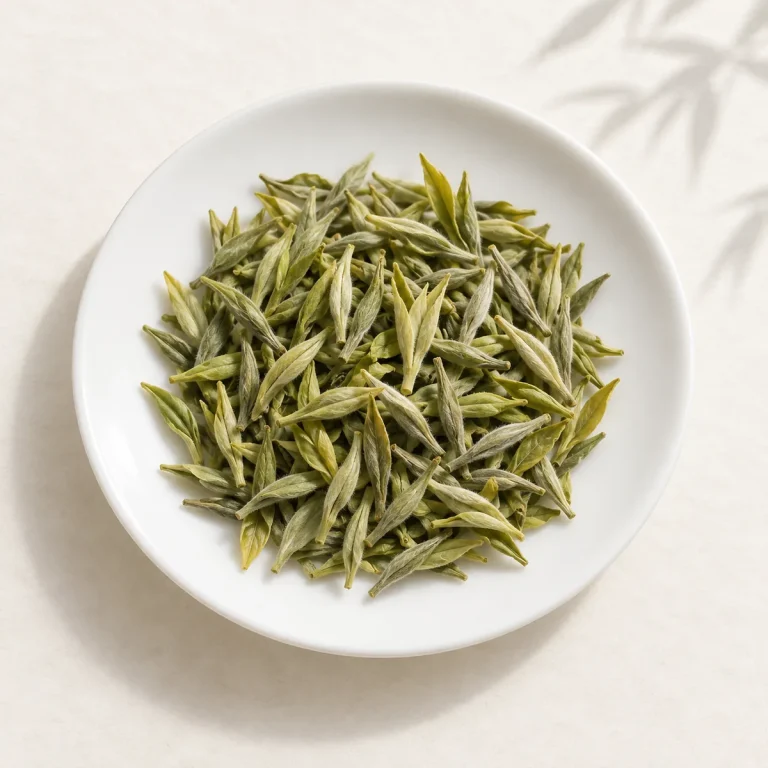
Yellow bud tea, small-leaf yellow tea and large-leaf yellow tea use raw material of different maturity. Tender buds, bud-and-leaf sets and more mature leaves produce different forms, mouthfeel and aromatic styles.
Bright yellow is not staleness
The yellow-green dry leaf and bright yellow liquor of good yellow tea result from the raw material and menhuang process. They are not simply signs of tea that has aged too long or lost freshness through uncontrolled oxidation.
Each region has its own tradition
Yellow-tea areas such as Mengding Mountain, Huoshan and the Dongting Lake region have their own raw materials, environments and menhuang methods. The production map is smaller than that of green tea, but regional styles remain distinct.
Classic Yellow Teas, Each with Its Own Mellow Character
Begin with well-known teas to see how yellow tea changes in form, aroma, taste and terroir.
Menhuang softens the leaf’s green edge, moving the cup from brisk freshness toward rounder, gentler flavor.
Dry Leaf Form
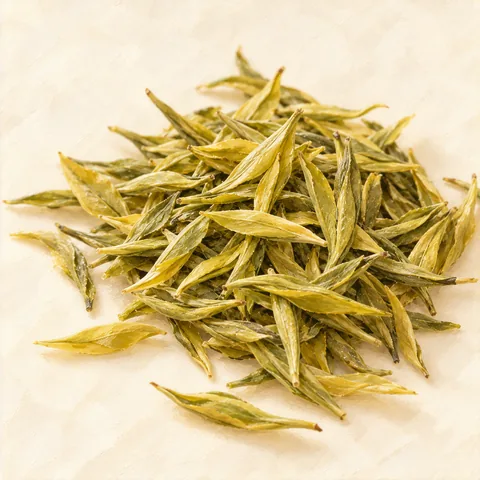
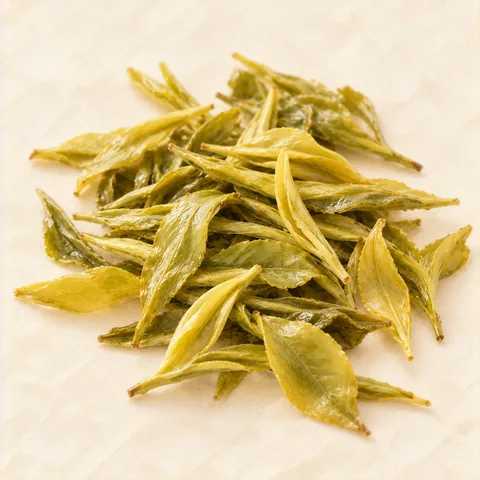
Material ranges from tender buds to more mature bud-and-leaf sets, commonly showing yellow-green, tender yellow-green or lightly golden tones.
Liquor Color
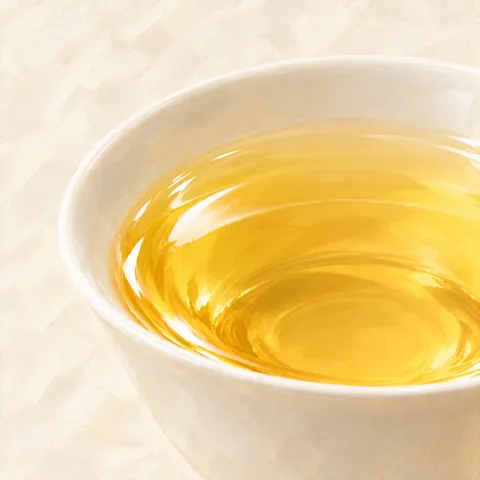
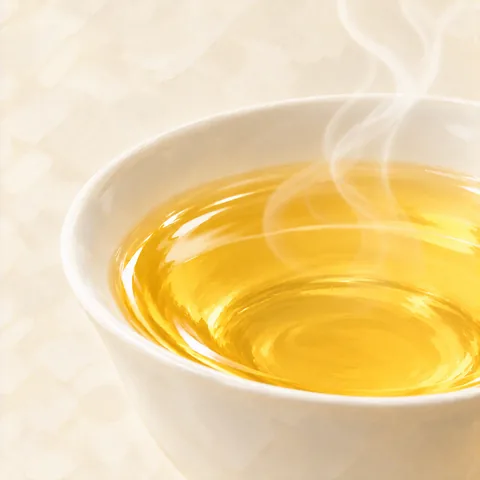
Bright yellow, pale apricot and light golden tones are common, typically clear and luminous rather than dark or heavy.
Aroma
Clean, sweet and gently mature aromas are common. Compared with green tea, yellow tea often feels less sharply green and somewhat warmer in tone.
Taste
Fresh-mellow, soft and gently sweet are common impressions. Tender bud teas and more mature leaf material differ noticeably in body.
Infused Leaf
The infused leaf is often tender yellow-green to yellow-green, soft and intact, with color varying according to the degree and method of menhuang.
Sense of Origin
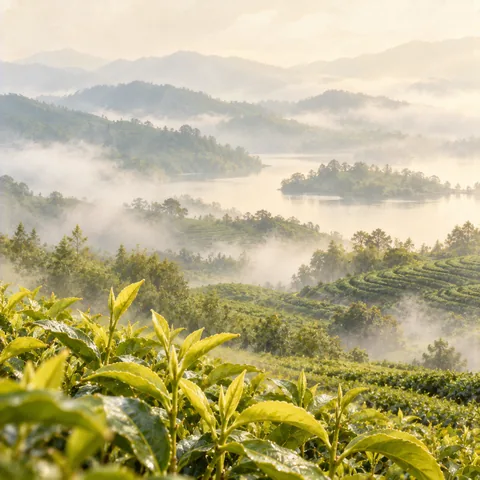
Humid mountain and lakeside environments around Mengding, Huoshan and Dongting Lake interact with local menhuang traditions to create regional differences in yellow tea.
Inside the Leaf: Where Flavor Comes From
Menhuang changes the balance created after fixation, gradually shifting the cup toward yellow brightness, mellow freshness and softer texture.
Yellow tea shares fixation as a starting point with green tea, but menhuang sends the two categories in different directions. Under the combined effects of warmth, humidity and time, catechins, amino acids, pigments and volatile compounds can continue to change, softening the sharper green character of the fixed leaf.The key to yellow-tea chemistry is not one supposedly unique “yellow tea compound” but how menhuang reshapes relationships among existing components. Studies show that menhuang duration and environment can influence catechins, some amino acids and multiple key aroma compounds.
Catechins & Their Transformations
Yellow tea retains substantial catechins after fixation, but they continue to transform to varying degrees during menhuang. Research often links these changes with reduced astringency and a softer liquor, though the extent depends on raw material and menhuang conditions.
Free Amino Acids
Theanine and other free amino acids continue to contribute freshness, sweetness and mellowness. Different amino acids may change in different ways during menhuang, so yellow tea’s softer character is not simply the result of “less bitterness” but of a broader rebalancing of taste compounds.
Caffeine
Caffeine still contributes to bitterness and stimulation in yellow tea, working together with catechins, amino acids and sugars to shape the overall cup. Different menhuang conditions and processing routes can shift the balance among bitterness, freshness and sweetness.
Pigments & Leaf-Color Change
Chlorophyll and other pigments continue to change during menhuang and later processing, shifting dry leaf, liquor and infused leaf from greener tones toward yellow-green and tender yellow. Yellow tea’s “yellow” is therefore a processing-derived quality feature rather than simple loss of freshness in storage.
Volatile Aroma Compounds
Menhuang also reshapes the aroma system. Floral, sweet, mellow and sometimes grain- or nut-like notes can emerge through changes in multiple volatile compounds, while temperature, humidity and menhuang duration influence the formation and release of key aroma substances.
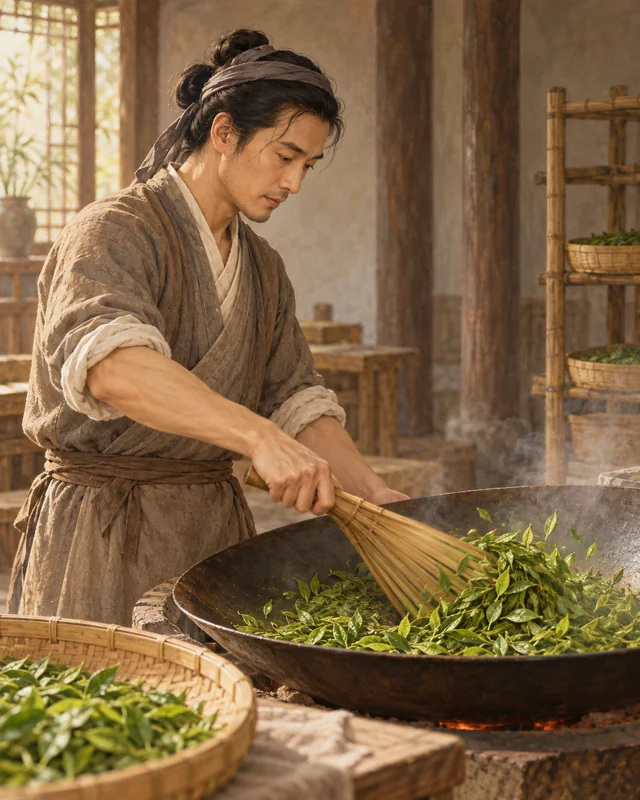
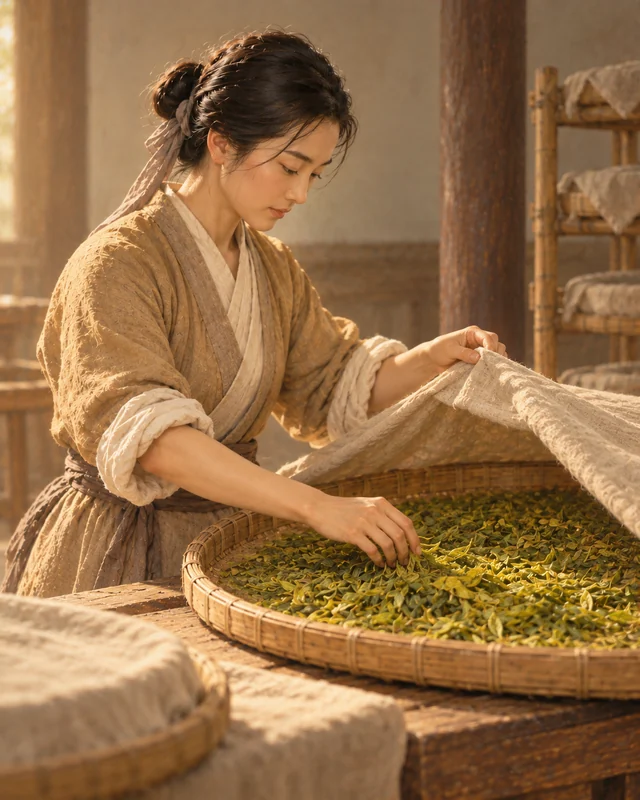
Yellow tea begins with fresh leaves and uses fixation as an important first step. High heat rapidly suppresses enzymes involved in oxidation, removes part of the moisture, softens the leaf and reduces raw green odor. In this respect, yellow tea begins much like green tea, but the later menhuang stage sends the two categories toward different color, aroma and taste profiles.
02
Rolling
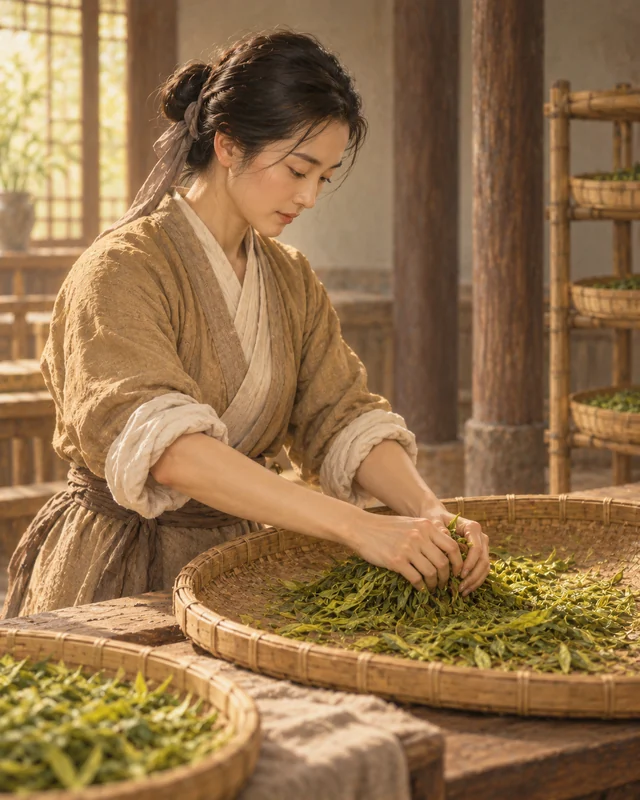
After fixation, the leaves may be rolled according to the product and process, allowing buds and leaves to curl or tighten moderately while redistributing moisture and soluble substances. Yellow bud tea, small-leaf yellow tea and large-leaf yellow tea differ clearly in raw-material maturity and processing, so the degree of rolling is not uniform; tender bud teas may be handled very lightly, while more mature leaf material may require more shaping.
03
Menhuang (Controlled Yellowing)
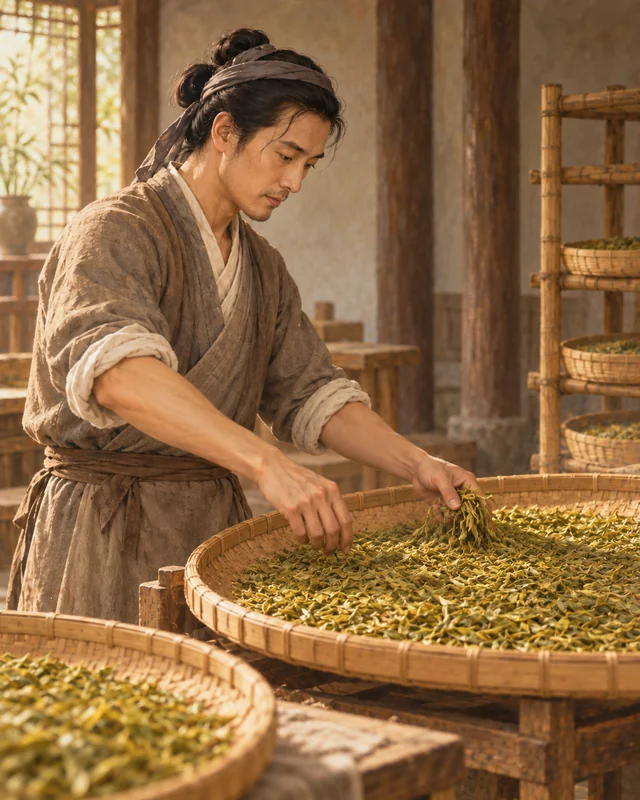
Menhuang is the defining processing stage of yellow tea. Under controlled temperature, humidity and time, the tea may be gently piled, wrapped or otherwise held in a suitable environment so that the fixed leaves continue to change slowly. As menhuang progresses, green tones move toward yellow-green and tender yellow, raw green notes diminish, and the taste becomes rounder and mellower.
Menhuang may occur at different points in the processing sequence depending on the yellow tea, and some products undergo it more than once. It is therefore better understood as a shared processing logic than as one single standardized operation.
04
Drying
Once menhuang reaches the desired point, further drying reduces moisture and stabilizes the color, aroma and taste already formed. Some yellow teas alternate initial drying, additional menhuang, re-drying or resting stages so that “yellowing” and “drying” work together repeatedly. Only after these stages does the tea gradually settle into the yellow-green, bright and mellow style associated with yellow tea.
Fixation, rolling, menhuang and drying form the basic process backbone of yellow tea, with menhuang as the most distinctive step. Yellow bud tea, small-leaf yellow tea and large-leaf yellow tea may differ in raw-material maturity, rolling intensity, timing of menhuang and drying sequence, so yellow tea does not have one universal fixed parameter set.
Different Landscapes, Different Yellow-Tea Origins
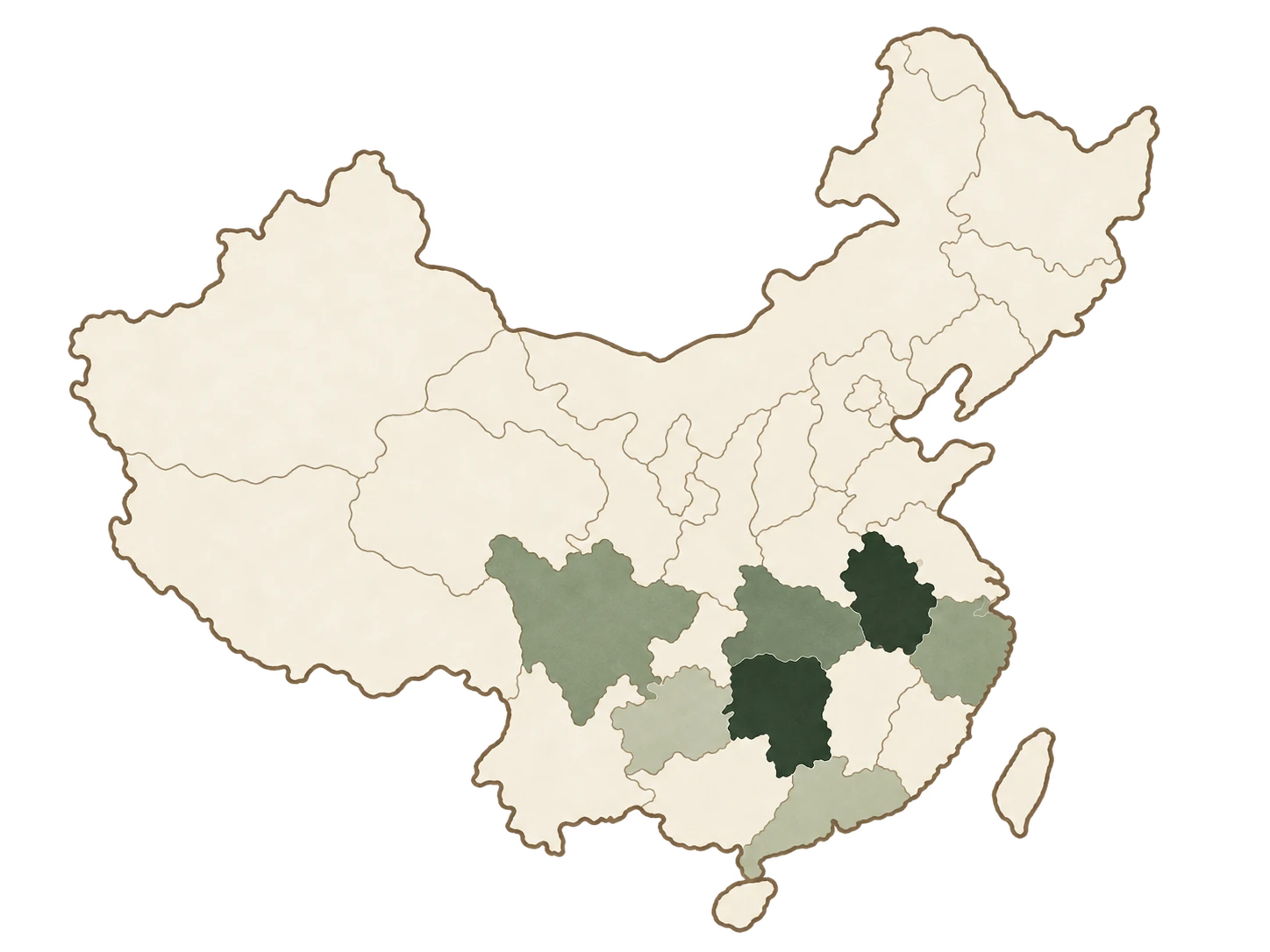
Yellow tea is geographically concentrated, yet Dongting Lake, the Dabie Mountains and Mengding Mountain preserve distinctive menhuang traditions.
Core Regions
Major Regions
Traditional & Extended Regions
Core Regions
01Hunan
Dongting Lake preserves classic yellow-tea traditions
Yueyang and the Dongting Lake area form one of China’s most recognizable traditional yellow-tea regions. Both delicate bud teas and more mature leaf material are used, giving Hunan yellow tea a broad range from refined to full-bodied.
02Anhui
Huoshan preserves both yellow bud and large-leaf traditions
Huoshan in the Dabie Mountains of western Anhui maintains both delicate yellow bud tea and mature large-leaf yellow tea. Within one region, differences in leaf maturity, rolling and menhuang create strikingly different styles.
Other Important Tea Regions
Sichuan · Hubei · Zhejiang · Guangdong · Guizhou
Mengding Mountain in Sichuan, western Hubei and Mogan Mountain in Zhejiang continue distinctive yellow-tea traditions; Guangdong and Guizhou represent more peripheral local survivals and modern extensions.
Yellow tea is much more geographically concentrated than green tea. The Dongting Lake area of Hunan and Huoshan in Anhui form the strongest traditional cores, while Mengding Mountain in Sichuan, Hubei and Zhejiang preserve distinctive regional branches. The map is an editorial province-level overview.
Balanced Water and Heat, a Better Cup
Use gentler water for tender yellow buds and more heat and strength for mature yellow leaves.
01Water
Clean and odor-free; low-mineral water helps preserve delicate aroma.
Tender yellow teas especially benefit from softer water, which is less likely to mask gentle sweetness, mellow freshness and bright liquor color.
02Teaware
Use glass or white porcelain gaiwan for tender bud teas; mature leaf material can also suit a pot.
Yellow bud tea suits vessels that show off the buds and bright liquor, while large-leaf yellow tea can be brewed in a gaiwan, larger cup or teapot.
03Tea-to-Water Ratio
For tender yellow tea, begin around 1:50; mature leaf material can move toward about 1:30.
Internal variation is substantial. Beigang Maojian and Huoshan Huangya, for example, use about 3 g / 150 mL in this site’s data, while Huoshan Huangdacha uses about 5 g / 150 mL as a daily starting point.
04Water Temperature
Begin tender yellow teas around 80–85°C; mature large-leaf yellow tea can move toward about 90–95°C.
This site’s data uses 80–85°C for Huoshan Huangya, while Huoshan Huangdacha—with larger leaves, stems, fuller taste and higher-fire character—can take 90–95°C.
05Steeping
Avoid over-steeping tender tea; mature leaf material can take somewhat longer infusions.
For tender buds and leaves, cup brewing around 2–3 minutes or gaiwan brewing starting in the tens of seconds is a reliable range. Large-leaf yellow tea can tolerate more heat and longer contact.
06Reinfusion
Extend gradually and let raw-material maturity guide the number of infusions.
Tender yellow bud teas often reveal their main layers in roughly 3–4 infusions, while large-leaf yellow tea tends to be fuller and more durable and can support additional rounds.
Yellow tea ranges widely from yellow bud tea to large-leaf yellow tea. Rather than forcing one “yellow-tea parameter,” use raw-material maturity as the first guide for adjusting water temperature, concentration and time.
Tea Conversations
Tea lovers from around the world meet over a cup of tea.
Sign in or register to join the conversation. Your comment account is created automatically the first time you use a connected account.
No comments yet
Share your thoughts with readers around the world.









Tea Conversations
Tea lovers from around the world meet over a cup of tea.
Sign in or register to join the conversation. Your comment account is created automatically the first time you use a connected account.
No comments yet
Share your thoughts with readers around the world.