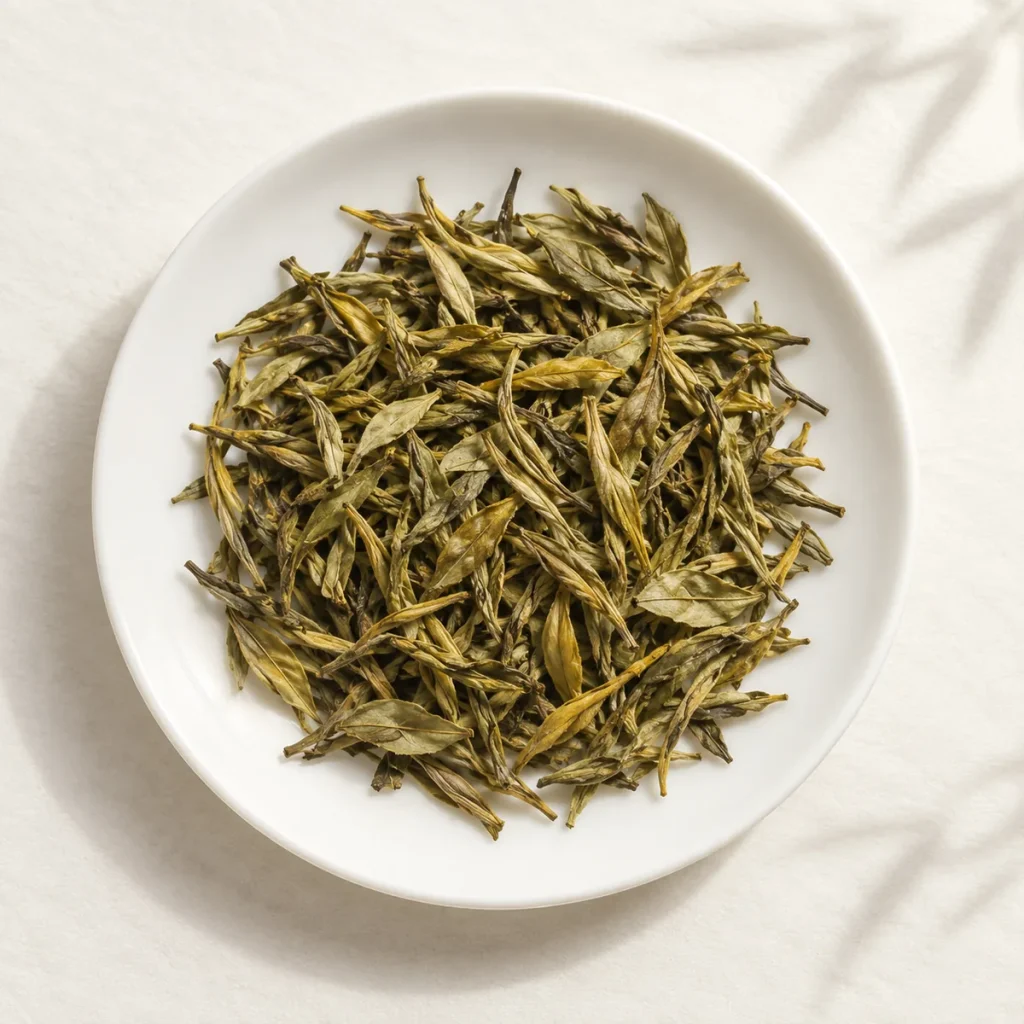
The core of yellow tea is warm-humid yellowing after heat-fixing. Beigang Maojian is especially interesting because different transmission sources use different names for this process. Yueyang local materials list heat-fixing, pan rolling, menhuang, re-firing, re-rolling and drying; a publicly documented 1976 revival process uses pan-firing, pan-rolling, paihan, re-firing and drying and explains that pan-rolling, paihan and drying jointly produce the yellowing effect; old-brand heritage lines also describe staged first and second menhuang. Rather than inventing one “unique ancient method,” it is more accurate to explain the shared logic: heat-fix first, then use rolling, piling or wrapping to create warm humid conditions so greenness subsides and taste becomes mellower, before re-firing and drying fix the yellow, clean and sweet-brisk Beigang style.
Tea Conversations
Tea lovers from around the world meet over a cup of tea.
Sign in or register to join the conversation. Your comment account is created automatically the first time you use a connected account.
No comments yet
Share your thoughts with readers around the world.