Skip to content
Tea & Realm
English

Tsampa Mixed with Butter Tea

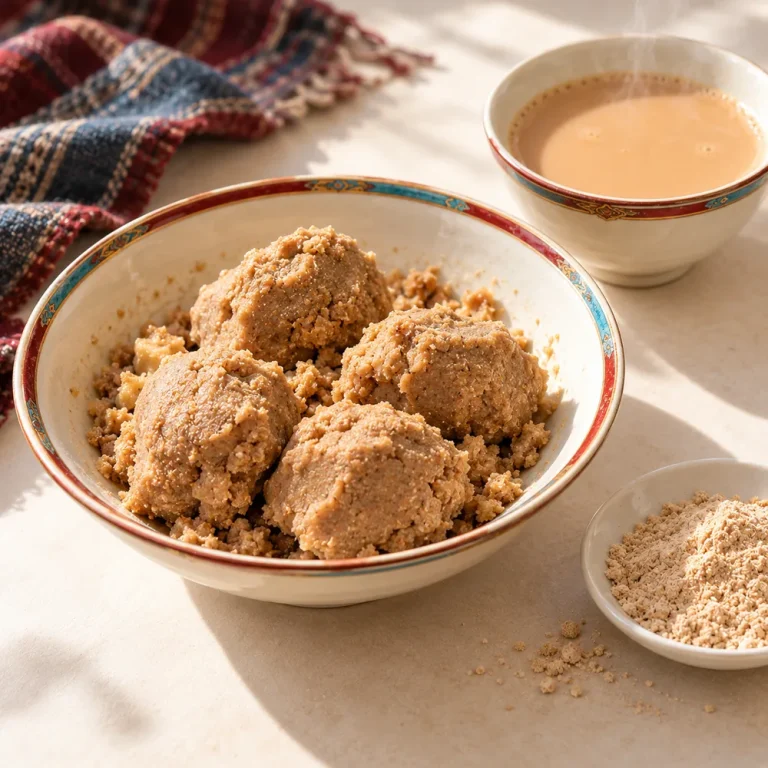
A bowl of hot butter tea and a handful of barley tsampa, kneaded into one of the plateau's simplest meals.

A traditional Tibetan way of eating tsampa: roasted barley flour is mixed with hot Tibetan butter tea and kneaded by hand into soft lumps. Some traditional versions also add extra butter, Milk curds or white sugar, while others such as gyomada are mixed into a thinner porridge-like consistency.

Category
Tea Meals · Tsampa with butter tea
Tea ingredient
Compressed tea used as the base for butter tea, commonly brick tea or tuocha
Tea form
Tea liquor
Preparation
Mix · Knead

Tea in the Dish

Butter tea provides moisture, salt, dairy aroma and tea fragrance, turning dry roasted-barley flour into a soft kneadable staple and adding an obvious tea-and-dairy layer to the barley's roasted aroma.

Tea ingredient
Compressed tea used as the base for butter tea, commonly brick tea or tuocha
Tea form
Tea liquor
Role of tea
Liquid base · Main flavor · Supporting aroma
How the tea is used
First simmer compressed tea into a strong liquor, then churn or blend it with butter and salt to make butter tea. When eating tsampa, use the hot butter tea as the liquid base and gradually mix in the tsampa flour.

Flavor & Texture

Roasted-barley aroma forms the core, while butter tea adds dairy richness, salt and tea fragrance, changing the texture from dry flour to soft and moist. Milk curds or sugar may add more dairy aroma or slight sweetness.

Aroma
Roasted barley aroma · Butter and dairy aroma · Tea aroma
Taste
Savory-salty · Grain aroma · Tea character
Texture
Soft lumps · Powdery-starchy · Moist

Origin & Culture

Origin & Story

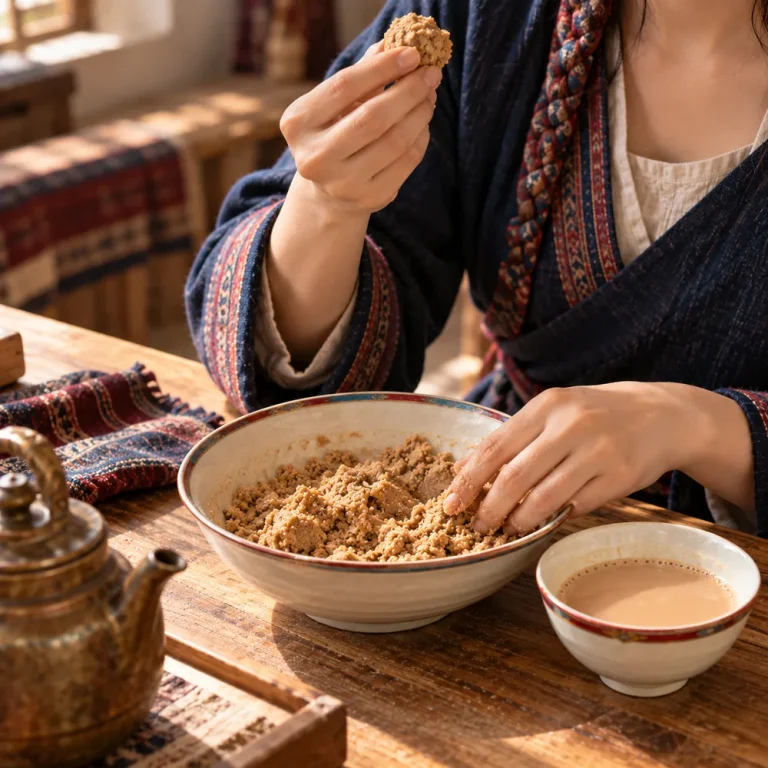
Tsampa Mixed with Butter Tea is not one single standardized dish name but a descriptive umbrella for traditional Tibetan ways of eating tsampa. The China Tibetology Research Center calls the common hand-kneaded form “mapa”: hot tea, butter and tsampa are combined and kneaded into lumps. Local-government materials likewise record pouring butter tea into a bowl, adding tsampa and kneading it by hand. Another traditional form, gyomada, mixes butter tea with tsampa flour, Milk curds and white sugar into a thinner paste.
Historical Development

Tsampa has long been a traditional Tibetan staple, typically made by roasting barley and grinding it into flour, while butter tea is a central drink in Tibetan daily tea culture. China's National People's Congress website, Tibetan local-government materials and the China Tibetology Research Center all record the custom of eating tsampa together with butter tea. Tibetology materials also distinguish hand-kneaded tsampa, tanggu-bag kneading and gyomada among several traditional forms, so this page title is a descriptive umbrella rather than the only Tibetan dish name.

Cultural Context

Tsampa and butter tea together form one of the most representative combinations in everyday Tibetan food. Hand-kneaded tsampa can be a daily staple, breakfast or food for work and travel, while butter tea also runs through hospitality, gatherings and festivals.

Regional Customs

Regional and household differences include liquid ratio, whether extra butter, Milk curds or sugar are added, and whether the mixture is kneaded into lumps or prepared as a thinner paste.

Serving Notes

Serving temperature
Warm
Serving style
Mix tsampa with hot butter tea and knead into small lumps to eat, or prepare a thinner porridge-like version.
Season
All year
Best occasions
Breakfast · Home snack · Winter hot serving · Tea table · Other
Storage
Traditionally mixed and eaten fresh. Dry tsampa flour itself stores well, but no Generic storage period is set for the finished mixture once combined with butter tea.
Reheating
Reheating is not a traditional standard serving method. It is more typical to mix fresh tsampa again with hot butter tea.
Allergens
Milk · Wheat / gluten
Caffeine
Contains caffeine · Unquantified

Traditional butter tea contains dairy-derived butter, so Milk is a core allergen. Classic tsampa is primarily barley and therefore contains gluten. In this site's schema, Wheat / gluten is the unified enum for gluten-containing grains; that does not mean traditional tsampa necessarily contains wheat. Butter tea is made from real tea and therefore contains naturally occurring caffeine, but no reliable per-serving milligram value can be given.

糌粑拌酥油茶·场景图

Traditional Method

糌粑拌酥油茶·过程图

How It Works

The core logic is to use the moisture and Milk fat in hot butter tea to bind roasted barley flour into a staple that can be grasped and kneaded. The technique depends on feel: tsampa gradually absorbs the tea, butter softens the texture, and repeated pressing, squeezing and kneading turns the mixture into small soft lumps.

Ingredients & Formula
Barley tsampa flour
Classic tsampa is made by roasting barley and grinding it into flour; some regions also use peas or other grains.
Hot Tibetan butter tea
The main liquid base; quantity is adjusted depending on whether a firm dough or thinner porridge-like texture is desired.
Butter
Some hand-kneaded versions add another small piece of butter to the hot tea; if the butter tea is already rich, extra butter may be omitted.
Milk curds
Small amounts can be added in both hand-kneaded tsampa and gyomada-style versions.
White sugar
Added to taste; commonly seen in traditional gyomada versions.
Method
  1. 1
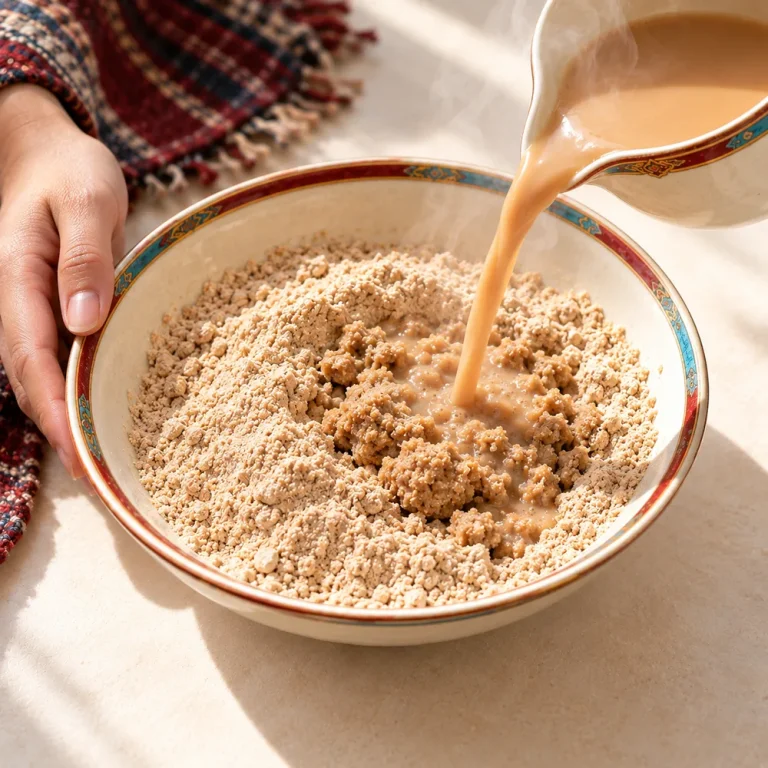
    Pour in hot butter teaPour an appropriate amount of hot butter tea into a wooden or porcelain bowl. Household and regional ratios differ, so do not add too much liquid at once.
  2. 2
    Add tsampa graduallyGradually add roasted barley tsampa flour to the hot butter tea. According to taste, a small amount of extra butter, Milk curds or white sugar may also be added.
  3. 3
    Press into the tea and mixUse the fingers to press the tsampa from the sides of the bowl slowly into the tea while turning the bowl, allowing the tsampa, butter tea and optional additions to combine.
  4. 4
    Knead into small lumpsContinue grasping, squeezing and kneading against the side of the bowl until the mixture is no longer loose or overly soft and can be formed into small lumps for eating.

Tea Conversations

Tea lovers from around the world meet over a cup of tea.

Sign in or register to join the conversation. Your comment account is created automatically the first time you use a connected account.