Skip to content
Tea & Realm
English

Zhangcha Duck

Tea smoke and camphor pass through crisp duck skin, leaving one of Sichuan cuisine's most distinctive smoky layers.

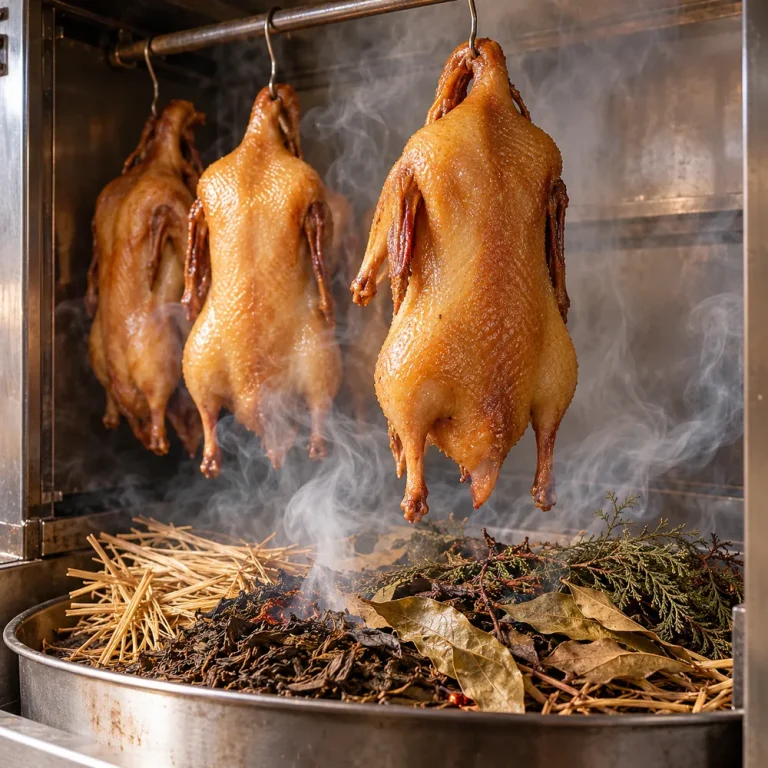
A classic Chengdu Sichuan dish in which duck is first marinated, then smoked with tea leaves, camphor leaves, rice straw and pine/cypress branches, steamed until tender and finally fried until crisp-skinned. Tea functions mainly as a smoking medium rather than as tea liquor or edible leaves in the finished dish.

Category
Tea Dishes · Sichuan smoked duck
Tea ingredient
Tea leaves (smoking material; some traditional lineages use jasmine-tea dust)
Tea form
Aroma only
Preparation
Marinate · Blanch · Smoke · Steam · Deep-fry

Tea in the Dish

Tea leaves contribute tea-smoke aroma within the smoking system, layering with camphor leaves and resinous wood smoke to create Zhangcha Duck's signature composite fragrance.

Tea ingredient
Tea leaves (smoking material; some traditional lineages use jasmine-tea dust)
Tea form
Aroma only
Role of tea
Smoking · Supporting aroma
How the tea is used
The tea is not brewed first. Tea leaves are heated or burned together with camphor leaves, rice straw and pine/cypress branches as smoking materials, producing smoke that gives the duck skin and meat their composite aroma.

Flavor & Texture

The most distinctive character is the composite smoke aroma formed by tea, camphor leaves and pine/cypress materials. The taste is savory, the skin crisp and the meat tender. Tea is one layer in the smoke system rather than a direct tea-liquor or leaf flavor like that of Longjing Shrimp.

Aroma
Tea smoke · Camphor-leaf aroma · Pine-cypress smoke · Roasted duck aroma
Taste
Savory · Smoky
Texture
Crisp skin · Tender meat

Origin & Culture

Origin & Story

Zhangcha Duck is a traditional Chengdu specialty and one of Sichuan's representative Tianfu tourism dishes. The current Sichuan standard defines it as duck smoked with tea leaves, camphor leaves and related materials, then steamed and fried. The standard also preserves the story that Huang Jinglin created it in the late Qing, but because the text itself uses “tradition says,” this record treats that as culinary legend rather than a fully verified sole-origin history.

Historical Development

DB51/T 3126—2023, Technical Specification for Tianfu Tourism Cuisine—Dishes, includes Zhangcha Duck as a representative provincial Tianfu tourism dish and notes in its appendix that it is a traditional Chengdu specialty named for smoking with camphor leaves and tea. The standard preserves the story that, in the late Qing, Huang Jinglin worked in the imperial kitchen, replaced the smoking materials of court smoked duck with camphor leaves and tea, then returned to Chengdu to operate a restaurant and make Zhangcha Duck. Because that passage explicitly begins with wording equivalent to “tradition says,” it must not be turned into uncontested historical fact. What can be confirmed is the dish's long-standing status as a Sichuan classic and its entry into the modern Sichuan local-standard system. Chongqing also issued DB50/T 445-2012, a cooking specification for Zhangcha Duck, in 2012; that standard was withdrawn in 2025 and is not used as the current recipe source here.

Cultural Context

Zhangcha Duck's distinctiveness lies not in tea leaves directly seasoning the meat, but in Sichuan smoking technique combining tea smoke, camphor-leaf aroma and pine-cypress smoke into one composite aromatic system. The Ministry of Commerce's Time-Honored Brand Digital Museum records that the Haozidong duck tradition favors local Sichuan duck and smokes it with camphor leaves plus jasmine-tea dust. Its related craft was recognized as Chengdu municipal intangible cultural heritage in 2010. Zhangcha Duck is therefore both a Sichuan classic and part of an ongoing local craft lineage.

Regional Customs

Modern standard versions typically emphasize young local duck, smoking with tea and camphor leaves, then steaming and frying. Time-honored lineages such as Haozidong may use jasmine-tea dust, special brine and maltose, with a process sequence that differs from the standard version. These are better treated as distinct inherited lineages rather than competing “true” and “false” versions.

Creation Notes

The current Sichuan local standard preserves a story that Huang Jinglin adapted smoked duck in the late Qing imperial kitchen and created Zhangcha Duck using camphor leaves and tea leaves. Because the standard itself presents this as “tradition says,” it can be shown as food-culture narrative but not upgraded into an independently proven sole-inventor fact.
Serving Notes

Serving temperature
Room temperature
Serving style
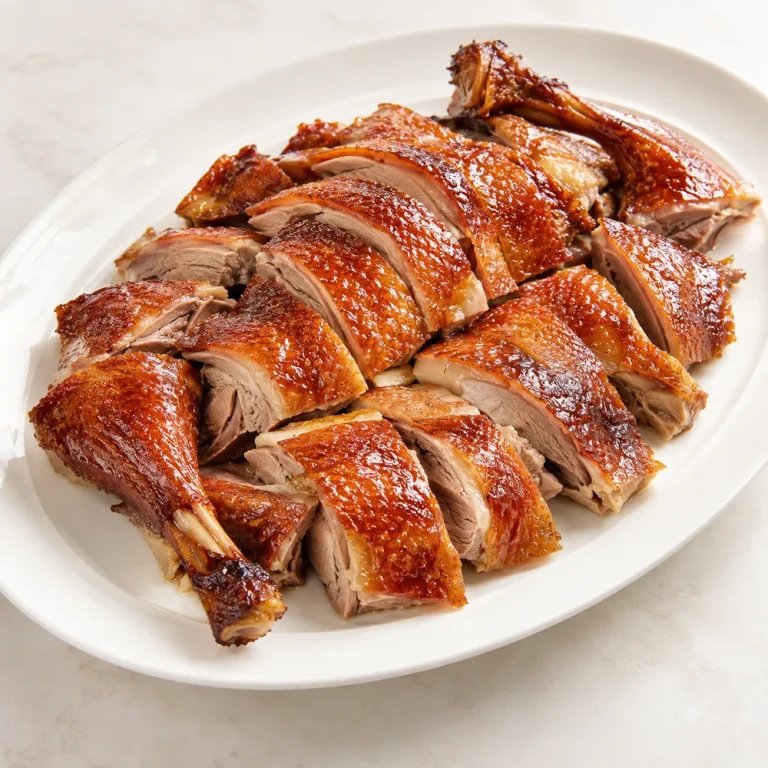
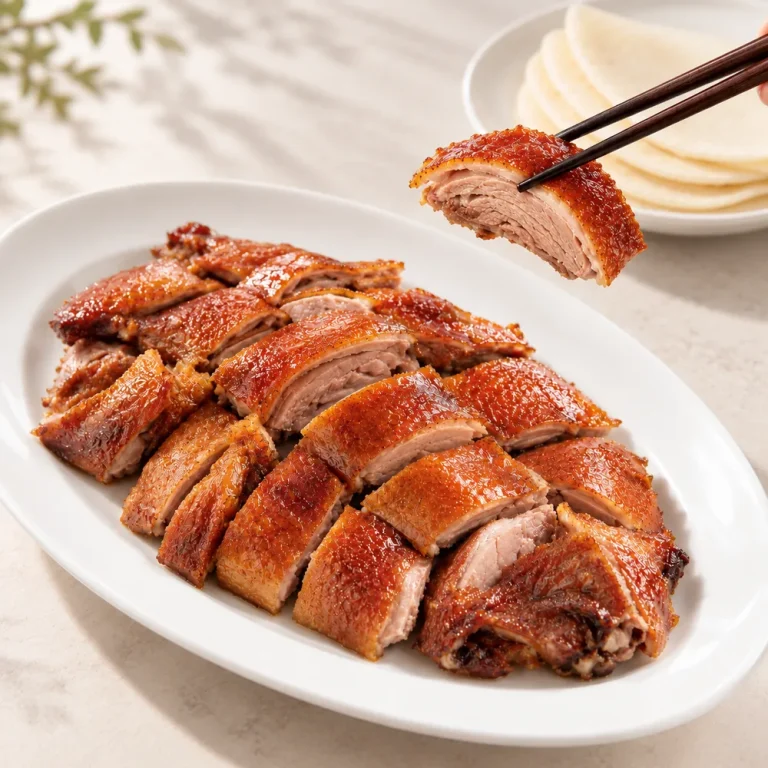
Chop into pieces, plate and serve at room temperature.
Best occasions
Banquet · Tea table
Storage
Best judged by freshly prepared eating quality; no unsupported home-storage period is set.
Caffeine
Not confirmed · Not checked

DB51/T 3126—2023 specifies serving Zhangcha Duck at room temperature and recommends eating it within one hour after preparation.

Tea leaves are used only as a smoking medium and do not enter the dish as tea liquor or edible leaves. Current standards and published traditional materials do not measure whether the smoked duck contains quantifiable caffeine, so “tea-smoked” should not be mechanically equated with “the finished dish definitely contains caffeine.”

樟茶鸭·场景图

Recipe & Method

樟茶鸭·过程图

How It Works

Zhangcha Duck is not simply “tea-flavored duck” but a composite-smoked duck. A long marinade first establishes the savory base, then tea leaves, camphor leaves, rice straw and pine/cypress branches build a layered smoke aroma. Steaming tenderizes the meat, and high-temperature frying at the end creates crisp skin. Tea contributes only part of the smoke profile, so the dish should not be understood as duck marinated in tea liquor or with tea leaves eaten directly.

Ingredients & Formula
Duck
1500 g The standard recommends a young local mallard-type duck when available.
Salt
10 g
Sichuan pepper
5 g
Ground pepper
1 g
Chinese cooking wine
20 g
Fermented glutinous-rice liquid
10 g
Ginger slices
10 g
Scallion sections
20 g
Cooking oil
2000 g Used as the frying medium; not equal to the amount actually absorbed by the finished dish.
Tea leaves
Listed as a smoking material in the standard; no quantity specified.
Camphor leaves
Listed as a smoking material in the standard; no quantity specified.
Rice straw
Listed as a smoking material in the standard; no quantity specified.
Pine and cypress branches
Listed as a smoking material in the standard; no quantity specified.
Method
  1. 1
    Marinate and blanchMix salt, Sichuan pepper, cooking wine, fermented glutinous-rice liquid, ground pepper, ginger slices and scallion sections. Rub evenly over the duck and marinate for eight hours, then blanch.
  2. 2
    Smoke with tea and camphorDry the duck's surface, then smoke it over tea leaves, camphor leaves, rice straw and pine/cypress branches until the skin turns yellow.
  3. 3
    Steam until tenderSteam the smoked duck for one hour, then remove it and let it cool.
  4. 4
    Fry until crispHeat cooking oil in a wok, fry the duck until the skin is crisp and fragrant, then remove, chop into pieces and plate.

Tea Conversations

Tea lovers from around the world meet over a cup of tea.

Sign in or register to join the conversation. Your comment account is created automatically the first time you use a connected account.