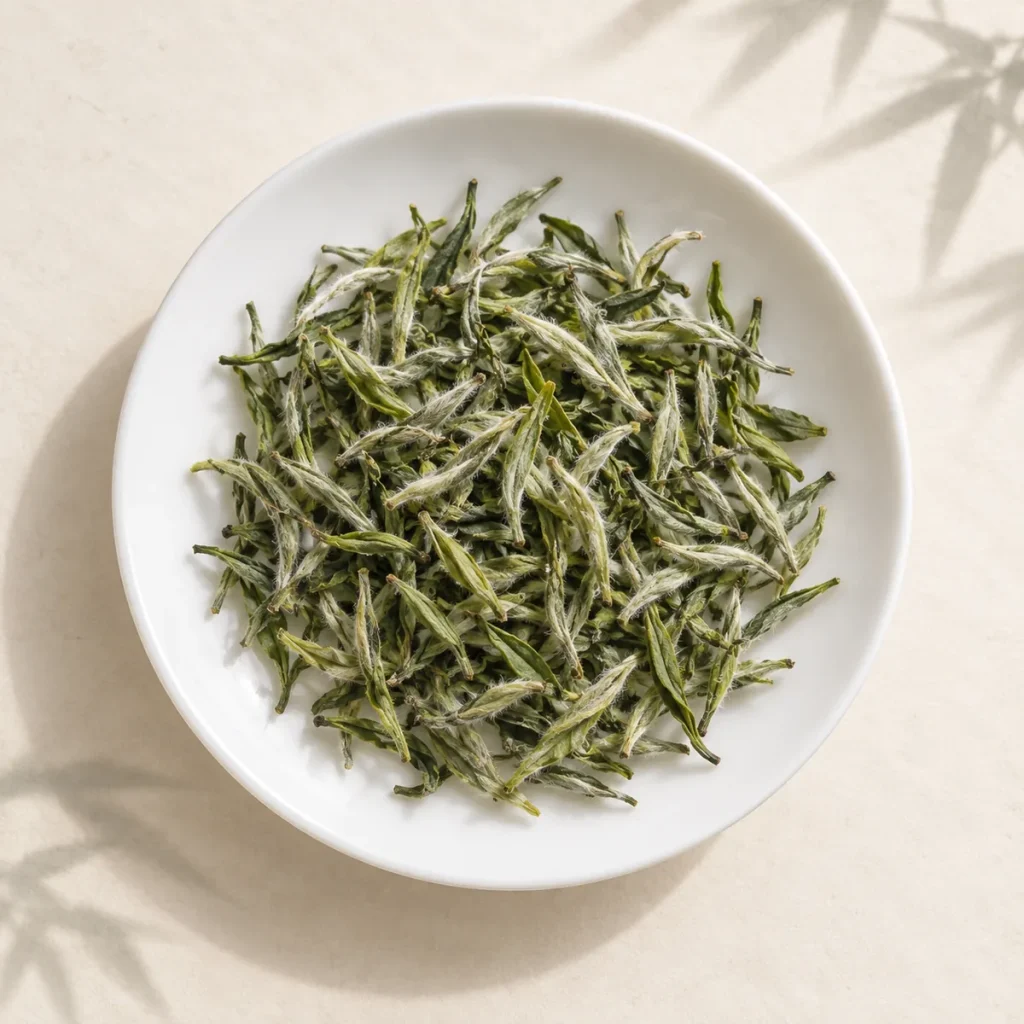
Evaluation of Huangshan Maofeng can begin with the buds, leaves and fine hairs. Higher-grade dry tea should be plump, intact, tender green and visibly hairy. Traditional Special Grade tea may also show the classic “sparrow-tongue” bud-and-leaf form and golden fish leaves. The white hairs do not need to be exaggerated; what matters more is intact material, lively color, and cleanliness and evenness appropriate to grade.
After brewing, the liquor should remain clear, from tender green to light yellow-green. Aroma is centered on tender-leaf and clean notes, with higher grades emphasizing a high, lasting fresh tenderness. Traditional tasting language sometimes compares its elegant floral character to orchid, but this does not mean every batch must express an identical orchid note. The taste should be fresh, mellow, sweet and brisk: freshness is clear, astringency controlled, the liquor has some body, and natural returning sweetness remains after swallowing.
The infused leaf offers another check on both raw material and craft. Good leaves should be tender, even, opening in clusters and remain bright green and lively. Muffled aroma, dull or cloudy liquor, coarse astringency, reddened leaves, scorched edges or stiff infused leaves often indicate damage to the fresh leaf, inadequate or excessive heat-fixing, unbalanced drying or poor storage. The real attraction of Huangshan Maofeng is not a single aroma note but the coordination of tender shoots, clean aroma, freshness, sweetness and the gentle warmth of baked green tea.
Tea Conversations
Tea lovers from around the world meet over a cup of tea.
Sign in or register to join the conversation. Your comment account is created automatically the first time you use a connected account.
No comments yet
Share your thoughts with readers around the world.