Black tea develops its warm, bright liquor and layered aroma through withering, rolling and relatively extensive oxidation. From Souchong to Gongfu black teas, differences in raw material, region and making tradition create distinct layers of floral, fruity, honeyed and full-bodied character.
Begin with the Reddening Leaf
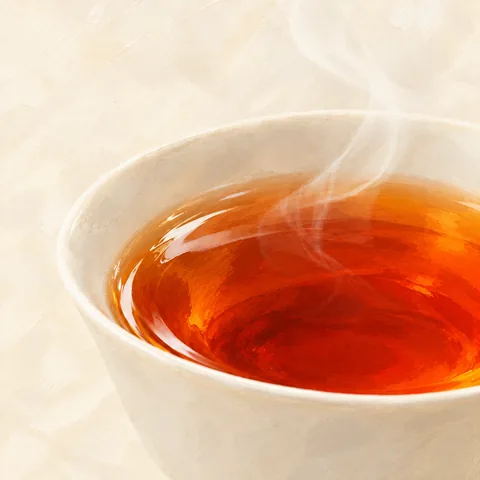
Relatively extensive oxidation gradually gives black tea its red-bright liquor and warm, sweet aroma.
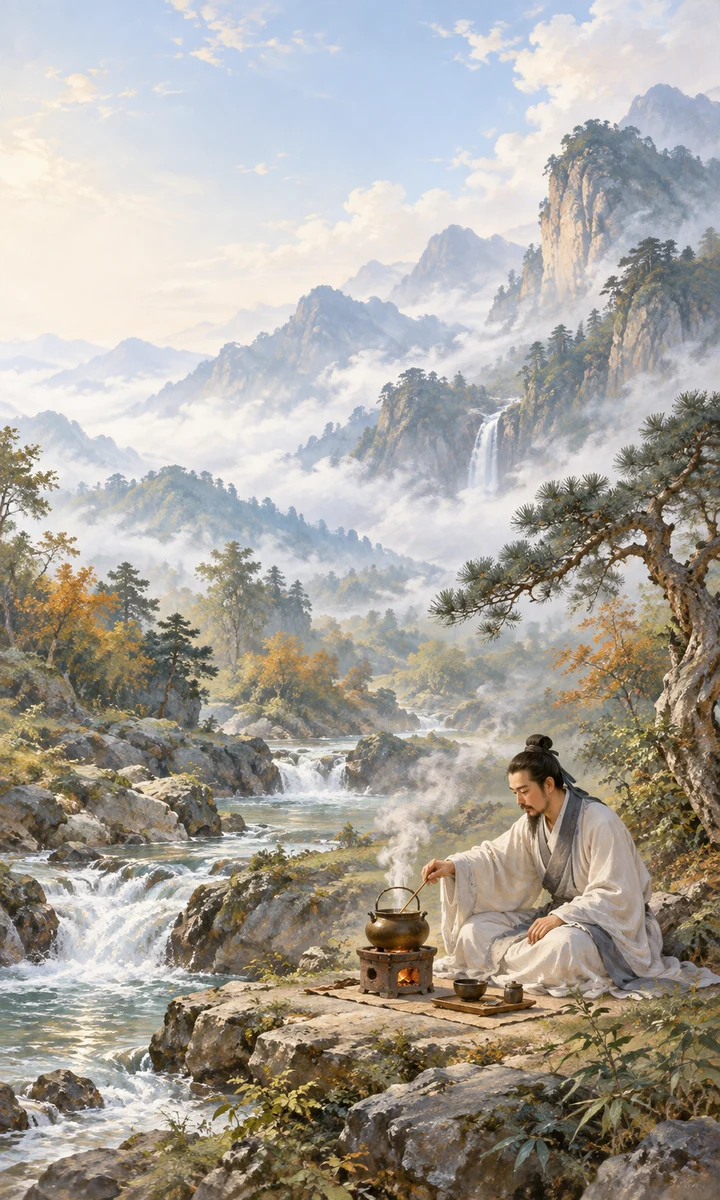
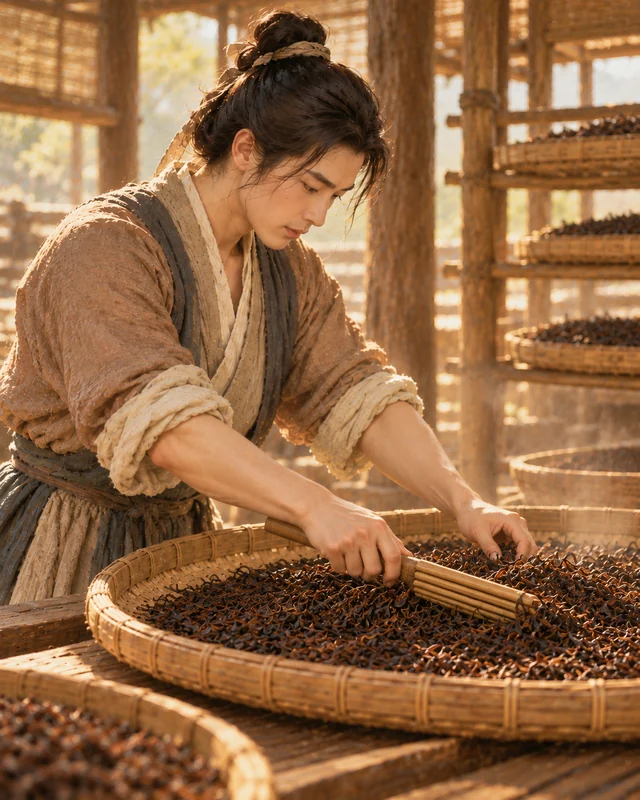
Begin with a single leaf
As the leaf turns red, aroma deepens and sweetness takes more than one form
Black tea is not a single kind of “sweet tea.” After withering, rolling and relatively extensive enzymatic oxidation, the fresh green color and aroma of the leaf gradually change, producing liquor from golden-red to bright red and aromas that can be floral, fruity, honeyed or reminiscent of ripe fruit. Souchong and Gongfu black teas share the basic logic of black-tea processing, yet cultivar, leaf tenderness, environment and local craft can produce very different leaf shapes, aromas and textures in the cup.
Oxidation builds the red-bright style
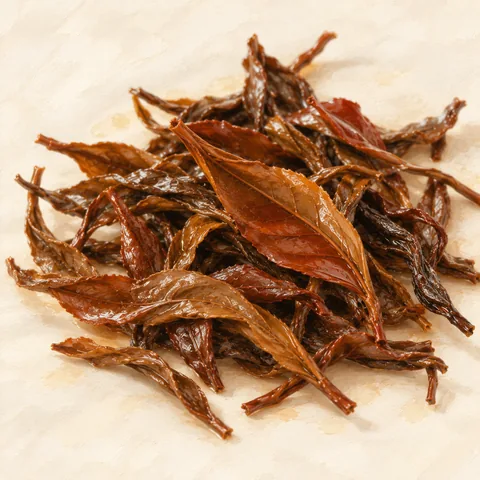
Relatively extensive enzymatic oxidation is fundamental to black-tea formation. As compounds in the leaf continue to change, leaf color moves from green toward copper-red and reddish brown, while the brewed liquor develops golden-red, orange-red or bright-red tones.
Sweet aroma comes in layers
Black-tea aroma is not simply “sweet.” Floral, fruity, honeyed and ripe-fruit notes may appear alongside varying degrees of roasted, smoky or woody character, depending on the raw material and processing route.
Tea-making systems shape the leaf
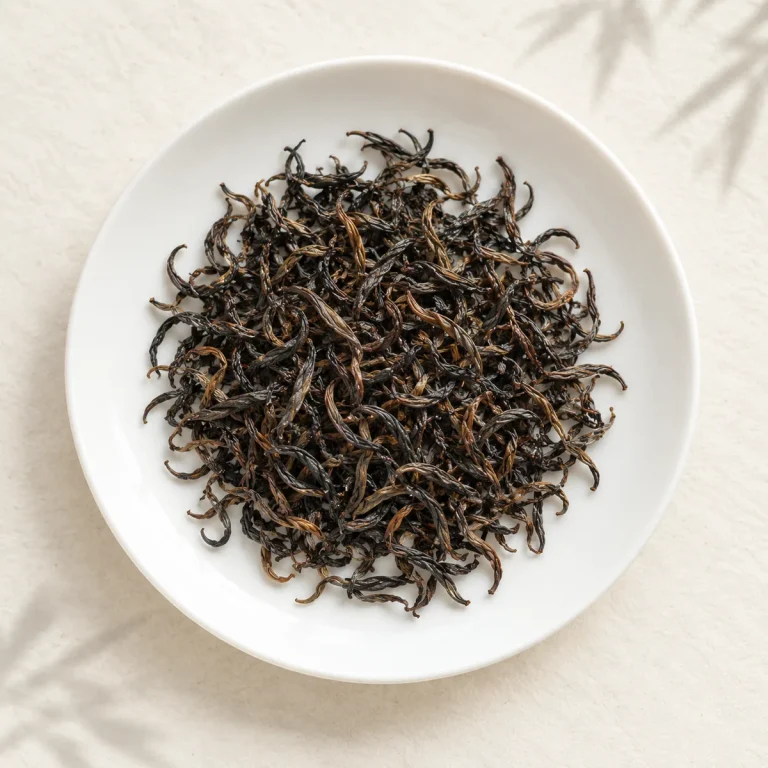
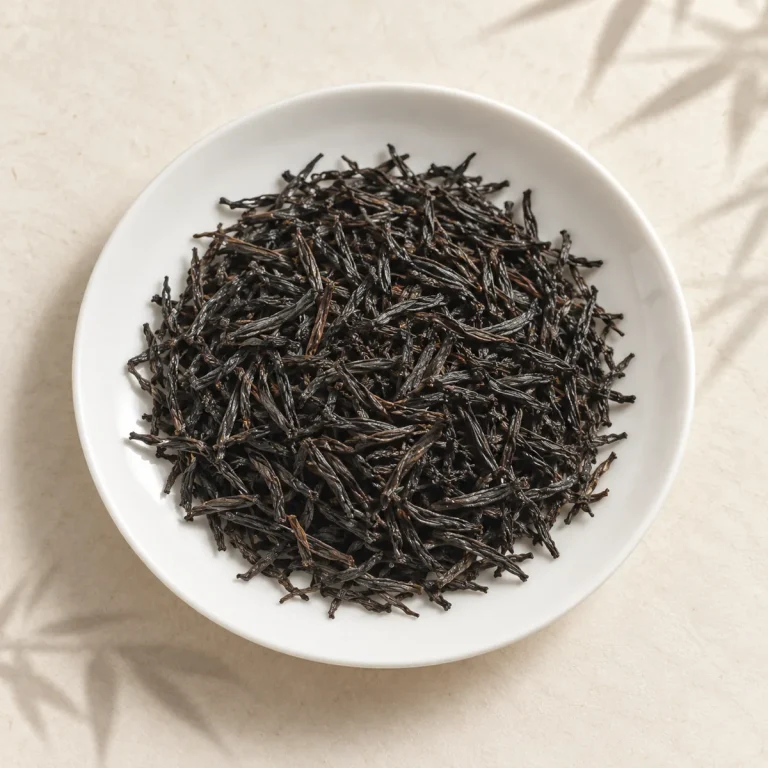
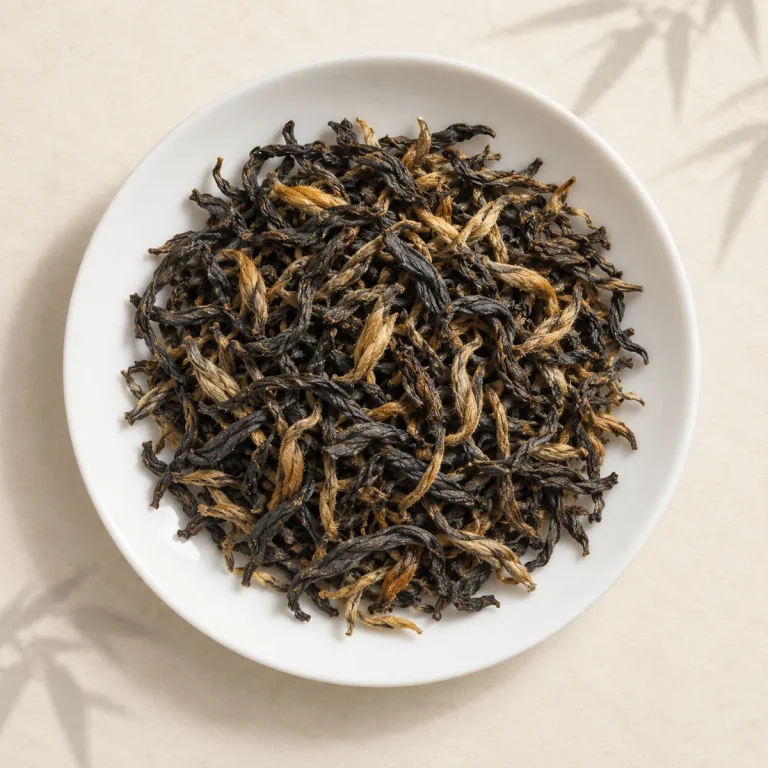
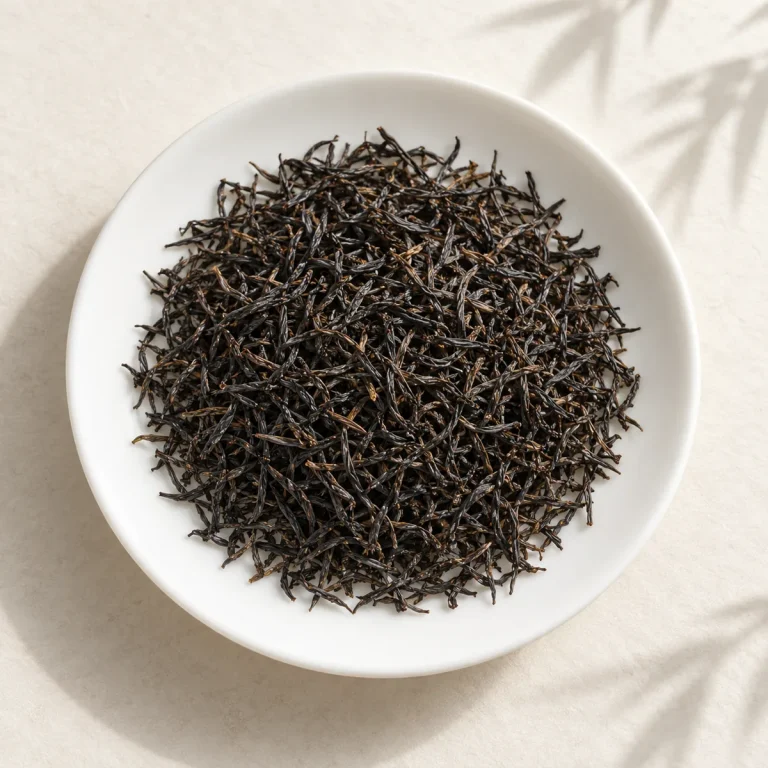
Traditions such as Souchong and Gongfu black tea emphasize different details of production, while raw material and rolling method also affect final leaf form. Fine, tight, dark glossy, golden-tipped or more robust strips can all belong to the black-tea world.
Region shapes character
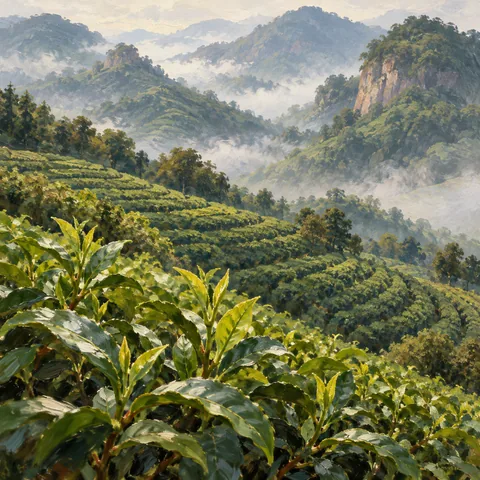
Black-tea regions such as Wuyi, the Qimen mountains and southwestern Yunnan have different cultivars, climates and tea-making traditions. The same basic black-tea logic develops distinct aromas and tastes when practiced in different landscapes.
Classic Black Teas, Each with Its Own Aroma
Begin with well-known teas to see how black tea changes in form, aroma, taste and terroir.
From dark glossy leaf to golden-red liquor, sweet aroma and body unfold layer by layer.
Dry Leaf Form
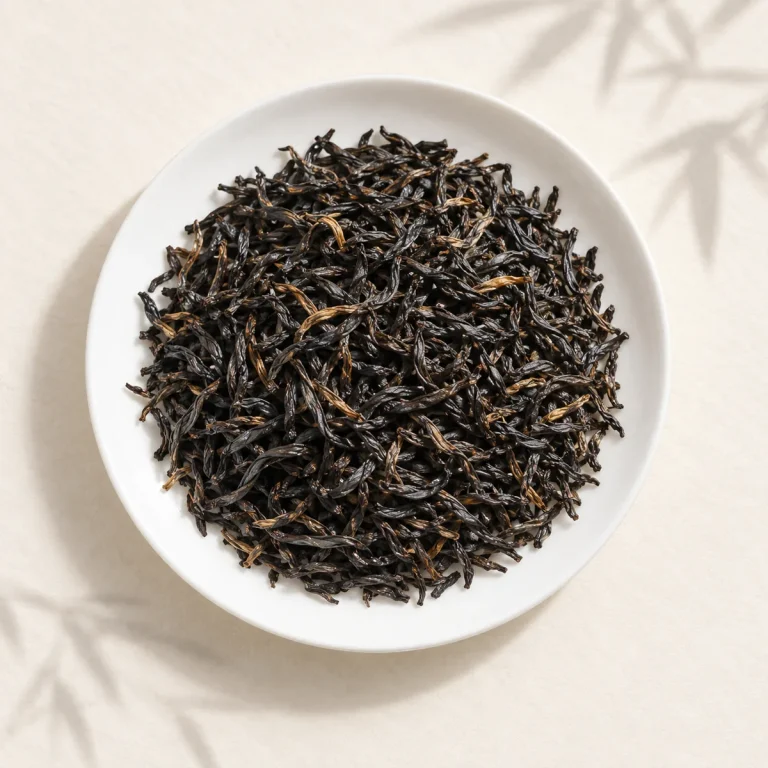
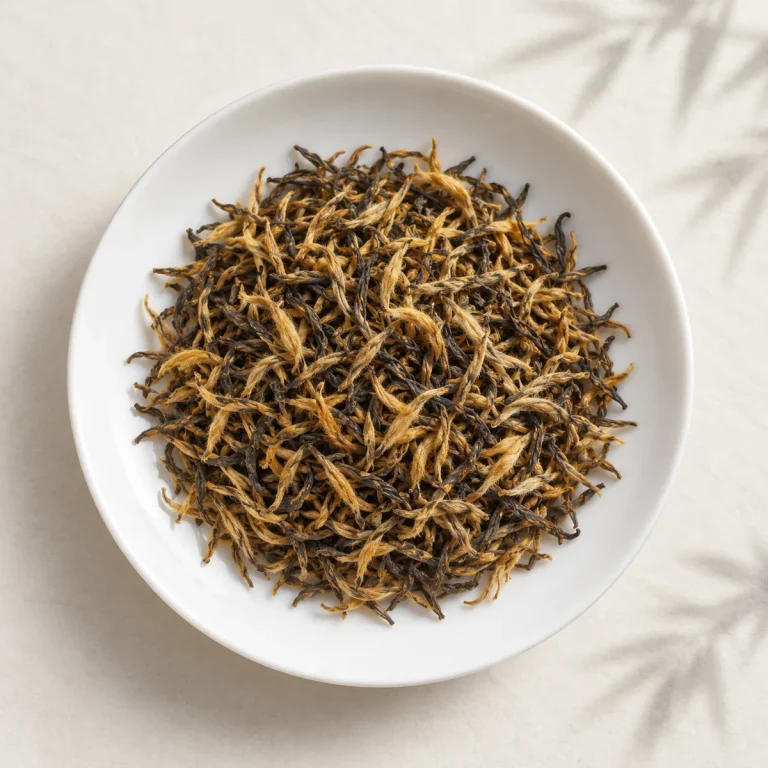
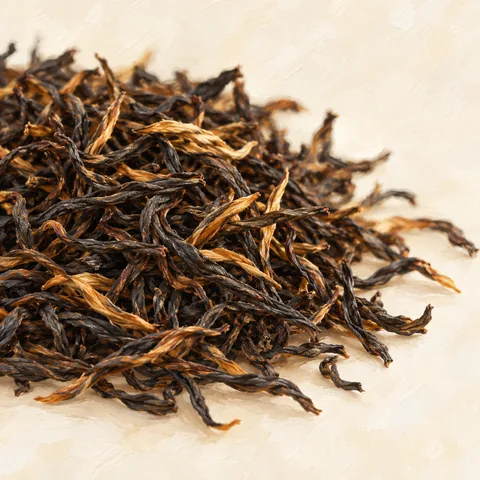
Fine, tight, dark glossy or more robust strips are common; some buds show golden tips, and different production systems create obvious visual differences.
Liquor Color
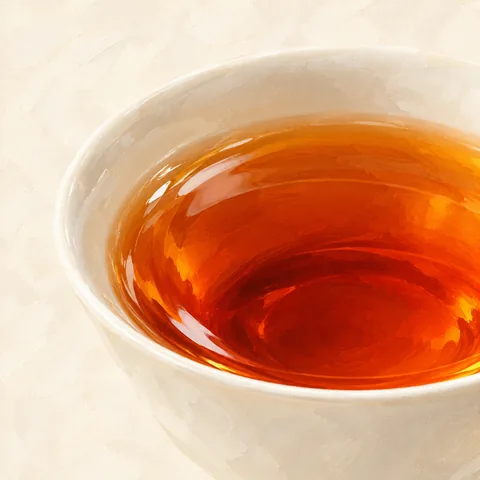
Often golden-red, orange-red or bright red, clear and lustrous, with depth changing according to raw material and processing.
Aroma
Floral, fruity, honeyed and ripe-fruit sweetness are common; some teas also show roasted, pine-smoke or woody notes.
Taste
Typically mellow-sweet, soft and smooth. Some styles are light and bright; others are fuller, richer and longer in the finish.
Infused Leaf
After brewing, leaves are often copper-red, bright red or reddish brown and soft in texture; bud-and-leaf integrity varies with raw material.
Sense of Origin
Mountain environments and cultivar traditions in Wuyi, Qimen and southwestern Yunnan have given black tea very different expressions of sweetness, aroma and mouthfeel.
Inside the Leaf: Where Flavor Comes From
As catechins transform through oxidation, bright red liquor, fuller taste and sweet aroma take shape.
The most distinctive chemical changes in black tea occur during oxidation. Catechins in the fresh leaf undergo enzymatic oxidation and gradually form theaflavins, thearubigins and more complex oxidation and polymerization products, while amino acids, caffeine, sugars and many volatile compounds continue to contribute to taste and aroma.Black tea is therefore not simply “green tea with fewer compounds.” Existing substances are transformed along a different pathway. Theaflavins and thearubigins in particular are closely associated with color, brightness, astringency and body in black-tea liquor.
Theaflavins
Theaflavins are a representative group of compounds formed through catechin oxidation. They are associated with brightness, golden-red color and part of the fresh, astringent and lively structure of black-tea liquor. Theaflavins themselves include multiple molecular structures rather than one single compound.
Thearubigins · Higher Oxidation Polymers
As oxidation continues, more complex thearubigins and other higher oxidation products form. They are closely related to reddish-brown color, liquor thickness and a more mature mouthfeel, and are part of the shift from bright golden-red toward deeper, fuller black-tea styles. Thearubigins are themselves a highly complex material system that remains under active research.
Residual Catechins · Phenolic Compounds
Black-tea processing does not make every catechin disappear. Unoxidized catechins and other phenolic compounds still contribute bitterness, astringency and liquor structure, although their proportions and chemical states differ markedly from those in green tea.
Amino Acids · Caffeine
Free amino acids contribute freshness, sweetness and mellowness and can also serve as precursors for some aroma compounds. Caffeine contributes bitterness and stimulation. Black tea’s mellow sweetness likewise comes from balance among many taste compounds rather than from sugar alone.
Volatile Aroma Compounds
Floral, fruity, honeyed, ripe-fruit, roasted and woody notes arise from complex combinations of volatile compounds. Withering, rolling, oxidation and drying all reshape this aroma system, which is why different black teas can have completely different aromatic profiles.
Oxidation into Aroma: How Black Tea Is Made
From withering through oxidation, black tea gradually develops its sweet aroma and red-bright liquor.
01
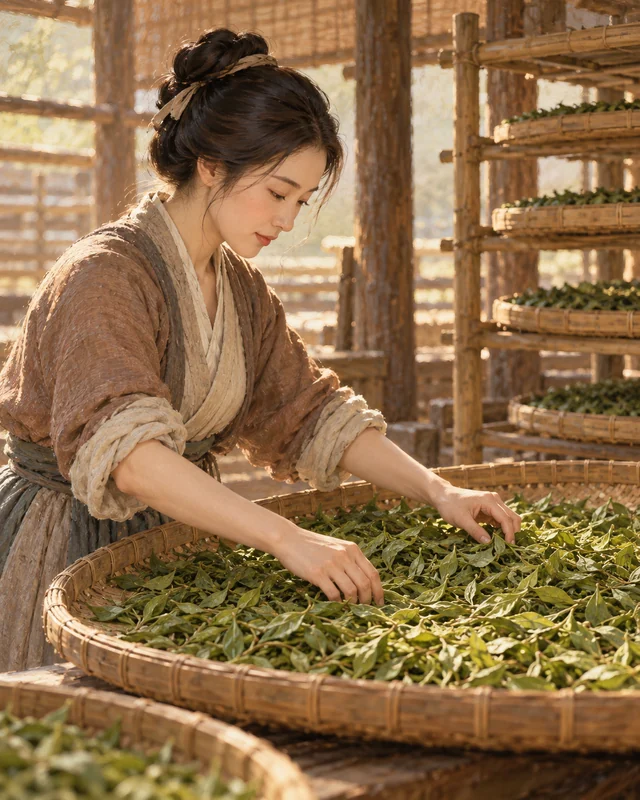
Withering
Freshly plucked leaves first undergo withering. As moisture slowly dissipates, the once-crisp buds and leaves become softer and more pliable, raw green odors weaken and internal compounds begin to change. Withering both prepares the leaf for rolling and marks an important starting point for black-tea aroma formation. Natural withering, trough withering or other systems may be used, with time and degree adjusted to the leaf and environment.
02
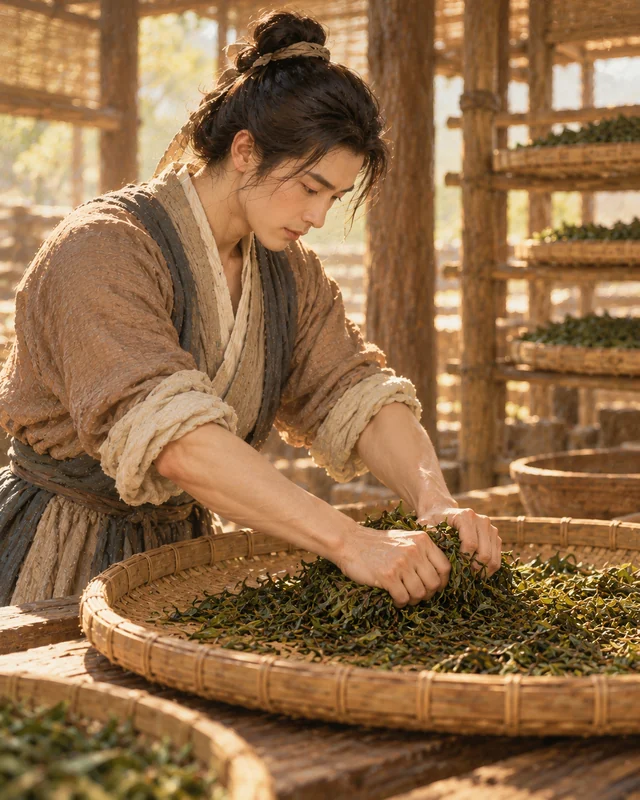
Rolling
The withered leaves are rolled, gradually curling and tightening. Mechanical action disrupts some leaf cells, releasing tea juices onto the surface and creating conditions for later oxidation. Gongfu and Souchong black teas often develop different strip forms through rolling, while broken black tea may use cutting or rolling-cutting techniques, so black tea does not have one single final shape.
03
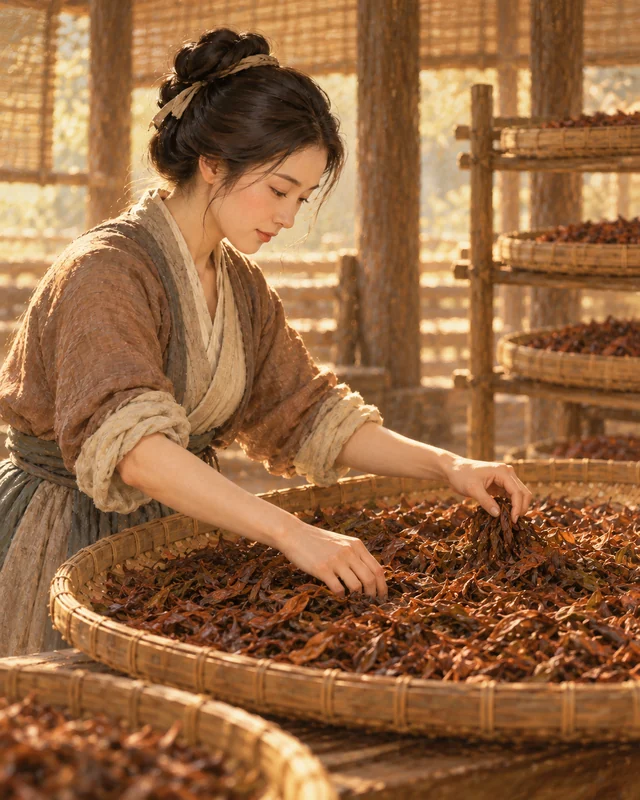
Oxidation (Traditionally Called “Fermentation”)
After rolling, the leaves enter the stage traditionally called “fermentation” in tea making. Its core mechanism is not microbial fermentation but continued enzymatic oxidation of leaf compounds. Leaf color shifts from green toward yellow-red, copper-red or reddish brown, raw green aromas continue to fade, and floral, fruity and sweet aromas develop. Temperature, humidity, leaf depth and time all affect the final degree.
04
Drying
When oxidation reaches the desired point, drying is used promptly to reduce moisture and slow further change while stabilizing the leaf shape, color and aroma already formed. Production may include initial drying, resting and final drying in different arrangements. At this stage, soft moist oxidized leaves become finished black tea suitable for storage and brewing.
Withering, rolling, oxidation and drying form the shared process backbone of black tea, but Gongfu, Souchong and broken black teas differ in raw material, rolling method, oxidation degree and later handling. These differences help create their distinct leaf forms, aromas and tastes.
Different Landscapes, Different Black-Tea Origins
From the Wuyi Mountains to the highlands of western Yunnan, black tea develops distinct sweetness, aroma and body through different landscapes and cultivars.
Core Regions
Major Regions
Traditional & Extended Regions
Core Regions
01Fujian
An important source region of Chinese black-tea tradition
Representative teas:Zhengshan Xiaozhong · Jin Jun Mei · Tanyang Gongfu
Tongmu in the Wuyi Mountains is closely tied to the early development of black tea and the Souchong tradition. Other parts of Fujian later developed several Gongfu black-tea traditions. Smoky, dried-longan-like, floral and fruity directions together create a highly varied regional landscape.
Other representatives:Zhenghe Gongfu · Bailin Gongfu
02Yunnan
Large-leaf cultivars shape a highland black-tea route
Representative teas:Dianhong Gongfu · Dianhong Golden Needle
Yunnan’s large-leaf tea resources and southwestern highland environment produce a highly recognizable black-tea tradition. Robust strips, strong body and mellow sweetness are important foundations of Dianhong’s difference from small-leaf black teas of southeastern hills.
03Anhui
Qimen mountains and the Gongfu black-tea tradition
Representative teas:Qimen Black Tea
Qimen and nearby mountains in southern Anhui created one of China’s best-known Gongfu black-tea traditions. Fine tight strips and complex floral-fruity sweetness made Qimen Black Tea an important representative in the international history of Chinese black tea.
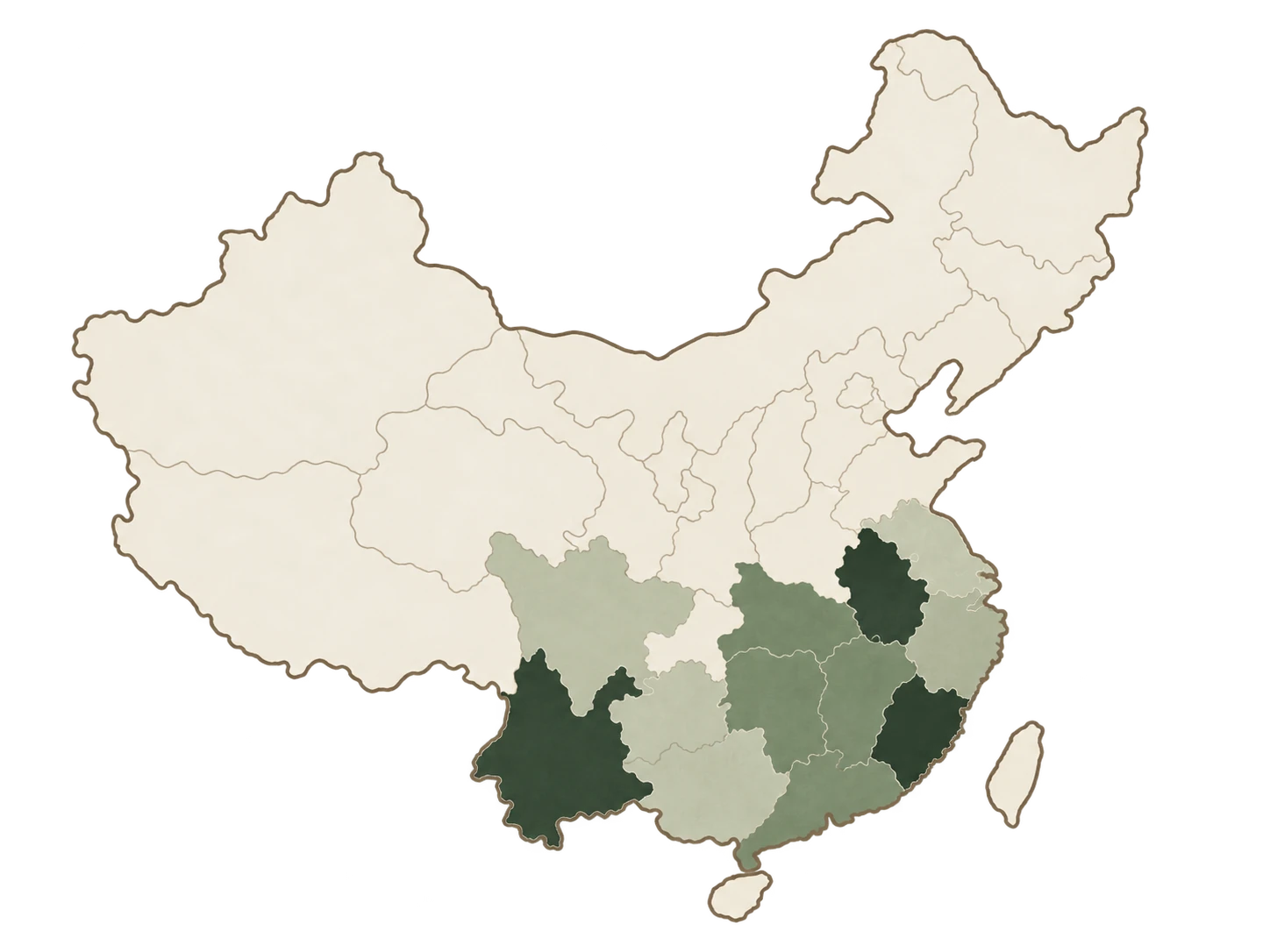
Hubei, Jiangxi, Hunan and Guangdong continue multiple Gongfu and local black-tea traditions. Zhejiang and Sichuan retain their own branches, while Guizhou, Guangxi and Jiangsu form part of the modern regional expansion of black-tea production.
Chinese black tea has no single regional center. Fujian preserves deep Souchong and Gongfu traditions, Yunnan follows a distinct large-leaf highland route, Qimen in Anhui represents classic Gongfu black tea, and Hubei, Jiangxi, Hunan and Guangdong broaden the regional map. The map is an editorial province-level overview.
Balanced Water and Heat, a Better Cup
Use enough heat to release aroma without waiting too long to decant, keeping sweetness and floral-fruity notes bright.
01Water
Clean and odor-free; low- to medium-mineral water shows sweet aroma more clearly.
Heavy mineral content can mute delicate floral and fruity notes. For daily brewing, soft or low- to medium-mineral drinking water is a reliable starting point.
02Teaware
White porcelain gaiwan is the most versatile; teapots can give a rounder feel.
A gaiwan makes it easy to observe liquor color and control decanting, useful when comparing black teas. Porcelain or suitable teapots work well for steady repeated brewing.
03Tea-to-Water Ratio
With gaiwan, begin around 1:25–1:35.
For example, use about 4–6 g of tea with 150 mL of water. Fine bud-heavy black teas can be brewed lighter, while robust strips and fuller styles may suit a little more leaf.
04Water Temperature
For many black teas, start around 90–95°C.
Not every black tea needs to be blasted with a hard rolling boil. Fine bud-rich, high-aroma teas may suit slightly lower temperatures; mature strips, smoky styles or fuller teas can take more heat.
05Steeping
Keep the first gaiwan infusion short, adjusting from about 15–30 seconds.
Black tea often releases flavor quickly, and prolonged steeping can let astringency cover its sweetness. Cup brewing can use a lower leaf-to-water ratio and extend the infusion to several minutes.
06Reinfusion
Decant promptly in the early rounds, then extend gradually as the tea lightens.
Many whole-leaf black teas can be infused several times, but Souchong, Gongfu and bud-heavy styles differ in endurance and pacing.
Black tea ranges from fine buds to robust strips. These are everyday starting points; parameters for Souchong, Gongfu and individual teas should follow the relevant single-tea page.
Tea Conversations
Tea lovers from around the world meet over a cup of tea.
Sign in or register to join the conversation. Your comment account is created automatically the first time you use a connected account.
No comments yet
Share your thoughts with readers around the world.















Tea Conversations
Tea lovers from around the world meet over a cup of tea.
Sign in or register to join the conversation. Your comment account is created automatically the first time you use a connected account.
No comments yet
Share your thoughts with readers around the world.