Skip to content
Tea & Realm
English

Ningxia Eight-Treasure Gaiwan Tea

One gaiwan opens into layers of tea, fruit and hospitality from Ningxia.

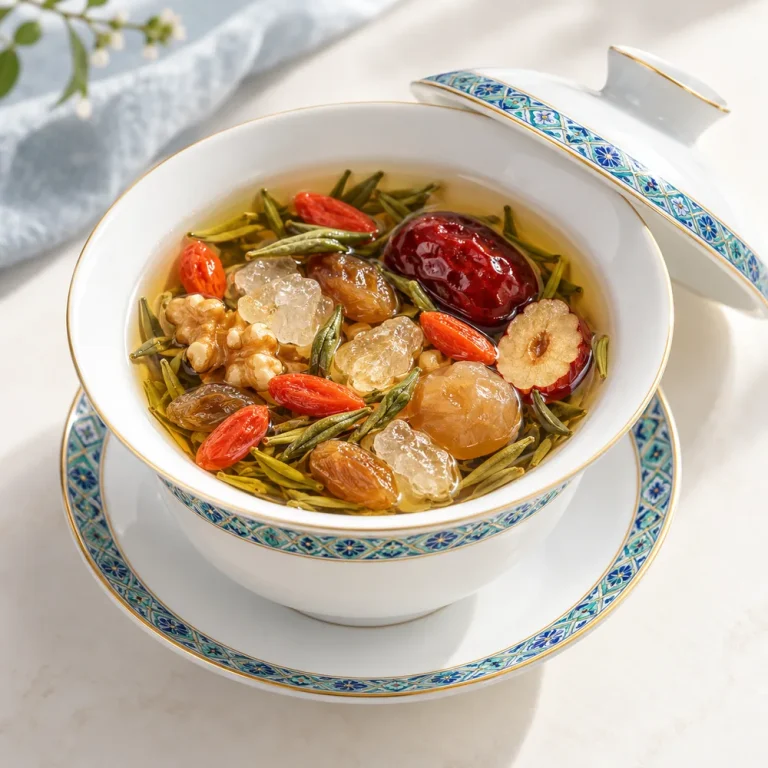
A representative traditional gaiwan tea of Ningxia, especially associated with Wuzhong. Tea leaves are combined with rock sugar or white sugar, goji berries, red dates, longan, raisins, Sesame, walnuts, dried fruit or rose preserves, then infused directly in a gaiwan with boiling water and repeatedly refilled.

Category
Tea Drinks · Traditional mixed gaiwan tea
Tea ingredient
Green tea in common Ningxia and Wuzhong versions; the tea base may vary
Tea form
Whole leaf

Tea in the Dish

Tea leaves provide the base tea flavor, combining with sugar sweetness, fruit sweetness from goji and red dates, nuttiness and floral notes. With repeated refilling, tea and dried-fruit flavors evolve gradually.

Tea ingredient
Green tea in common Ningxia and Wuzhong versions; the tea base may vary
Tea form
Whole leaf
Role of tea
Main flavor · Supporting aroma
How the tea is used
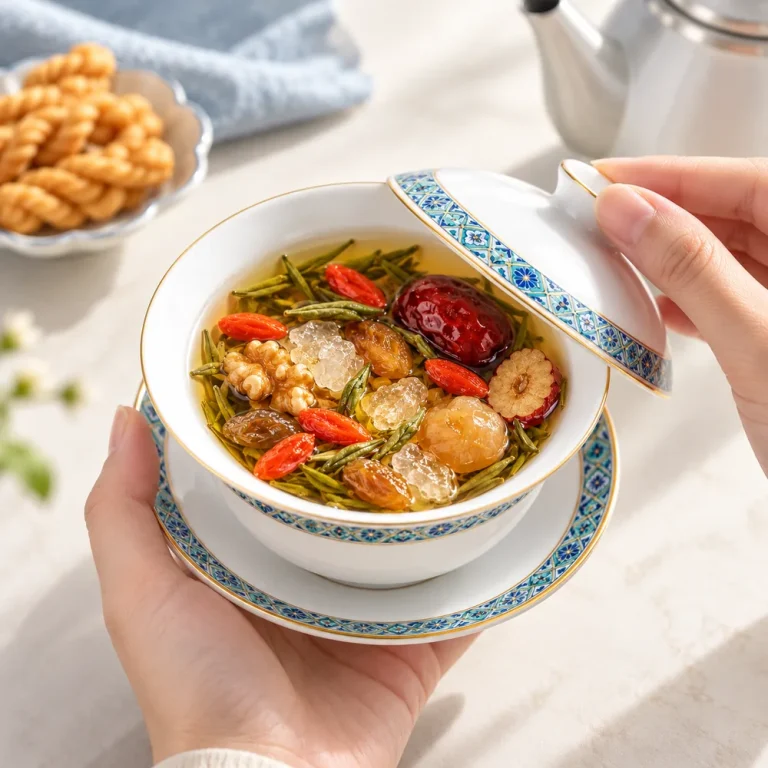
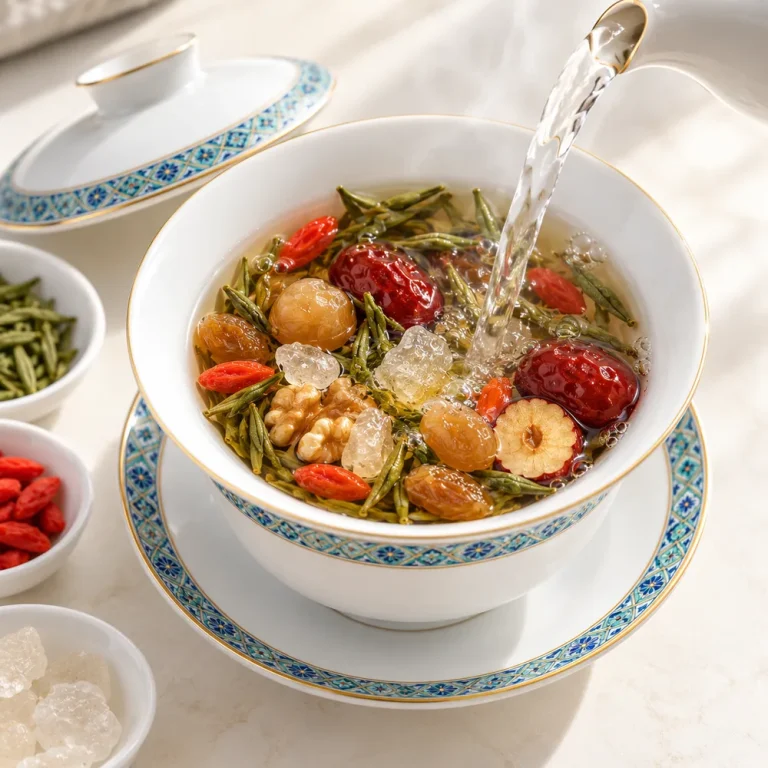
Place the tea leaves together with sugar, dried fruit, nuts, seeds or floral-fruit ingredients directly in the gaiwan, add boiling water and cover. Before sipping, use the lid to lightly scrape and integrate the flavors, then tilt it to leave a gap and drink; refill with boiling water as desired.

Flavor & Texture

The typical profile starts with tea aroma and clear sweetness, followed by layered fruit and dried-fruit notes. Repeated refilling gradually changes the balance of sweetness and tea strength, while household ingredient combinations create obvious variation.

Aroma
Tea aroma · Fruit aroma · Dried-fruit aroma
Taste
Sweet · Tea character · Fruity sweetness
Texture
Light and soothing · Hot drink

Origin & Culture

Origin & Story

Ningxia Eight-Treasure Tea is a representative traditional folk tea of Ningxia with particularly strong association with Wuzhong. In 2019, the People's Government of Ningxia Hui Autonomous Region included “Ningxia Eight-Treasure Tea” in its fifth representative intangible-cultural-heritage list under folk customs, with Litong District, Wuzhong, as the applying area and Wuzhong Cultural Center as the safeguarding unit. Official sources securely establish its traditional character, regional identity and importance in Hui hospitality and everyday tea culture, but not one inventor or precise origin year.
Historical Development

The Ningxia Department of Culture and Tourism describes Eight-Treasure Tea as a traditional folk drink widely consumed in Wuzhong and surrounding areas, appearing in summer refreshment, winter household gatherings, hospitality and the Wuzhong morning-tea system alongside foods such as youxiang, sanzi, peanuts and pastries. National Ethnic Affairs Commission materials likewise list Eight-Treasure Gaiwan Tea among the most representative covered-bowl teas of Hui communities in northwestern China. In 2019, “Ningxia Eight-Treasure Tea” was officially included in the Ningxia autonomous-region representative intangible-cultural-heritage list, confirming its regional heritage status. This record does not adopt common online claims that the present-day ingredient structure originated in the High Tang period because current higher-level sources do not establish that chronology.

Cultural Context

Eight-Treasure Gaiwan Tea is both an everyday drink and a form of hospitality. National ethnic-affairs materials describe gaiwan tea as a favorite among Hui communities in northwestern China and as a way of welcoming guests. Ningxia cultural-tourism sources connect Eight-Treasure Tea directly with Wuzhong morning tea, household breakfast and hospitality. The drinking gesture itself is ritualized: lift the saucer, scrape lightly with the lid and sip through the gap.

Regional Customs

Ingredient choice is deliberately open. Ningxia cultural-tourism materials explicitly say ingredients can be increased or reduced according to preference, ranging from three to five ingredients to more than ten. Folk practice therefore does not require exactly eight. By contrast, DBS64/002-2018 for commercially produced packaged Eight-Treasure Tea requires a blend of at least eight ingredients. Ningxia Eight-Treasure Tea is related to northwestern gaiwan traditions such as Lanzhou sanpaotai, but names, ingredients and flavor profiles are not identical and should not be treated as strict synonyms.

Serving Notes

Serving temperature
Hot
Serving style
Infuse with boiling water in a gaiwan, scrape lightly with the lid before sipping, and refill repeatedly.
Season
All year
Best occasions
Breakfast · Tea table · Home snack
Caffeine
Contains caffeine · Unquantified

The representative traditional version uses real tea leaves—commonly green tea in Ningxia official materials—and therefore contains naturally occurring caffeine. Tea type, leaf dose, gaiwan size and number of refills are not fixed, so caffeine cannot be calculated reliably per bowl. Common additions may include walnuts, Sesame and Other allergens, but because ingredients are freely adjusted, these are not treated as mandatory in every Generic version.

宁夏八宝盖碗茶·场景图

Method Overview

宁夏八宝盖碗茶·过程图

How It Works

The core of Ningxia Eight-Treasure Gaiwan Tea is not a fixed “eight-ingredient formula.” Tea leaves form the base, while sugar, dried fruit, nuts, seeds, flowers and fruit preserves are combined directly in the gaiwan and infused with boiling water. During drinking, the lid is used to stir and integrate the surface and bottom layers, and the bowl is repeatedly refilled so tea, sweetness and fruit aromas evolve across infusions.

Tea Conversations

Tea lovers from around the world meet over a cup of tea.

Sign in or register to join the conversation. Your comment account is created automatically the first time you use a connected account.