Skip to content
Tea & Realm
English

Gongmei

White tea · loose-leaf white tea · Gongmei

Tender population-cultivar shoots · fresh pekoe aroma · clean, sweet and mellow.

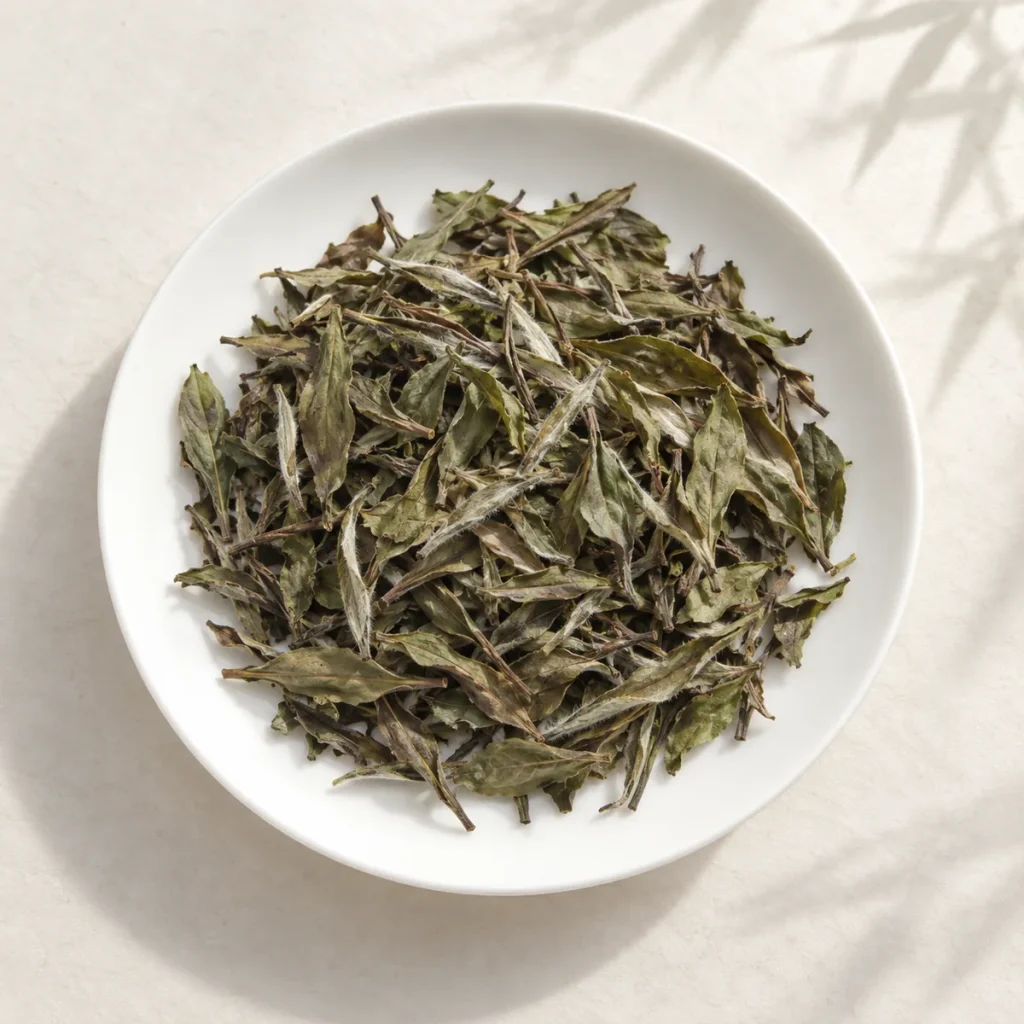
Gongmei is an independent white-tea product type under China's national standard. It is made from tender shoots of population tea cultivars through withering, drying and sorting. Current GB/T 22291—2017 clearly distinguishes it from Shoumei and grades it as Special Grade, Grade 1, Grade 2 and Grade 3. Higher-grade Gongmei shows curled leaves with visible hairy buds, orange-yellow liquor, a fresh tender aroma with pekoe character, and a clean, sweet, mellow and brisk taste.

Origin
Traditional Fujian white-tea core · Jianyang, Fuding, Zhenghe and others
Harvest
Tender shoots of population cultivars · tenderness varies by grade
Craft
Withering · drying · sorting
Aroma
Fresh tender pekoe aroma · Clean and natural
Taste
Clean, sweet, mellow and brisk · Fresh, lively and soft
Liquor
Clear orange-yellow · Soft and translucent
Dry Leaf
Curled leaf formVisible hairy buds
Liquor Color
Clear orange-yellowSoft and translucent
Aroma
Fresh tender pekoe aromaClean and natural
Taste
Clean, sweet, mellow and briskFresh, lively and soft
Finish
Clean, moist returning sweetnessSweetness builds gradually
Infused Leaf
Tender bright yellow-greenBud tips visible

Tea Overview

Tea Category
White tea · loose-leaf white tea · Gongmei
Cultivar
Population tea cultivars
Grade
Special Grade / Grade 1 / Grade 2 / Grade 3
Harvest Period
Depends on regional phenology and grade
Plucking Standard
Tender population-cultivar shoots · no universal fixed bud-leaf ratio
Processing
Withering · drying · sorting
Also Known As
Gongmei White Tea
Aging
Gongmei can be stored long term and develop aged flavor, but raw material, moisture, packaging and storage conditions differ greatly, so the site does not use absolute claims such as “the older, the better.”

Origin & Terroir

Gongmei is first of all a white-tea product type defined by GB/T 22291—2017, not one unified geographical-indication name. Its traditional production is closely connected with white-tea regions such as Jianyang, Fuding and Zhenghe in Fujian. Fuding White Tea and Zhenghe White Tea each have separate GI systems, and those protected regions should not be treated as the legal production area of all generic Gongmei.

Origin
Traditional Fujian core · no single unified GI area
Altitude
No single legal value
Climate
Traditional regions humid and misty · no unified hard value
Soil
Follow the relevant origin standard
Landform
Fujian hills and mountains · multiple production regions

Brewing

Gaiwan / white porcelain cup / glass cupWater first, then tea, then top up
Leaf Method
Gaiwan / white porcelain cup / glass cup
Teaware
White porcelain gaiwan, tasting cup or heat-resistant glass cup
Leaf Amount
About 5 g
Water Temperature
About 90–95°C
Tea-to-Water Ratio
About 1:20–1:30 (editorial recommendation)
Time
First infusion about 15–25 s · extend gradually
Infusions
About 5–7 infusions, adjusted to grade and aging state
Water
Clean drinking water
Brewing Steps · 4
  1. Warm the vessel: Warm the gaiwan or glass with hot water, then discard the warming water.
  2. Add the tea: Place about 5 g of Gongmei gently into the vessel, keeping the buds and leaves as intact as possible.
  3. Pour the water: For newer tea, use water around 90–95°C and pour steadily along the vessel wall to avoid violently breaking up the shoots.
  4. Decant: Start the first infusion around 15–25 seconds, then extend according to grade, age and preferred strength.

Composition & the Body

Gongmei has direct research on key aroma compounds, anthocyanin glycosides and experimental fungal-flowering treatment using loose Gongmei as the raw material.

Composition Profile

Verified · 2026-09-26
  1. 01
    Key aroma profile of GongmeiA total of 236 volatile compounds were identified, dominated by aldehydes (38.46%) and alcohols (25.58%). GC-O-MS detected 26 aroma-active compounds and identified 21 of them.
    Dry-leaf sample

    Fresh, green, floral, fruity and sweet impressions arise jointly from multiple active aldehydes and alcohols.

  2. 02
    Total anthocyanin glycosides122.75 μg/g
    Dry-leaf sample
  3. 03
    Physicochemical and volatile changes after experimental fungal floweringAcross samples before and after fungal flowering, 318 aroma compounds were detected and 97 differential volatiles identified. After treatment, bitter/astringent substances including tea polyphenols declined, flavonoids and caffeine increased, and ROAV values for linalool, phenethyl alcohol, β-ionone and damascenone rose significantly.
    Dry-leaf sample

Traditional Gongmei aroma is built from numerous aldehydes, alcohols and aroma-active compounds. Experimental fungal flowering further reshapes tea polyphenols, flavonoids, caffeine and the volatile profile.

The 2026 fungal-flowering study is an experimental processing intervention and does not represent the normal composition of traditional Gongmei. Anthocyanin-glycoside values apply only to the corresponding grade samples.

View Research Sources

白茶贡眉的香气组成与关键呈香成分分析

刘洋, 刘雅芳, 林智, 陈勤操 · 食品科学 · 2021

Gongmei white-tea samples.

The high proportions of aldehydes and alcohols form an important chemical basis of Gongmei aroma quality.

DOI: 10.7506/spkx1002-6630-20201222-252View Source

白茶花青素苷的结构鉴定与分析

胡金祥, 叶钰珊, 蔡梅生, 张青碧, 李博, 吴媛媛, 屠幼英, 何普明 · 浙江大学学报(农业与生命科学版) · 2022

Grade 1 Gongmei sample.

Grade 1 Gongmei contained 122.75±1.35 μg/g total anthocyanin glycosides.

DOI: 10.3785/j.issn.1008-9209.2021.03.181View Source

发花对白茶感官品质及挥发性风味物质的影响

孟艺萱, 董春旺, 黄晓琴 · 食品科学 · 2026

Loose Gongmei before and after experimental fungal-flowering treatment.

The treatment shifted aroma from stronger green notes toward a combination of fungal-flower, woody and floral-fruity qualities.

View Source

Tea Culture

Landscapes, people and history within a single leaf.

01

Under Today's Standard, Gongmei Is No Longer the Same as Shoumei

Gongmei and Shoumei overlapped for a long time in older trade usage and local cultural narratives, and historical phrases such as “Gongmei (Shoumei)” or “Shoumei is also called Gongmei” can still be found today. Current GB/T 22291—2017, however, sets a clear boundary: Gongmei must use tender shoots from population tea cultivars, while Shoumei may use tender shoots or leaves from Dabai tea, Shuixian or population cultivars. Gongmei is also divided into four grades from Special Grade through Grade 3, whereas Shoumei has only Grade 1 and Grade 2. Cha Yu Jing therefore treats them as two independent products under the current national standard while preserving the historical overlap in the history chapter.

02

To Understand Gongmei, Start with Fujian's Population-Cultivar “Small White Tea” Tradition

The core modern identity of Gongmei is not a “tribute-grade” label but white tea made from tender population-cultivar shoots. Zhangdun in Jianyang, Fujian, still preserves the tradition of making small white tea from sexually propagated population cultivars commonly called Caicha. Fujian government materials trace modern Jianyang small white tea production to the 18th century and note a long history of white tea for overseas Chinese markets. Fuding's national intangible-heritage materials also list Gongmei among traditional Fuding White Tea products. Because historical use of the names Gongmei, Shoumei and small white tea differed by region, this page does not invent a single precise “invention year” for Gongmei. Instead, it understands the tea through two stages: the long population-cultivar small-white-tea tradition and modern national standardization.

03

Gongmei Is a Product Type Across White-Tea Regions, Not the Exclusive GI of One County

Unlike directly place-named products such as West Lake Longjing or Anhua Dark Tea, “Gongmei” is first a national white-tea classification. Population-cultivar small white tea from Jianyang forms an important historical and cultivar background; Gongmei has long been made within the Fuding White Tea tradition; and the new Zhenghe White Tea national standard will formally include Gongmei as a GI product category from 2027. Precisely because several regional systems coexist, this page does not assign one unified GI to Gongmei or extend the protected boundaries of Fuding or Zhenghe to all Gongmei nationwide.

04

No Firing, No Rolling: Gongmei Depends on Slowly Withering Tender Population Shoots

Gongmei processing looks simple: withering, drying and sorting. Withering, however, is not merely leaving fresh leaves to dry. Under the combined influence of temperature, humidity, airflow and time, the shoots slowly lose moisture and undergo natural quality transformation. The national white-tea processing specification covers standardized primary and refining procedures, while Fuding's national heritage tradition preserves experience with natural and combined withering. The technical challenge in Gongmei is to preserve the buds, leaves and pekoe character of population cultivars while avoiding under-withering that leaves green odor or over-withering that damages color and freshness.

05

Higher-Grade Gongmei Means Curled Leaves, Hairy Buds and Clean Sweetness—not “Coarse Branches and Big Leaves”

GB/T 22291—2017 gives Special Grade Gongmei a very distinctive profile: curled leaves with hairy buds, gray-green or dark-green color, a fresh tender aroma with pekoe character, a clean sweet mellow brisk taste, orange-yellow liquor and a tender bright infused leaf with visible bud tips. As grade decreases, the leaves gradually open, color darkens, bud tips become fewer, liquor deepens and the taste shifts from clean sweet briskness toward greater strength. This is why Gongmei imagery cannot simply copy Shoumei: higher-grade Gongmei is clearly more tender, and the bud-leaf structure and fine stems should appear more refined.

06

Gongmei Can Share Fuding White Tea's Heritage Context—but Only with Geographic Qualification

Fuding White Tea Making Craft entered China's national intangible-cultural-heritage list in 2011 and became one Fujian element of UNESCO's 2022 “Traditional tea processing techniques and associated social practices in China.” Official project materials list Gongmei among traditional Fuding White Tea products. The Fuding White Tea Culture System entered China's fourth list of Important Agricultural Heritage Systems in 2017 and was formally recognized by FAO as a Globally Important Agricultural Heritage System in 2025. These are important cultural connections for a Gongmei page, but they apply specifically to the Fuding production system and must not be assigned automatically to Gongmei from every origin.

Frequently Asked Questions

Are Gongmei and Shoumei the same white tea?
Not under current GB/T 22291—2017. Gongmei must use tender shoots from population tea cultivars, while Shoumei may use tender shoots or leaves from Dabai tea, Shuixian or population cultivars. They are separate product types.
How many grades does Gongmei have?
The current national standard divides Gongmei into four grades: Special Grade, Grade 1, Grade 2 and Grade 3.
Must Gongmei always be one bud with two or three leaves?
That should not be generalized as the current nationwide standard. GB/T 22291—2017 requires only tender shoots from population cultivars. The new Zhenghe White Tea standard effective in 2027 will specifically define Zhenghe Gongmei as one bud with one to three leaves from sexually propagated population cultivars.
Can Gongmei be compressed into white-tea cakes?
Yes. GB/T 31751—2015 lists compressed Gongmei as a type of compressed white tea, made by sorting and blending loose Gongmei and then steaming, shaping and drying it.
Why is Gongmei closely related to Jianyang small white tea?
The national Gongmei definition requires population-cultivar tender shoots, while Zhangdun in Jianyang preserves a tradition of making small white tea from sexually propagated Caicha population cultivars. This makes Jianyang an important region for understanding Gongmei's cultivar and historical background.
Is Gongmei part of Fuding White Tea?
Gongmei itself is a nationwide white-tea product type and is not identical to Fuding White Tea. However, Gongmei can be produced within the Fuding GI and traditional craft system, and Fuding's national intangible-heritage materials list it among traditional Fuding White Tea products.
Does Gongmei have its own geographical indication?
Generic “Gongmei” is not one unified geographical-indication name. Different production areas may belong to their own regional-brand or GI systems, such as Fuding White Tea or Zhenghe White Tea, which need to be checked separately.
Is the Fuding White Tea Culture System now an FAO GIAHS?
Yes. The Fuding White Tea Culture System was formally recognized by FAO as a Globally Important Agricultural Heritage System in 2025. This is a geographically specific Fuding agricultural heritage system and cannot automatically be applied to Gongmei from every origin.

Tea Conversations

Tea lovers from around the world meet over a cup of tea.

Sign in or register to join the conversation. Your comment account is created automatically the first time you use a connected account.