Skip to content
Tea & Realm
English

Huoshan Huangya

Yellow tea · yellow-bud tea · geographical-indication product

Sparrow-tongue buds · a light “three yellows” style · fresh mellow menhuang.

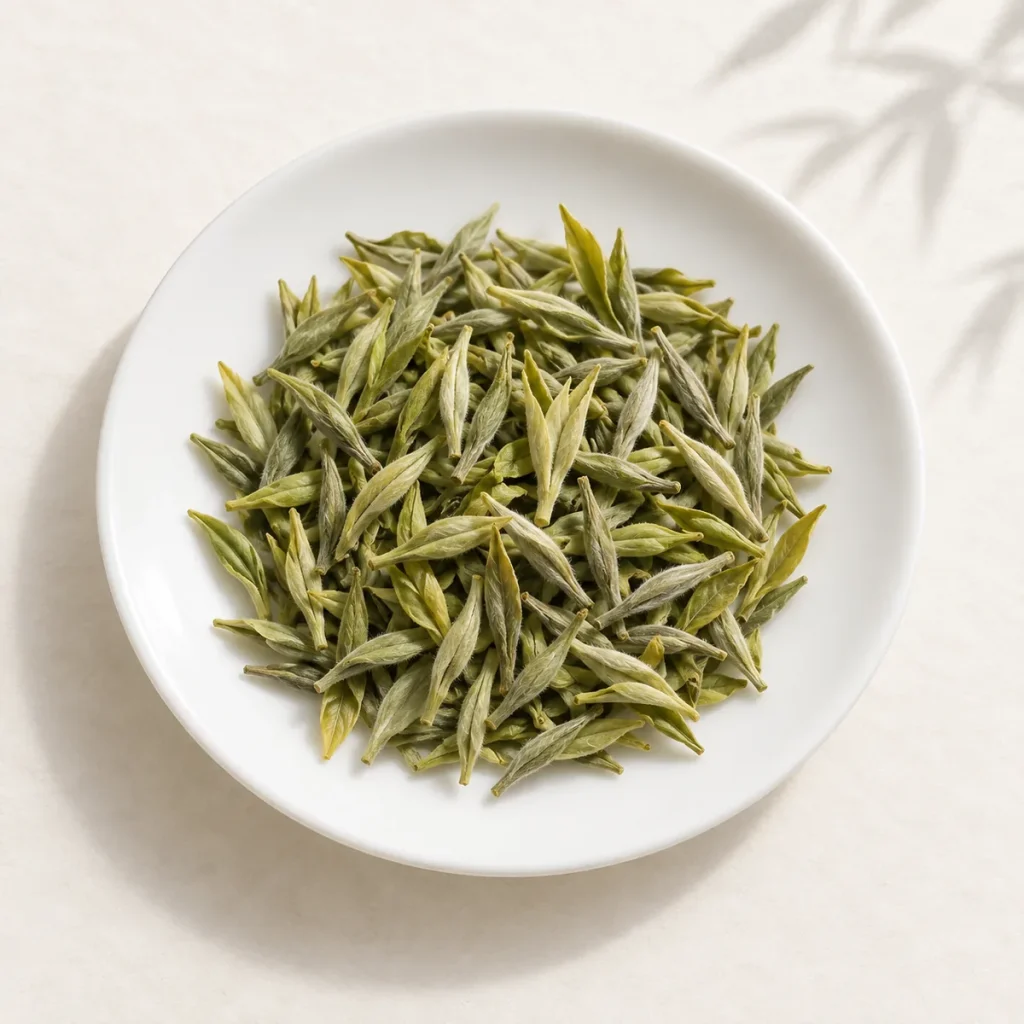
Huoshan Huangya is a representative yellow-bud tea from Huoshan, Anhui, and an independently protected geographical-indication product. Under the latest 2025 protection requirements, it uses Huoshan Jinji cultivar shoots of one bud with one leaf to one bud with two just-opening leaves. Current processing uses spreading, heat-fixing and shaping, first drying and staged menhuang to create the characteristic “three yellows” style. The finished tea is straight and slightly open, yellow-green with fine hairs; the liquor is bright yellow-green, the aroma clean and persistent, and the taste fresh, mellow, full and returning sweet.

Origin
Huoshan County, Lu'an, Anhui · GI covers the whole county
Harvest
Around Qingming · one bud with one leaf to two just-opening leaves
Craft
Spreading · heat-fixing/shaping · first drying · menhuang · re-drying
Aroma
Clean and persistent · Pure tender-bud aroma
Taste
Fresh, mellow and full · Returning sweetness and salivation
Liquor
Bright yellow-green · Clear and soft
Dry Leaf
Straight and slightly openYellow-green with fine hairs
Liquor Color
Bright yellow-greenClear and soft
Aroma
Clean and persistentPure tender-bud aroma
Taste
Fresh, mellow and fullReturning sweetness and salivation
Finish
Sweet freshness continuesClean sweet aftertaste
Infused Leaf
Tender yellow and brightEven buds and leaves

Tea Overview

Tea Category
Yellow tea · yellow-bud tea · geographical-indication product
Cultivar
Huoshan Jinji cultivar
Grade
Special Grade 1 / Special Grade 2 / Grade 1 / Grade 2
Harvest Period
Around Qingming · picking period about one month
Plucking Standard
One bud with one leaf to two just-opening leaves
Processing
Spreading · heat-fixing/shaping · first drying · menhuang · re-drying

Origin & Terroir

Huoshan Huangya has an independent geographical-indication product identity. CNIPA Announcement No. 632 of 2025 re-recognized the GI and updated its protection requirements, defining the production area as the current administrative territory of Huoshan County and setting explicit requirements for Huoshan Jinji cultivar, altitude, soil and plucking tenderness.

Origin
Lu'an, Anhui · current administrative territory of Huoshan County
Altitude
GI: 300–700 m
Climate
Humid Dabie Mountain climate
Soil
Skeletal yellow-brown soil · pH 4.5–6.0
Landform
Dabie Mountain tea gardens

Brewing

Glass cup / white porcelain gaiwanWater first, then tea, then top up
Leaf Method
Glass cup / white porcelain gaiwan
Teaware
Clear glass cup or white porcelain gaiwan
Leaf Amount
3 g
Water Temperature
80–85°C
Tea-to-Water Ratio
About 1:50 (3 g / 150 mL)
Time
Glass 2–3 min · gaiwan start around 25–40 s
Infusions
About 3–4 infusions
Water
Clean soft or low-mineral water
Brewing Steps · 4
  1. Warm the cup: Warm the glass or gaiwan with hot water, then discard the warming water.
  2. Add the tea: Use about 3 g of Huoshan Huangya per 150 mL, leaving enough room for the sparrow-tongue-like buds and leaves to open.
  3. Brew with moderately hot water: Use water around 80–85°C and pour gently to avoid directly striking the delicate shoots with boiling water.
  4. Drink promptly: In a glass, begin drinking after about 2–3 minutes; in a gaiwan, decant the first infusion around 25–40 seconds and adjust later steeps gradually.

Composition & the Body

Huoshan Huangya has direct GC-MS aroma research on finished teas of different grades from the place of origin.

Composition Profile

Verified · 2026-09-26
  1. 01
    Aroma profiles across Huoshan Huangya gradesAcross three grades, 44 aroma compounds were detected, including 26 shared compounds. Special Grade 1, Grade 1 and Grade 3 samples contained 41, 34 and 32 compounds respectively. Major compounds included linalool, geraniol, nerolidol, β-ionone, linalool oxides, cis-3-hexenyl acetate, benzaldehyde and 2-pentylfuran.
    Dry-leaf sample

    Linalool, geraniol and related volatiles form part of the chemical basis of the clean persistent aroma.

Different Huoshan Huangya grades share major volatiles such as linalool, geraniol and nerolidol, while both the number of detected compounds and total relative aroma abundance vary by grade.

This batch includes only directly verifiable tea-specific aroma research on Huoshan Huangya itself and does not borrow data from Huoshan Huangdacha or generic yellow-tea mechanisms.

View Research Sources

不同等级霍山黄芽茶叶香气成分定性定量分析与评价

范培珍, 王梦馨, 崔林, 朱慧怡, 韩宝瑜 · 热带作物学报 · 2018

Special Grade 1, Grade 1 and Grade 3 Huoshan Huangya from Dahuaping Town, Huoshan County, Anhui.

Total relative aroma abundance in Special Grade 1 and Grade 1 samples was 33.7% and 9.8% higher respectively than in Grade 3.

View Source

Tea Culture

Landscapes, people and history within a single leaf.

01

Huoshan Huangya Is Not Simply a “Tender Version” of Huoshan Huangdacha

Huoshan Huangya and Huoshan Huangdacha both come from Huoshan County and both belong to yellow-tea culture, but they are two completely different product identities. The latest 2025 geographical-indication requirements restrict Huoshan Huangya to the Huoshan Jinji cultivar, tea gardens at 300–700 m, and delicate spring shoots of one bud with one leaf to one bud with two just-opening leaves. Huoshan Huangdacha, by contrast, uses much more mature one-bud-three- to four-leaf material. Huangya seeks a straight, slightly open sparrow-tongue form, yellow-green fine hairs, clean fragrance and fresh mellow taste; Huangdacha emphasizes thick stems, broad leaves, bronze color and strong caramel aroma. The two should therefore not be treated as different grades of the same raw material, but as independent yellow-tea products with their own GI, processing and sensory systems.

02

Between the Ancient Name “Huoshan Huangya” and Today's Standardized Product

Huoshan has a very long tea history. Tang-dynasty texts already contain references such as “yellow buds from Huoshan in Shouzhou,” while Lu'an and Huoshan tea later remained prominent in Ming and Qing tribute-tea and famous-tea narratives. But the tea-class process behind an ancient “yellow bud” cannot simply be equated with yellow tea under today's national standards: historical periods saw changing steamed-green, pan-fired and other methods, while modern standardized Huoshan Huangya was restored and defined again in the 20th century.

Its modern legal identity is much clearer. It received national geographical-indication product protection in 2006, developed the local product standard DB34/T 319 in 2012, received agricultural geographical-indication registration in 2018, entered the first China-EU GI protection list in 2020, and was re-recognized under the new CNIPA system in 2025. The page therefore separates the historical famous-tea lineage from the modern standardized yellow-tea product.

03

Huoshan Jinji Tea Gardens at 300 to 700 Meters

The legal terroir of Huoshan Huangya is unusually concentrated. The latest 2025 GI protection requirements specify the Huoshan Jinji cultivar, tea gardens at 300–700 m, skeletal yellow-brown soil deeper than 70 cm, organic matter above 2% and pH 4.5–6.0. This creates a clear contrast with Huoshan Huangdacha: Huangya has a more specific GI elevation band, its cultivar is directly fixed as Huoshan Jinji, and its raw material is tender spring growth.

Dahuaping, Mozitan, Manshuihe, Shangtushi and other traditional areas together form the mountain tea landscape of Huoshan Huangya, but the legal GI boundary remains the whole current administrative territory of Huoshan County.

04

The Menhuang Hidden in Older Simplified GI Process Wording

Huoshan Huangya presents a data problem that can easily lead to misclassification. The simplified process chain carried forward in the 2025 GI requirements reads heat-fixing and shaping, first firing, spreading, final firing, sorting and re-firing, without listing “menhuang” as a separate named step. Yet the new DB3415/T 80—2024 specifically regulates Huoshan Huangya processing, and Huoshan County's 2026 production guidance clearly uses spreading, heat-fixing, shaping, cooling, first drying, first menhuang, re-drying, second menhuang, sorting and final firing.

In other words, the yellowing process did not disappear. In older process descriptions, it was often embedded in spreading, resting between firings and re-softening. Modern production language makes staged menhuang more explicit. The page should preserve both the legally defined GI process names and the modern technical explanation rather than misclassifying Huoshan Huangya as green tea simply because an older announcement did not spell out “menhuang.”

05

The “Three Yellows” Are Actually a Very Light Yellow

The “yellow” of Huoshan Huangya is not the deep yellow or bronze tone of Huoshan Huangdacha, nor a brownish dark-tea hue. The latest GI sensory profile describes the dry tea as straight and slightly open, yellow-green with fine hairs; the aroma as clean and persistent; the liquor as bright yellow-green; the taste as full, fresh and mellow with returning sweetness; and the infused leaf as slightly yellow and bright.

The traditional phrase “three yellows” is therefore best understood as the overall quality created by slightly yellow dry tea, yellow-green liquor and tender-yellow infused leaves. The representative images should not exaggerate yellow-tea identity by turning the dry leaf golden or the liquor deep apricot; the distinctive Huoshan Huangya style lies precisely in “green showing yellow, yellow remaining fresh and clear.”

06

The Product Is Yellow Tea, but the Heritage Project Is Officially Named “Green Tea Making Craft”

Huoshan Huangya has one official heritage-naming phenomenon that must be preserved exactly. The Anhui provincial intangible-cultural-heritage project is still formally named “Green Tea Making Craft (Huoshan Huangya),” and it entered Anhui's first provincial heritage list in 2006. The latest Lu'an official list and safeguarding-unit evaluation continue to use this name, with the Huoshan County Tea Industry Association currently serving as the safeguarding unit.

At the same time, Huoshan Huangya is clearly classified as yellow tea under product standards, geographical-indication protection and local industry practice. These naming systems come from different administrative and historical contexts, and a data system should not independently rename the heritage project as “Yellow Tea Making Craft (Huoshan Huangya).” As of September 2026, this provincial project was also not verified as one of the 44 constituent elements of UNESCO's 2022 “Traditional tea processing techniques and associated social practices in China.”

Frequently Asked Questions

Is Huoshan Huangya a yellow tea or green tea?
As a product, it is yellow tea. GB/T 21726—2018, the Huoshan Huangya GI system and local industry practice all classify it as yellow tea. The phrase “Green Tea Making Craft (Huoshan Huangya)” is the historical official name of an Anhui provincial intangible-cultural-heritage project; that heritage-project name does not change the product's tea category.
What is the difference between Huoshan Huangya and Huoshan Huangdacha?
They are independent GI products. Huoshan Huangya uses tender spring shoots of the Huoshan Jinji cultivar, one bud with one leaf to two just-opening leaves, and emphasizes a sparrow-tongue form, yellow-green hairs, clean fragrance and fresh mellow taste. Huoshan Huangdacha uses mature one-bud-three- to four-leaf shoots and emphasizes thick stems, broad leaves, bronze color, deep yellow liquor and strong caramel aroma.
How many grades does Huoshan Huangya have?
The latest 2025 GI protection requirements define four grades: Special Grade 1, Special Grade 2, Grade 1 and Grade 2. Higher grades use finer, more even shoots, and the main visual baseline on this page uses mostly one bud with one just-opening leaf.
What is the legally required cultivar for Huoshan Huangya?
The latest 2025 geographical-indication product protection requirements explicitly specify the Huoshan Jinji cultivar. If GI identity is claimed, ordinary tea cultivars should not be substituted into the legal cultivar field.
Why does the older GI process not explicitly say menhuang?
The older simplified GI chain lists heat-fixing/shaping, first firing, spreading, final firing, sorting and re-firing, with part of the yellowing taking place during spreading and resting between heating stages. The 2024 processing specification and Huoshan County's 2026 production guidance now make first and second menhuang stages explicit, so the tea should not be misclassified as green tea because an older announcement did not name menhuang separately.
Is Huoshan Huangya a provincial intangible cultural heritage tea?
Yes. The official project name is “Green Tea Making Craft (Huoshan Huangya),” which entered Anhui's first provincial intangible-cultural-heritage list in 2006. Current Lu'an official evaluation identifies the Huoshan County Tea Industry Association as safeguarding unit. The project name should be preserved exactly.
Has Huoshan Huangya entered UNESCO intangible heritage?
As of September 2026, this review did not verify “Green Tea Making Craft (Huoshan Huangya)” as one of the constituent elements of UNESCO's 2022 “Traditional tea processing techniques and associated social practices in China,” so this page does not assign UNESCO status.
Is Huoshan Huangya also protected as a geographical indication in the European Union?
Yes. Huoshan Huangya is included in the China-EU Geographical Indications Agreement and is registered in the EU as PGI under the name Huoshan Huang Ya. This international protection derives from the Chinese Huoshan Huangya GI product system.

Tea Conversations

Tea lovers from around the world meet over a cup of tea.

Sign in or register to join the conversation. Your comment account is created automatically the first time you use a connected account.