Skip to content
Tea & Realm
English

Yingde Black Tea

Black tea · strip-style black tea (principal form on this page)

Large-leaf tea from Lingnan, bright red with a golden ring, rich, mellow, sweet and brisk.

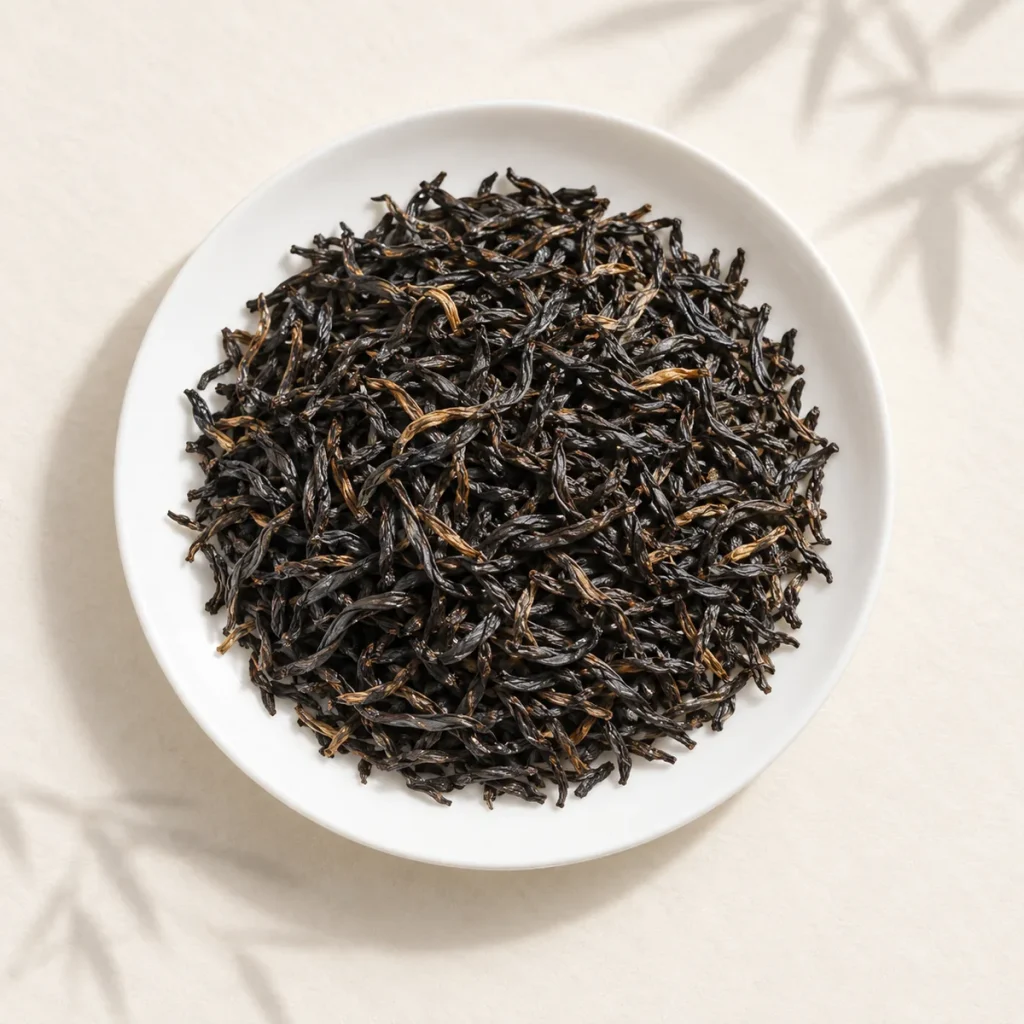
Yingde Black Tea is produced in Yingde, Guangdong, and is one of the most representative Lingnan black teas to emerge from the development of modern Chinese tea industry. Current industry standards divide strip-style Yingde Black Tea into Yinghong No. 9, traditional large-leaf cultivars, and medium- to small-leaf cultivars, with Yinghong No. 9 the most recognizable in today's market. Typical tea is robust and tightly twisted, glossy dark with visible golden tips. The liquor is vivid red with a clear golden ring, the aroma is high and persistent with sweet floral and orchid-like notes, and the taste is rich, mellow, brisk, sweet and substantial, often showing the signature “sugarcane sweetness and orchid resonance” associated with Yingde Black Tea.

Origin
Yingde, Guangdong · full geographical-indication area
Harvest
Graded plucking · tender spring buds and leaves especially prized
Craft
Withering · rolling · oxidation · drying · screening
Aroma
High sweet-floral aroma · Persistent orchid resonance
Taste
Rich, mellow and brisk · Sweet, smooth and substantial
Liquor
Vivid, deep red · Clear golden ring
Dry Leaf
Robust and tightly twistedGlossy dark with golden tips
Liquor Color
Vivid, deep redClear golden ring
Aroma
High sweet-floral aromaPersistent orchid resonance
Taste
Rich, mellow and briskSweet, smooth and substantial
Finish
Sugarcane-like returning sweetnessLong lingering finish
Infused Leaf
Even, bright redPlump, tender and soft

Tea Overview

Tea Category
Black tea · strip-style black tea (principal form on this page)
Cultivar
Yinghong No. 9 and suitable medium- to large-leaf cultivars
Grade
Yinghong No. 9: Special I · Special II · Grade 1 · Grade 2 · Grade 3
Harvest Period
Tender spring tea emphasized · multiple seasonal harvests
Plucking Standard
Buds and leaves plucked by grade · finer material for higher grades
Processing
Withering → rolling → oxidation → drying → screening
Also Known As
Yinghong (common shorthand; Yinghong No. 9 is only one representative cultivar/product type)
Oxidation / Fermentation
A fully oxidized black tea. After rolling or cutting ruptures the cells, polyphenols undergo extensive enzymatic oxidation, forming the bright red liquor, sweet floral aroma and rich mellow taste associated with black tea.

Origin & Terroir

Yingde lies in northern Guangdong along the middle reaches of the Beijiang River, in a transition from southern to central subtropical climate. The Beijiang, Wengjiang and other waterways intersect with low mountains, hills, river valleys and karst landscapes. A warm, rainy climate and predominantly acidic tea-garden soils provide vigorous growing conditions for large-leaf cultivars such as Yinghong No. 9.

Origin
Yingde, Guangdong · 23 towns plus Yingcheng Subdistrict
Altitude
Mostly hills and low mountains · marked elevation variation
Climate
Warm and rainy · abundant heat and moisture
Soil
Acidic soils · typical pH 4.5–5.5
Landform
Hills and low mountains · river valleys and karst peaks

Brewing

White porcelain gaiwan · hot water, quick decantWater first, then tea, then top up
Leaf Method
White porcelain gaiwan · hot water, quick decant
Teaware
White porcelain gaiwan or porcelain pot
Leaf Amount
About 5 g / 150 mL
Water Temperature
About 90–95°C
Tea-to-Water Ratio
About 1:30
Time
About 5–10 seconds, quick decant
Infusions
About 5–7 infusions, adjusted to grade and strength
Water
Clean low- to medium-mineral drinking water
Brewing Steps · 4
  1. Warm the vessels and add tea: Warm a white porcelain gaiwan and tasting cups, empty them, then add about 5 g of strip-style Yingde Black Tea.
  2. Pour hot water: Add water at about 90–95°C quickly so the robust strands move evenly and release their sweet floral aroma.
  3. Decant the red liquor quickly: Pour the first infusion at about 5–10 seconds and observe the vivid bright-red liquor and golden ring, avoiding prolonged covered steeping.
  4. Extend later infusions: Lengthen later steeps gradually and follow the shift from lifted sweet-floral fragrance toward sugarcane sweetness, orchid resonance and a fuller returning sweetness.

Composition & the Body

Research on Yingde Black Tea includes studies of major biochemical-component ranges across different cultivars as well as aroma-component studies of representative products such as Yinghong No. 9, Yinghong No. 1 and population-derived black tea.

Composition Profile

Verified · 2026-09-25
  1. 01
    Tea polyphenols14.53–21.98 %
    Dry-leaf sample
  2. 02
    Theaflavins1.57–3.75 %
    Dry-leaf sample
  3. 03
    Aroma profile of representative productsMore than 50 aroma compounds were identified across Yinghong No. 9, Yinghong No. 1 and population-derived black tea. Alcohols averaged 67.03% of total aroma compounds, esters 12.85% and aldehydes 11.33%. Linalool, methyl salicylate, linalool oxides, nerol and nonanal together accounted for more than 60% of the total aroma profile.
    Dry-leaf sample

    Volatiles associated with floral-fruity and sweet aroma form an important aromatic basis of representative Yingde Black Tea products.

Tea polyphenols, amino acids, theaflavins and catechins differ significantly among Yingde Black Tea cultivars. Aroma profiles in representative products are dominated by alcohols and shaped by multiple volatiles including linalool and methyl salicylate.

A 2021 study labels four common cultivar samples anonymously as A/B/C/D, so this dataset does not guess which code corresponds to which cultivar. Cross-region controls used in the 2012 aroma study are retained only as research context and are not used for public cross-tea rankings. No tea-specific human evidence was included.

View Research Sources

不同品种英德红茶的品质比较分析

桑嘉玘, 温靖, 刘昊澄, 徐玉娟, 肖更生, 吴继军, 傅曼琴, 卜智斌, 蓝丽丹, 黄慧馨 · 现代食品科技 · 2021

Black-tea samples made from four common Yingde tea cultivars; the paper presents the cultivars anonymously as A/B/C/D.

Tea-polyphenol content ranged from 14.53% to 21.98% across the four Yingde Black Tea samples, with significant cultivar differences.

DOI: 10.13982/j.mfst.1673-9078.2021.4.0748View Source

广东英德红茶代表产品的香气成分鉴定研究

王秋霜, 吴华玲, 陈栋, 许勇泉, 尹军峰, 黄国资 · 茶叶科学 · 2012

Guangdong-produced Yinghong No. 9, Yinghong No. 1 and population-derived black tea.

Alcohols accounted for a relatively high share of the aroma profile in the three representative Yingde Black Tea products, which showed characteristic volatile composition.

DOI: 10.13305/j.cnki.jts.2012.05.002View Source

Tea Culture

Landscapes, people and history within a single leaf.

01

A Red Cup from Lingnan

Yingde Black Tea is easily represented by Yinghong No. 9, but the two are not identical. GH/T 1243—2019 divides strip-style Yingde Black Tea into Yinghong No. 9, traditional large-leaf and medium- to small-leaf categories, while the geographical-indication local standard also distinguishes Yingde strip tea, Yinghong No. 9 strip tea and broken black tea. Yingde Black Tea is therefore a regional product system shaped by both origin and processing.

This page uses Yinghong No. 9 for its representative images and sensory profile because it now carries the strongest market identity. Higher-grade Yinghong No. 9 has plump shoots, visible golden tips, vivid red liquor with a golden ring, lifted fragrance and a rich, brisk taste. The industry standard even uses the dedicated phrase “sugarcane sweetness and orchid resonance” for the composite clean-sweet and orchid-like character found in the liquor.

This is also what separates Yingde from many small-leaf gongfu black teas. The cup can be more powerful and substantial without aiming for darkness or heaviness. Good Yingde Black Tea keeps richness with brightness, body with freshness, and sweetness with fragrance in balance.

02

The First Red Tea from Hongqi

Yingde has a much older history of tea cultivation, but modern Yingde Black Tea is closely tied to the industrialization of Chinese tea after 1949. Yingde municipal records state that seeds of Yunnan large-leaf tea were introduced in 1956 and successfully trial-planted at the state-run Yingde Xinsheng United Enterprise. Hongqi Tea Factory was built around 1958, and the first modern Yingde Black Tea was produced in 1959 and exported in the same year.

Export was part of its identity from the beginning. Large-leaf black tea from Yingde developed through mechanized processing, large-scale gardens and a research system. Around 1964, the “No. 2 set” standard samples and production model for broken black tea were formed and later promoted to other large-leaf black-tea regions, making Yingde not only a production area but also an important testing ground for modern Chinese black-tea industrial technology.

Later, Yingde moved from the era of broken black tea toward premium strip-style teas and a more diverse product system. Yinghong No. 9 became a new brand core, while old factories, tea research institutes, overseas-Chinese farms and modern intelligent production lines created a technological lineage spanning decades. Yingde Black Tea therefore has an unusually modern historical character: it connects the older Lingnan tea region with the development story of industrial tea in the People's Republic of China.

03

Tea Hills of the Beijiang

Yingde lies in north-central Guangdong along the middle reaches of the Beijiang River, in a mountainous county-level landscape transitioning from southern to central subtropical conditions. The Beijiang, Wengjiang and other waterways flow through a terrain of low mountains, hills, river valleys and karst peak forests. Large modern tea gardens often spread across gentler rolling slopes, while northern mountain areas retain more forest and stronger vertical ecological variation.

Government industry materials repeatedly emphasize Yingde's warm and rainy natural conditions. Most local tea soils are acidic, with a representative pH of about 4.5–5.5, and fertility and organic-matter conditions broadly favorable for tea. The warm humid climate and long growing season especially suit vigorous large-leaf tea plants and support the accumulation of tea polyphenols and other compounds in cultivars such as Yinghong No. 9.

The geographical-indication range, however, covers nearly all of Yingde—23 towns plus Yingcheng Subdistrict. A single garden in Yinghong Township therefore cannot supply the altitude, temperature or soil values for the whole production area. The more accurate large-scale terroir is abundant heat and water, acidic soils, hilly mountains and the Beijiang river system.

04

Large Leaves Turn Red

The core of strip-style Yingde Black Tea remains the four classic black-tea stages: withering, rolling, oxidation and drying. Fresh leaves gradually lose water and soften during withering as green odors weaken. Rolling shapes the strands and, at the same time, ruptures cells so the abundant polyphenols of large-leaf tea can interact with oxygen and enzymes.

Oxidation determines the red liquor and high aroma. As the leaves turn red, green odor fades and sweet floral fragrance emerges, the tea approaches an appropriate degree. Yinghong No. 9 contains abundant internal compounds: under-oxidation can leave greenness and harshness, while over-oxidation can sacrifice freshness and lifted aroma. The qualities described as rich, mellow, sweet and fragrant therefore come from precise control rather than simply “more fermentation.”

After drying, the tea is screened, organized and, where needed, aroma-finished. Guangdong implemented DB44/T 2844—2026 for strip black tea processing in 2026, while Yingde itself has long developed automated and digital strip-tea lines. From the large machines of Hongqi Tea Factory to today's 5G and sensor-controlled systems, the processing history of Yingde Black Tea is itself a story of turning craft experience into standards.

05

Sugarcane Sweetness and Orchid Resonance

If one standard phrase is used to remember Yingde Black Tea, it can be “sugarcane sweetness and orchid resonance.” GH/T 1243—2019 uses the term for the composite clean-sweet and orchid-like quality in the liquor. In higher-grade Yinghong No. 9, this is often accompanied by tender sweetness, fine-hair aroma, vivid red liquor and a thick yet brisk cup.

Higher-grade Yinghong No. 9 is plump and tightly twisted, with golden tips becoming more visible as tenderness and grade rise. The liquor must keep brightness: it can be deeply red, but it should not be dull. Vivid red clarity and a distinct golden ring are classic visual signs of quality. The concentration and astringency of large-leaf material should be wrapped in sweetness and freshness rather than becoming coarse bitterness.

The infused leaf also carries a sense of strength. High-grade buds and leaves are plump, soft and bright red to copper-red, while lower grades gradually show more mature leaves. Yingde's “body” is therefore not merely an illusion created by brewing strong; it reflects raw material, oxidation and the tea's soluble solids.

06

A New Chapter for Yinghong

The cultural identity of Yingde Black Tea is strikingly modern. Hongqi Tea Factory, overseas-Chinese farms, educated-youth memories, export earnings, cultivar breeding and national broken-black-tea standards form a historical narrative very different from that of classical literati teas. Hongqi Tea Factory has now become a national industrial-heritage site and industrial-tourism destination, where old rolling machines, slogans and production lines have been reinterpreted as tea-cultural space.

The making of Yingde Black Tea has also entered the intangible-cultural-heritage system. In May 2018 it was included in Guangdong's seventh group of provincial representative intangible cultural heritage projects and remains a provincial-level project. In 2026, Yingde invited provincial heritage specialists for a dedicated study aimed at advancing a future national-level application, so the site must not prematurely call it a national project.

At the same time, Yingde Black Tea remains strongly future-facing. In 2026, new physical standard samples and a flavor wheel were released, while new provincial strip-black-tea processing standards also took effect. Geographical-indication management, digital tea gardens, smart factories and heritage workshops are developing together. The tea's cultural value lies precisely in the fact that industry, agriculture, science and craft are still growing along the same timeline.

Frequently Asked Questions

Are Yingde Black Tea and Yinghong No. 9 the same thing?
Not exactly. Yingde Black Tea is a regional black-tea system. GH/T 1243—2019 divides strip-style Yingde Black Tea into Yinghong No. 9, traditional large-leaf and medium- to small-leaf categories. Yinghong No. 9 is one of the best-known and most representative cultivar/product types within that system.
Is Yingde Black Tea produced only in Yinghong Township?
No. Yinghong Township is an important center for modern industry, research and Yinghong No. 9, but the protected geographical-indication area covers 23 towns plus Yingcheng Subdistrict across Yingde. Authentic GI Yingde Black Tea must use raw material from the protected area and be processed in Yingde according to the relevant rules.
How many grades does Yinghong No. 9 have?
Under GH/T 1243—2019, Yinghong No. 9 has five grades: Special Grade I (Jinhao), Special Grade II (Jinmaoha), Grade 1, Grade 2 and Grade 3. Other Yingde Black Tea product types use different grading systems.
What does “sugarcane sweetness and orchid resonance” mean?
GH/T 1243—2019 uses this dedicated term for a composite flavor in the liquor that combines clean sweetness with an orchid-like aromatic impression. It is a natural flavor created by cultivar and processing, not by added sugar or flavoring.
Why does Yingde Black Tea often look so deep in color?
Large-leaf cultivars such as Yinghong No. 9 contain abundant internal compounds and can produce vivid, concentrated red liquor after full oxidation. High-quality tea may be deep in color but should remain clear, bright, fresh and sweet rather than dull brown or muddy.
What water temperature should I use for Yingde Black Tea?
For everyday brewing, about 90–95°C works well. A useful starting point is about 5 g of tea to 150 mL of water with a quick first infusion of roughly 5–10 seconds. Very bud-rich Jinhao or Jinmaoha can use slightly cooler water or shorter time.

Tea Conversations

Tea lovers from around the world meet over a cup of tea.

Sign in or register to join the conversation. Your comment account is created automatically the first time you use a connected account.