Skip to content
Tea & Realm
English

Tibetan Butter Tea

Strong tea meets butter, churned into the everyday warmth of the plateau.

A traditional Tibetan savory tea made by simmering brick tea, tuocha or Other compressed tea into a strong liquor, then adding butter and salt and churning repeatedly until the tea and dairy fat form a smooth emulsion. It is usually served hot.

Category
Tea Drinks · Traditional savory tea
Tea ingredient
Compressed tea, commonly brick tea or tuocha; some regional versions use Kangzhuan or other border tea
Tea form
Tea liquor

Tea in the Dish

Strong tea contributes aroma, tea flavor and some astringent structure, combining with the dairy richness of butter and salt to create the characteristic savory, full-bodied and emulsified style.

Tea ingredient
Compressed tea, commonly brick tea or tuocha; some regional versions use Kangzhuan or Other border tea
Tea form
Tea liquor
Role of tea
Liquid base · Main flavor
How the tea is used
Break or crush brick tea, tuocha or Other compressed tea and simmer it in water to make a relatively strong tea liquor, then strain out the leaves. Combine the hot tea liquor with butter and salt and churn or blend until emulsified.

Flavor & Texture

The defining profile is hot, savory, rich and smooth. Strong tea contributes tea aroma and structure, butter brings pronounced dairy fat and body, and salt connects the two into a drink closer to a savory broth than to ordinary sweet Milk tea.

Aroma
Tea aroma · Butter and dairy aroma
Taste
Savory-salty · Strong tea flavor
Texture
Rich and smooth · Emulsified · Warm

Origin & Culture

Origin & Story

Tibetan Butter Tea is a long-standing traditional drink in Tibetan food culture, widely consumed in Tibet and Other Tibetan-populated areas of China. Reliable sources clearly confirm its traditional status, daily use and hospitality role, but do not establish one universally accepted inventor, birthplace or exact origin year.

Historical Development

The China Tibetology Research Center cites Tang-period sources such as Li Zhao's Guoshi Bu to show that tea drinking had already developed in Tibet during the Tubo period, but this is evidence for the history of Tibetan tea drinking rather than proof that the modern butter-tea formula was already fixed in the Tang dynasty. Reliable modern ethnographic and food materials consistently record the stable process of today's butter tea: simmer compressed tea into liquor, add butter and salt, churn repeatedly until fully integrated, then reheat or keep warm before drinking. This record therefore marks Tibetan Butter Tea as documented and traditional while avoiding weak single-origin legends such as claims that Princess Wencheng invented it.

Cultural Context

Butter tea is not only an everyday drink but also part of Tibetan hospitality, festivals and social exchange. China Tibetology Research Center materials discuss tea rituals at Losar, Ongkor festivals and weddings, while Tibetan cultural-tourism sources also record serving butter tea first when guests arrive and sitting together to drink and talk.

Regional Customs

Ingredients and strength vary among Tibetan regions. Sources from Tibet commonly mention brick tea or tuocha; materials from Comai in Shannan explicitly use Kangzhuan brick tea; some Garze-area versions may include a small amount of Milk or Milk powder. The stable core remains “strong tea liquor + butter + salt + churning to emulsify,” and no one local version should be elevated into the sole standard for all Tibetan Butter Tea.

Serving Notes

Serving temperature
Hot
Serving style
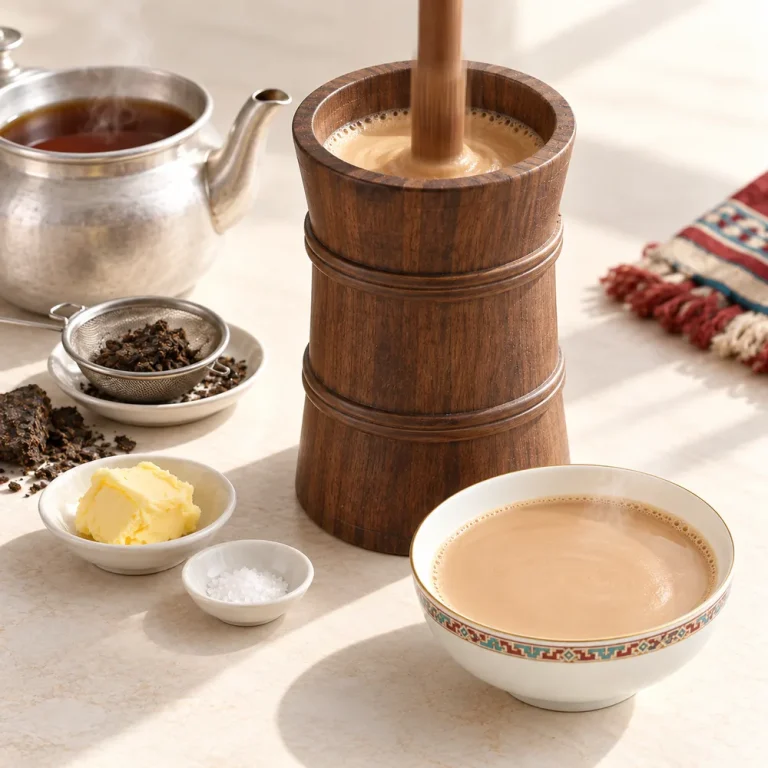
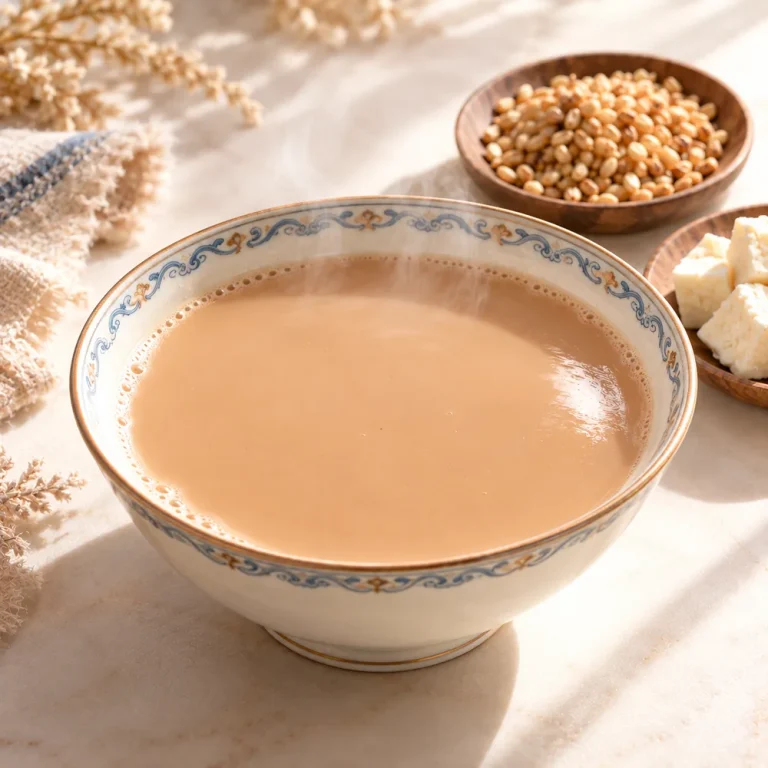
Serve hot. Traditionally it is churned in a butter-tea vessel, transferred to a teapot to stay warm, and poured into tea bowls.
Best occasions
Breakfast · Festival · Winter hot serving · Tea table
Storage
Traditional preparation may keep a batch of strong tea liquor ready in advance; the finished drink is usually reheated or kept warm and served hot.
Reheating
Return the tea to a teapot or pot, warm it gently and stir to re-integrate before drinking. No fixed temperature is set without source support.
Allergens
Milk
Caffeine
Contains caffeine · Unquantified

Traditional butter comes from the Milk fat of yak, cattle, sheep or Other ruminants and is therefore classified under Milk allergens. Real compressed tea is simmered into the drink, so naturally occurring caffeine is present, but tea type, leaf dose, strength of the tea liquor and serving size vary too much to calculate a reliable milligram amount per bowl.
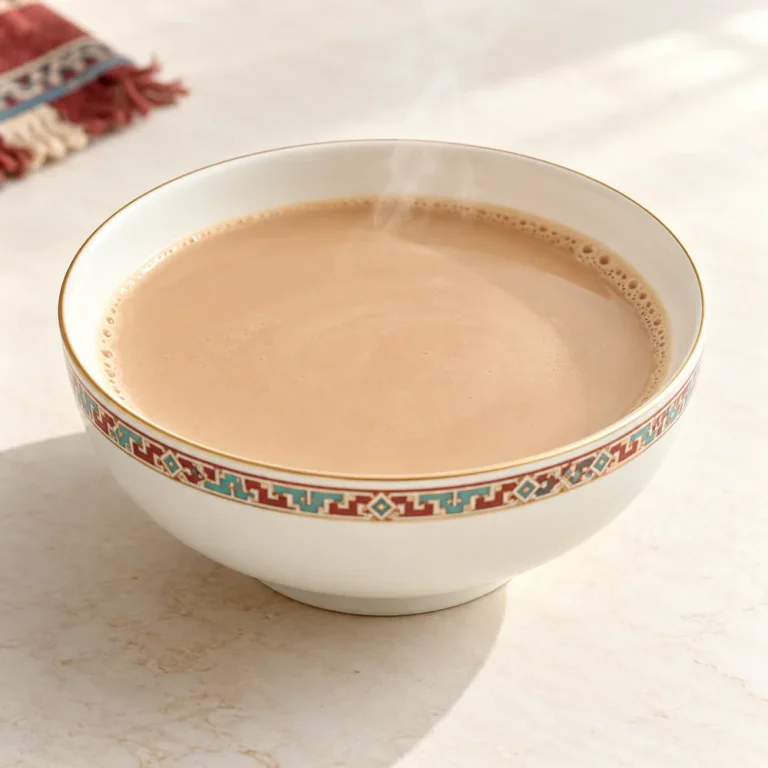
藏式酥油茶·场景图

Method Overview

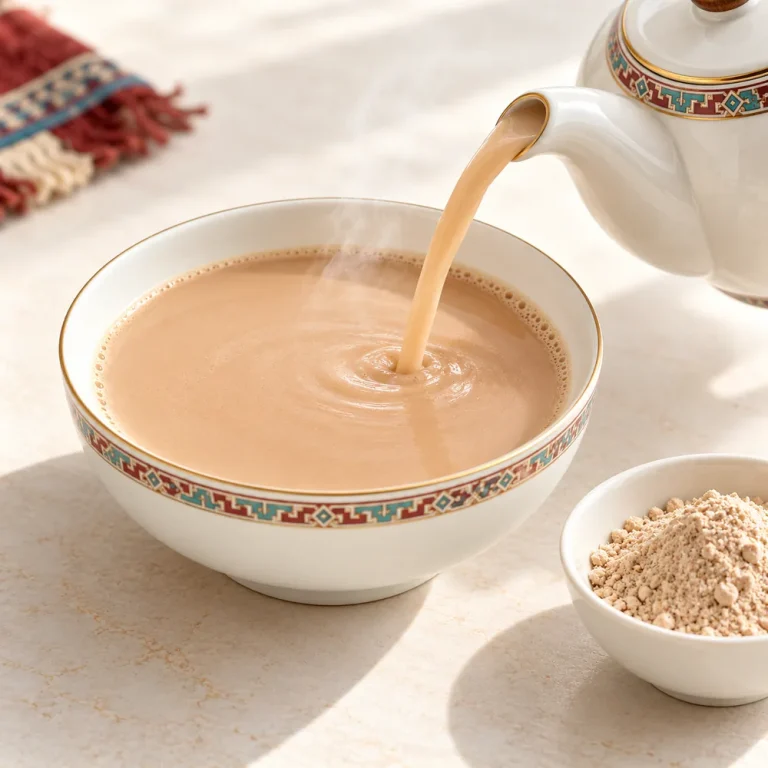
藏式酥油茶·过程图

How It Works

Traditional Tibetan Butter Tea is not simply hot tea with butter stirred in. Compressed tea is first simmered into a strong liquor, then the hot tea, butter and salt are repeatedly churned in a traditional vessel or modern blender until the dispersed Milk fat and tea form a relatively stable emulsion. Tea strength, butter quantity and salt level vary clearly by household and region.

Tea Conversations

Tea lovers from around the world meet over a cup of tea.

Sign in or register to join the conversation. Your comment account is created automatically the first time you use a connected account.