Skip to content
Tea & Realm
English

Hong Kong-Style Silk-Stocking Milk Tea

A cloth tea sock and a pot of strong brew pull out the fragrance of Hong Kong's streets.

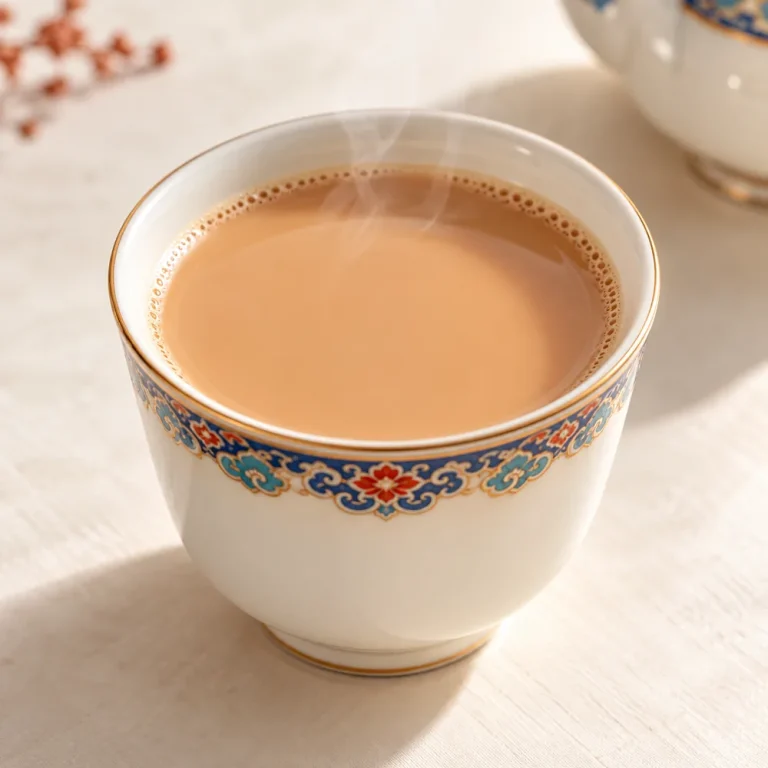
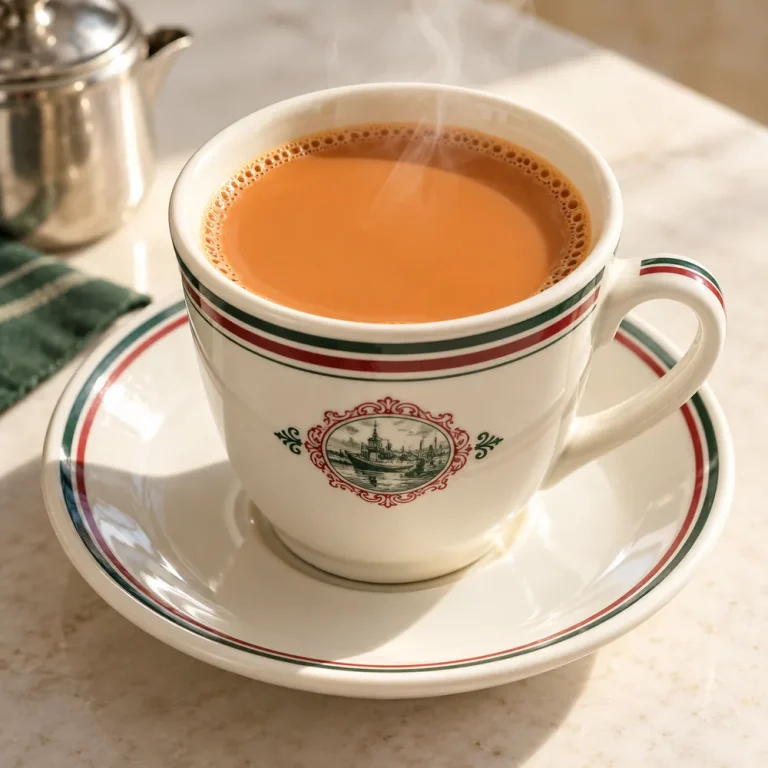
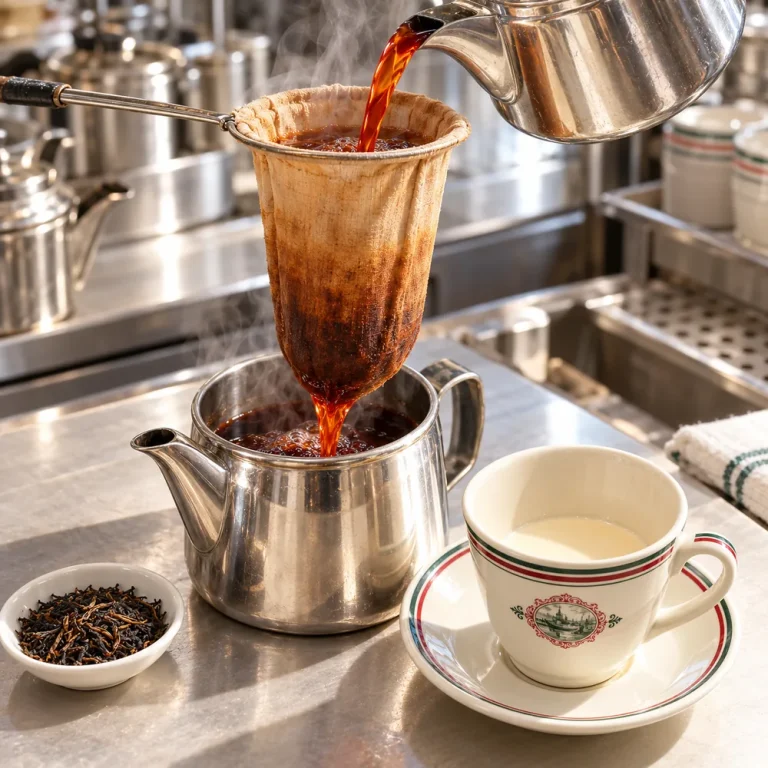
A signature Hong Kong Milk tea made from blended black tea that is boiled, steeped and repeatedly pulled through a cloth filter, then poured hot into evaporated Milk. The nickname “silk stocking” comes from the tea-stained cloth filter, whose brown appearance resembles a stocking after repeated use.

Category
Tea Drinks · Hong Kong milk tea
Tea ingredient
Blended black tea
Tea form
Tea liquor

Tea in the Dish

Blended black tea creates the drink's strong aroma, color and astringent backbone, while evaporated Milk contributes dairy richness, body and smoothness. Their balance through high-concentration tea and pouring technique creates the classic Hong Kong style.

Tea ingredient
Blended black tea
Tea form
Tea liquor
Role of tea
Liquid base · Main flavor
How the tea is used
Blend black teas, boil and steep them in hot water, then repeatedly pour and filter the liquor between pots through a cloth strainer to reach the desired concentration, aroma and mouthfeel. Finally pour the hot tea into a cup that already contains evaporated Milk.

Flavor & Texture

Classic Hong Kong Milk tea emphasizes a strong tea aroma and clear tea structure. Evaporated Milk rounds the astringency and edges, creating a drink that is full-bodied yet smooth while still retaining a firm tea backbone. Sugar is commonly adjusted to taste.

Aroma
Strong black-tea aroma · Dairy aroma
Taste
Strong tea flavor · Milky sweetness · Slightly astringent
Texture
Smooth and fragrant · Full and silky · Warm

Origin & Culture

Origin & Story

Hong Kong-Style Silk-Stocking Milk Tea is a representative fusion drink created through the localization of British Milk tea in Hong Kong. Official heritage materials describe its evolution from British Milk tea into a distinctly local craft built around tea blending, boiling, pulling, steeping and combining the strong tea with evaporated Milk. In 2017, “Hong Kong-style Milk tea making technique” became one of the first items on Hong Kong's Representative List of Intangible Cultural Heritage.
Historical Development

During the British colonial period, black tea and the practice of adding Milk entered Hong Kong, initially appearing mainly in hotels and higher-end Western dining settings. As bing sutt, dai pai dongs and later cha chaan tengs expanded, local operators transformed that style into a more affordable, stronger and faster everyday drink based on evaporated Milk and concentrated black tea. Hong Kong government heritage materials summarize this as a century-long localization of British Milk tea. By around the 1950s, the growth of bing sutt and cha chaan teng culture had made Hong Kong Milk tea part of ordinary daily life. The Hong Kong Tourism Board presents Lan Fong Yuen as an important historic shop associated with silk-stocking Milk tea and describes it as an originator; this record treats that as a specific shop-origin narrative rather than proof of one exclusive inventor for the entire craft.

Cultural Context

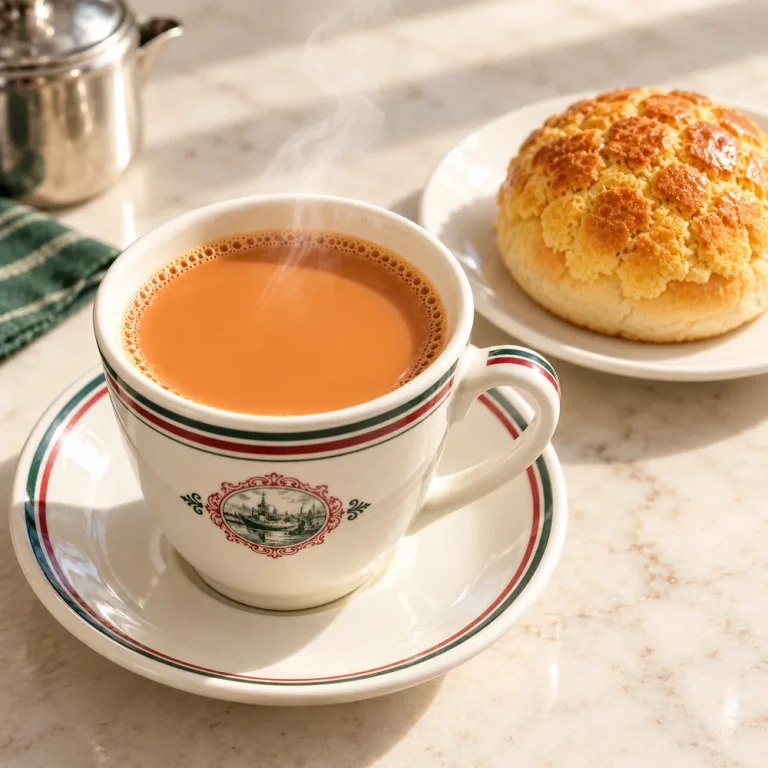
Hong Kong Milk tea is inseparable from bing sutt, cha chaan tengs and dai pai dongs and is a representative example of Hong Kong's Chinese-Western food culture. It appears alongside pineapple buns, Egg tarts, sandwiches and breakfast noodles and also forms the tea component of yuenyeung. In 2017, Hong Kong-style Milk-tea making technique entered the Representative List of the Intangible Cultural Heritage of Hong Kong, and Hongkong Post issued a special stamp featuring the craft in 2023.

Regional Customs

Different Hong Kong cha chaan tengs maintain their own black-tea blends, heat control, number of pulls and tea-to-Milk ratios. Hot Milk tea usually uses strong tea filtered through the cloth bag and poured into evaporated Milk, while sugar is added to taste. Iced versions introduce further variation in tea strength, ice and sweetness management.

Serving Notes

Serving temperature
Hot
Serving style
Commonly served hot in cha chaan tengs, with iced versions also widely available.
Season
All year
Best occasions
Breakfast · Afternoon tea · Tea table
Storage
Traditional shops prepare, hold warm and serve the drink within their service cycle. No fixed shelf-life is assigned without a unified standard.
Reheating
No Generic rule is set for repeated reheating. Cha chaan tengs generally control tea-base temperature and hot-drink service according to their own workflow.
Allergens
Milk
Caffeine
Contains caffeine · Unquantified

Traditional Hong Kong Milk tea uses real black tea and evaporated Milk, so Milk is a confirmed allergen and naturally occurring caffeine is present. Tea blend, leaf dose, boiling and steeping time, cup size and tea-to-Milk ratio vary too much to calculate one reliable caffeine value per cup.

港式丝袜奶茶·场景图

Method Overview

港式丝袜奶茶·过程图

How It Works

Hong Kong-style silk-stocking Milk tea is not simply black tea with Milk. Its identity comes from a full craft sequence built around highly concentrated blended black tea: blending, boiling, steeping, repeated pulling and filtering through a cloth bag, then pouring the strong hot tea into evaporated Milk. The cloth controls leaf particles and participates in the repeated tea exchange, while the high-strength tea liquor and evaporated Milk balance intensity, astringency, dairy richness and smoothness.

Tea Conversations

Tea lovers from around the world meet over a cup of tea.

Sign in or register to join the conversation. Your comment account is created automatically the first time you use a connected account.